
2025 Hino Tow Trucks For Sale in Florida
Have 2025 hino tow truck to sell? List it here to reach thousands of buyers.
2025 Hino Tow Trucks in Florida
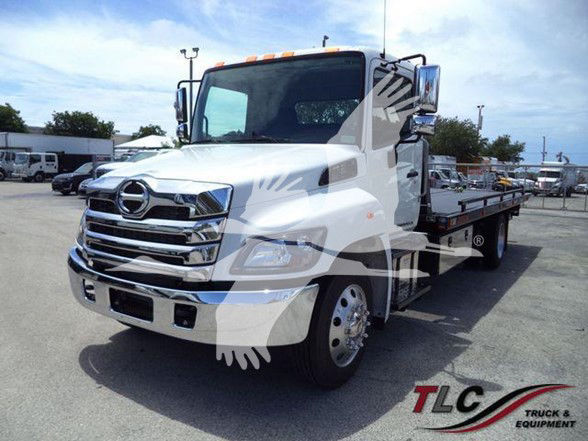
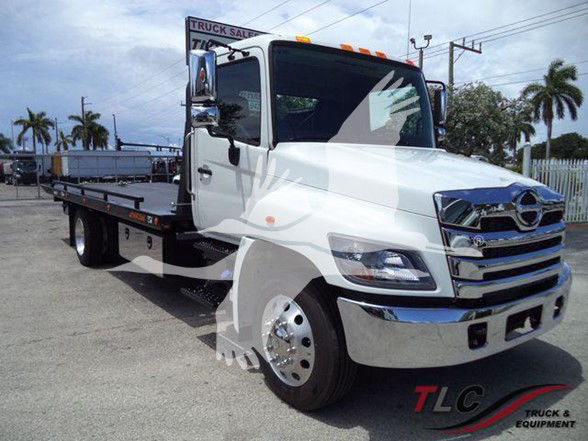
The most common 2025 Hino tow truck setup in this class uses a Cummins 6.7L diesel with an Allison automatic transmission, air brakes, and air ride suspension. That spec is popular for a reason. It is straightforward to service, easy to train drivers on, and well suited for stop-and-go towing routes. Carrier bodies in this category are often 102 inches wide and built with low-profile or low center-of-gravity decks to improve loading angles for low-clearance cars, crossovers, and light trucks. Buyers should pay close attention to bed length, usable deck space, winch rating, wheel-lift capacity, and whether the truck has removable rails, lower work lights, and properly sized toolboxes for chains, straps, skates, and recovery gear.
A 6-ton steel bed with an 8,000-pound winch and a 3,500-pound wheel lift is a common configuration on Hino rollback tow trucks, and it covers a wide share of daily calls. That setup is generally aimed at passenger vehicles, small vans, and light-duty commercial units rather than heavy recovery. Low-profile 22.5 tires, aluminum wheels, heated power mirrors, and air ride seats are more than cosmetic details on a tow truck. They affect ride quality, visibility, driver fatigue, and loading confidence over a long shift. If your operation runs highway service, repossession, police rotation, or private property impounds, approach angle, wheel-lift geometry, and deck construction will matter as much as engine and transmission specs.
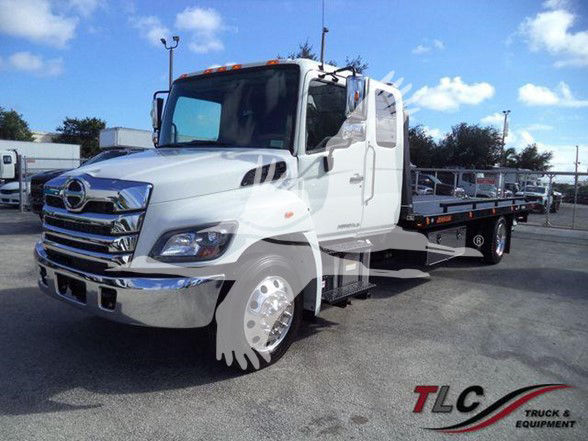
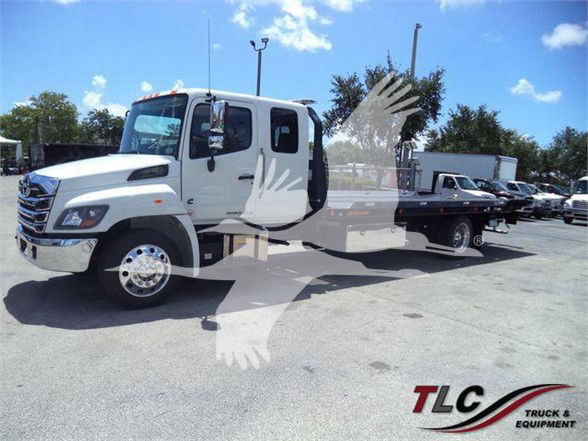
When comparing 2025 Hino carriers and rollbacks, also known as flatbed tow trucks or car carriers, it helps to focus on fit for your call mix. A truck that spends most of its time moving sedans and disabled crossovers may benefit most from a low deck and fast-loading controls. A truck expected to handle work vans, pickups, and longer-wheelbase units may need closer review of wheelbase, axle ratings, overhang, and body balance. Buyers should also verify cab configuration, fuel capacity, storage layout, lighting package, and body warranty coverage, since those details affect uptime just as much as the chassis itself.
Frequently Asked Questions about 2025 Hino Tow Trucks in Florida
What is the typical configuration of a 2025 Hino tow truck?
Most 2025 Hino tow trucks in this category are medium-duty rollback or carrier units built on an Hino L6 or 268A chassis. A common spec includes a Cummins 6.7L diesel, Allison automatic transmission, air brakes, air ride suspension, and a 21-foot to 22-foot steel carrier body. Many are rated at 26,000 GVWR and equipped with an 8,000-pound winch plus a 3,500-pound wheel lift, which makes them well suited for light-duty towing and transport work.
Is a 26,000 GVWR Hino rollback enough for everyday towing work?
For many operators, yes. A 26,000 GVWR Hino rollback is a practical choice for passenger cars, SUVs, light pickups, small vans, and general service calls. It is not intended to replace a heavy wrecker or a larger recovery unit, but it covers a large percentage of daily dispatches efficiently. The right answer depends on your average vehicle weights, route density, and whether you regularly tow longer-wheelbase commercial units.
What should I look for in the carrier body on a Hino tow truck?
The body spec often matters as much as the chassis. Buyers should review deck length, deck width, approach angle, bed construction, wheel-lift rating, winch capacity, toolbox size, and lighting layout. A low-profile or low center-of-gravity deck can make a major difference when loading low-clearance vehicles. Removable rails, lower work lights, and a clean control layout also improve day-to-day usability and safety.
Are 2025 Hino tow trucks good for Florida operations?
They are generally a strong fit for Florida towing operations because the medium-duty rollback format works well in urban traffic, highway service, dealership transport, and private property towing. Air brakes and air ride suspension are well suited to frequent stop-and-go work, and the chassis size is manageable for tighter service areas. Buyers in Florida should still pay attention to corrosion protection, cooling performance, lighting visibility in heavy rain, and storage layout for gear that stays exposed to heat and humidity.
What is the difference between a rollback, carrier, and flatbed tow truck?
In this market, those terms are often used interchangeably. A rollback tow truck uses a hydraulic bed that tilts and slides back to load a vehicle onto the deck. Carrier and flatbed tow truck usually refer to the same basic style of unit. The exact design can vary by manufacturer, especially in deck height, wheel-lift integration, and bed construction, but they all serve the same primary purpose of carrying a disabled or damaged vehicle fully off the ground.