
Isuzu Sweeper Trucks For Sale
Shop Isuzu sweeper trucks built for parking lots, streets, and municipal cleanup with diesel power, maneuverability, and commercial-duty sweep systems.
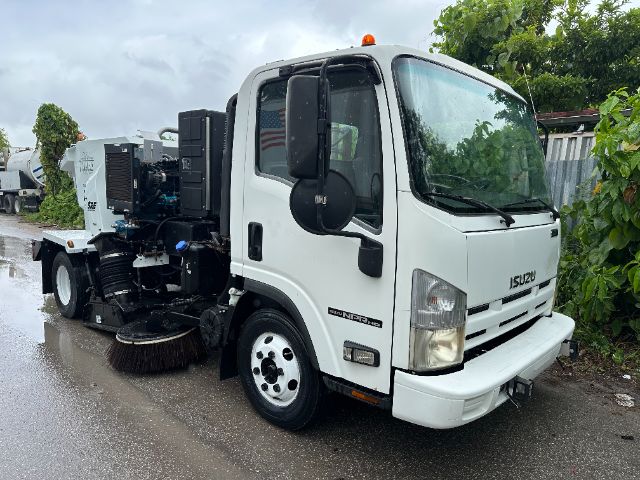
Selling a isuzu sweeper truck? List your isuzu sweeper truck for sale and reach thousands of commercial buyers.
Isuzu Sweeper Trucks
A typical Isuzu sweeper truck in this category is diesel powered, often with an automatic transmission, and sized to balance payload, maneuverability, and operating cost. Common details that deserve a close look include hopper capacity, broom configuration, vacuum or air system condition, water tank size, dust suppression components, and auxiliary engine hours if the sweeper body uses a pony motor. Parking lot sweepers often use dual gutter brooms and compact hoppers for daily commercial property maintenance, while street-oriented units may be set up for heavier curb debris, longer duty cycles, and more demanding municipal schedules. On used equipment, engine miles and chassis condition matter, but sweeper hours, fan wear, hydraulic performance, and pickup head condition usually tell you more about how the unit has actually worked.
Maintenance access is one of the stronger arguments for an Isuzu-based sweeper truck. Isuzu cabover trucks are widely used in medium-duty commercial service, so parts support, service familiarity, and drivability are usually solid selling points for fleets that want a compact sweeper without stepping into a larger conventional chassis. Buyers should inspect the hopper for corrosion, check broom arm wear, verify water spray operation, and confirm that the vacuum, blower, or regenerative air components build and hold proper performance. If the unit has a separate auxiliary engine, compare its hours to the chassis miles and ask about rebuild history, pump service, and bearing replacement intervals.
The right Isuzu sweeper truck depends on where it will work most of the time. For retail centers, HOAs, warehouses, and parking structures, a shorter wheelbase cabover with a compact air sweeper body is often the best fit. For municipalities and contractors handling mixed debris, route density, and curb work, a heavier-duty setup with more hopper volume and stronger broom coverage may be the better long-term choice. Also known as parking lot sweeper trucks or street sweeper trucks depending on configuration, these units are judged less by brand name alone and more by the condition of the sweeping system, the chassis service history, and how well the spec matches the debris, route speed, and daily operating hours.
Frequently Asked Questions about Isuzu Sweeper Trucks
What should I check first on a used Isuzu sweeper truck?
Start with the sweeper system before the chassis cosmetics. Hopper condition, broom wear, hydraulic leaks, fan or blower performance, pickup head condition, water spray function, and auxiliary engine hours usually reveal more than paint or cab appearance. On the Isuzu chassis side, confirm engine service history, transmission operation, brake condition, and any fault codes, but remember that expensive repairs on a sweeper truck often come from the sweeping equipment rather than the truck itself.
Are Isuzu sweeper trucks better for parking lots or street sweeping?
Most Isuzu sweeper trucks are especially well suited for parking lots, campuses, warehouses, and tight urban routes because the cabover chassis is compact and easy to maneuver. That said, some units are equipped for broader street sweeping work if the sweeper body has the right hopper capacity, broom arrangement, dust control, and duty cycle rating. The intended application depends more on the sweeper body and system design than on the Isuzu badge alone.
What is the advantage of an Isuzu cabover chassis on a sweeper truck?
The main advantage is maneuverability. A cabover Isuzu chassis typically offers a tighter turning radius, better visibility at the curb line, and easier access in confined areas than a larger conventional truck. That makes it useful for sweeping around islands, parked vehicles, loading docks, and downtown streets where precision and low-speed control matter.
Why do sweeper hours matter as much as mileage?
Mileage tells you how far the truck has traveled, but sweeper hours show how long the sweeping equipment has actually operated. A unit with moderate chassis miles can still have heavy wear in the brooms, blower, hydraulics, pumps, bearings, and auxiliary engine if it spent years on daily sweeping routes. Buyers should compare miles, engine hours, and maintenance records together to understand total wear.
Do Isuzu sweeper trucks usually have a pony motor?
Some do and some do not. Many sweepers use a separate auxiliary engine, often called a pony motor, to run the blower, hydraulics, or vacuum system independently of the chassis engine. Others are chassis-driven or PTO-driven depending on the body manufacturer and design. If a truck has a pony motor, inspect its hours, service history, cold-start behavior, and parts availability just as carefully as the main Isuzu engine.