
Used Service/Utility Trucks For Sale in California
Used service and utility trucks for sale in California, including pickup-based and medium-duty work trucks with bodies, bins, cranes, and PTO gear.

Selling a used service/utility truck? List your used service/utility truck for sale and reach thousands of commercial buyers.
Used Service/Utility Trucks in California
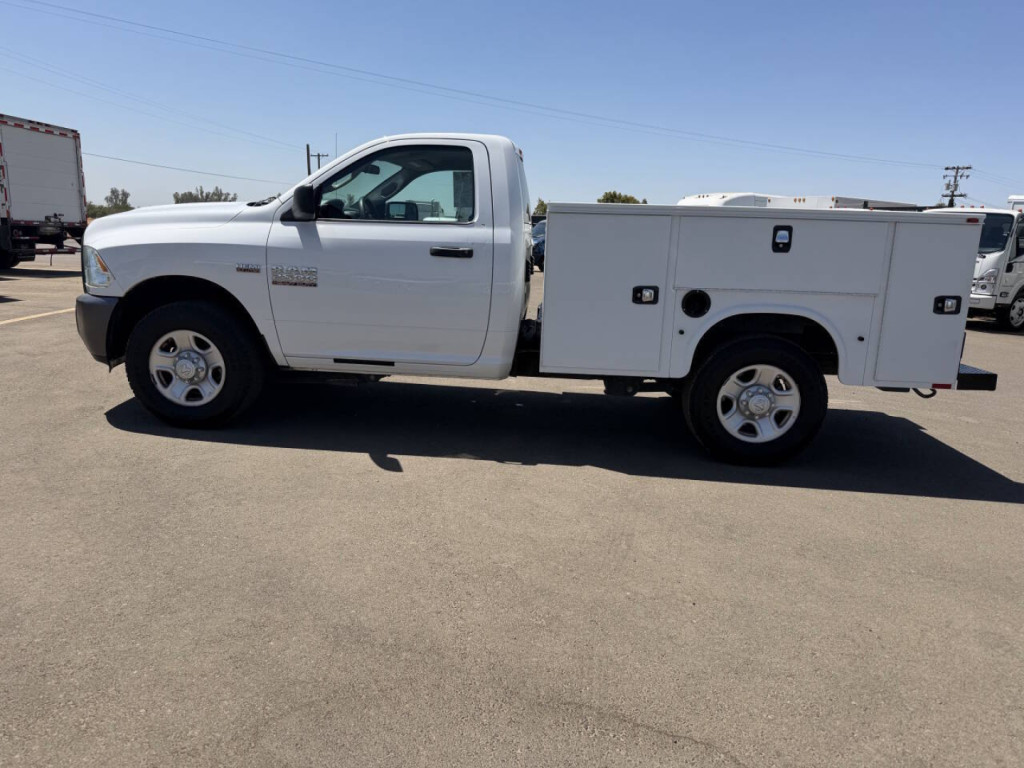
The body matters as much as the cab and engine. A good service body should have usable compartment layout, secure latches, solid shelving, and enough room for reels, fluids, fittings, and power tools without overloading one axle. On used units, check door alignment, hinge wear, lock condition, rust around compartment floors, and the state of scuff protection inside the boxes. California fleets often favor white utility bodies with ladder racks, beacon lights, backup cameras, and inverter or PTO-powered accessories. On medium-duty trucks, common upfits include underbody toolboxes, compressors, hydraulic outriggers, welder platforms, and telescopic or articulated cranes. If the truck has a crane, review the boom rating, service records, current annual inspection status, and the condition of the winch, sheaves, and remote controls.
Specs should match the route and the trade. Gas engines are common on pickup-based service trucks because acquisition cost and maintenance can be simpler for urban stop-and-go work, while diesel medium-duty trucks make more sense when the body is heavier and the truck supports crane or compressor duty every day. Pay attention to GVWR, rear axle rating, wheelbase, cab-to-axle dimension, and payload after the body and equipment are installed. A 4x2 truck is typical for paved-road service routes, but some California buyers still need 4x4 capability for utility easements, rural maintenance, or construction access. If the truck will carry a crane or run PTO equipment, confirm transmission compatibility, PTO hours if available, and whether the body installation leaves enough stability and legal payload margin for real-world use.
A used service truck should be evaluated like a tool, not just a vehicle. Look at idle hours, electrical system condition, inverter and auxiliary battery setup, compartment sealing, and how cleanly the upfit was wired. Review tire size and load range, brake condition, suspension wear, and signs of frame modification around the body mounts. In California, emissions compliance, registration class, and commercial use rules can affect operating cost, especially on diesel trucks in regulated metro areas. The best service/utility trucks are the ones that fit the trade precisely: enough enclosed storage to keep technicians efficient, enough chassis to carry the load safely, and enough upfit support to power the equipment the job requires.
Frequently Asked Questions about Used Service/Utility Trucks in California
What is the difference between a service truck and a utility truck?
The terms are often used interchangeably, but most buyers use service truck to describe a work truck with exterior compartments for tools, parts, and field repair equipment, while utility truck can be broader and may include fleet service bodies used by contractors, municipalities, telecom crews, and maintenance departments. A mechanic truck is typically a service truck with a crane, compressor, welder, or heavier-duty upfit. The key buying point is the body layout and equipment package, not just the name.
What GVWR range is typical for a used service/utility truck?
Used service and utility trucks commonly range from light-duty 3/4-ton and 1-ton chassis around 9,000 to 10,000 pounds GVWR up to Class 5 and Class 6 trucks in the 19,500-pound range and beyond. Pickup-based units are popular for lighter service routes and lower operating costs. Medium-duty chassis are a better fit when you need larger compartment bodies, higher payload, crane capability, or onboard compressors and generators.
What should I inspect on a used utility body?
Inspect compartment floors, door hinges, seals, latches, locks, and shelving first because body condition directly affects daily usability. Check for corrosion, cracked welds, bent box openings, and signs that the body has been overloaded. Look underneath at body mounts, frame attachment points, and underbody boxes. If the truck has electrical accessories, confirm all work lights, strobes, inverters, outlets, and battery isolators operate correctly and that the wiring is protected and professionally routed.
Are gas or diesel engines better for service trucks?
Gas engines are often a practical choice for lighter service trucks that run local routes, idle at jobsites, and do not need high continuous torque for heavy PTO loads. Diesel engines become more attractive as chassis size, payload, and equipment demands increase, especially on medium-duty trucks with cranes, compressors, or higher daily miles. The better engine choice depends on body weight, duty cycle, emissions requirements, and how much auxiliary equipment the truck is expected to power.
What matters most if the truck has a crane or compressor?
Focus on the complete working system, not just the truck mileage. Confirm crane capacity, boom length, stability equipment, PTO operation, and maintenance history. Check hydraulic lines, outriggers, winch function, hook condition, and any required inspection records. For compressors, verify output, PTO engagement, service history, and air system condition. A clean chassis does not make up for neglected auxiliary equipment, because the upfit often drives the truck's value and its ability to perform on the job.