
New 2026 Service/Utility Trucks For Sale
Shop new 2026 service and utility trucks built for field repair, mobile maintenance, crane work, compressors, and organized jobsite support.
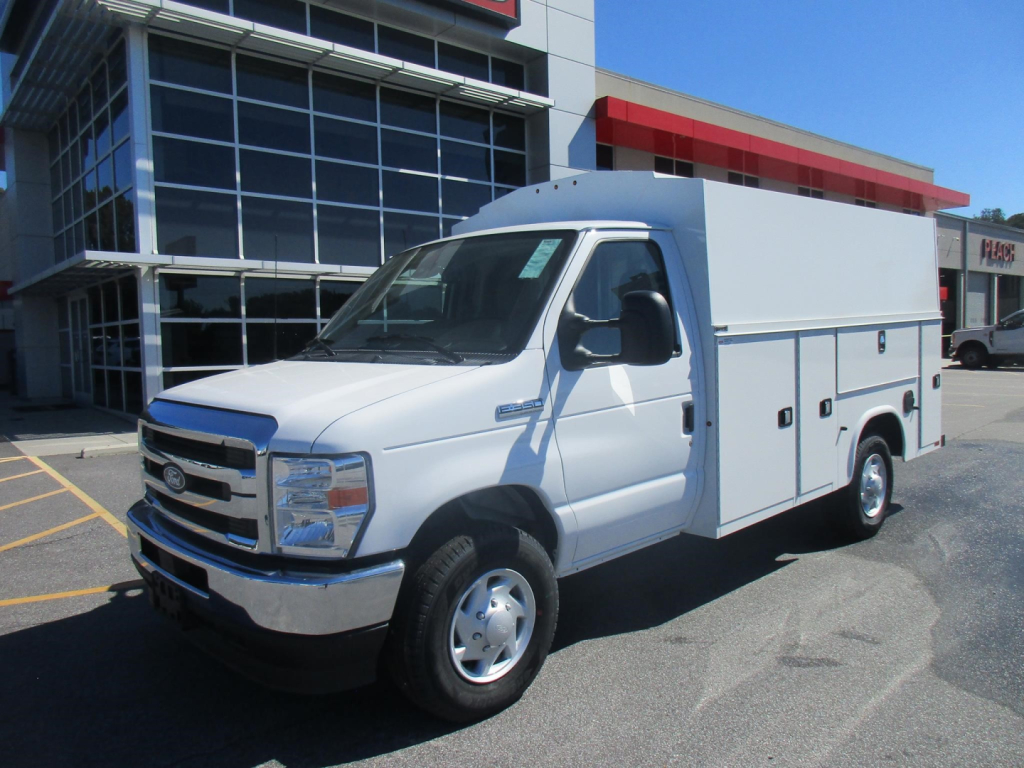
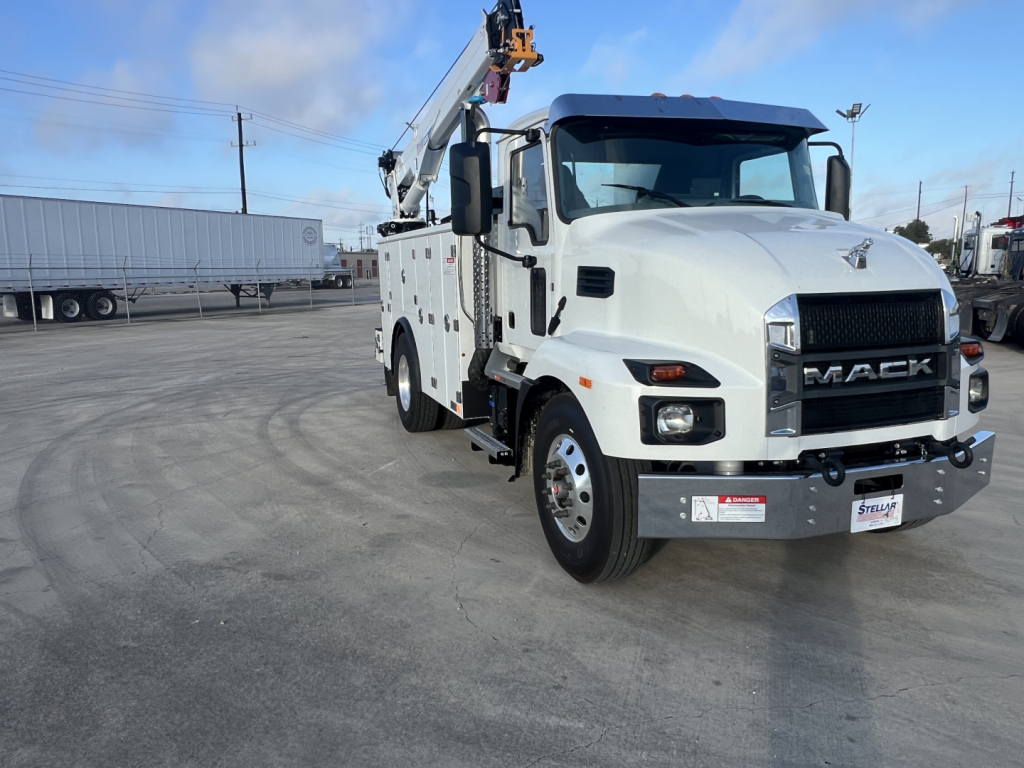
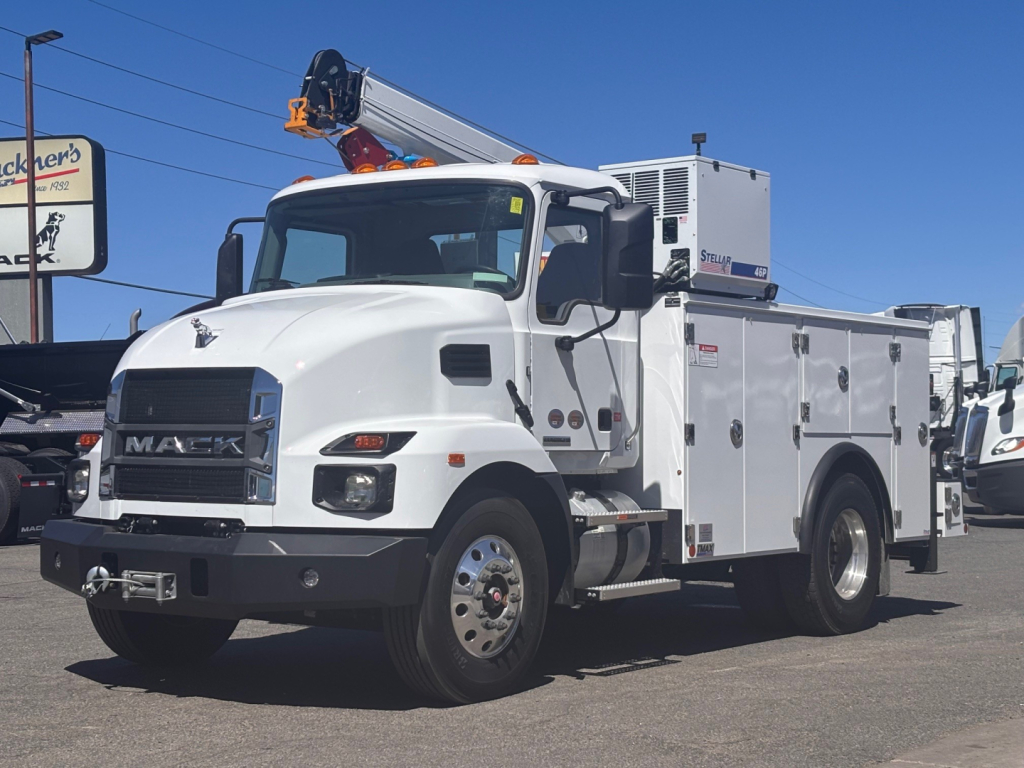
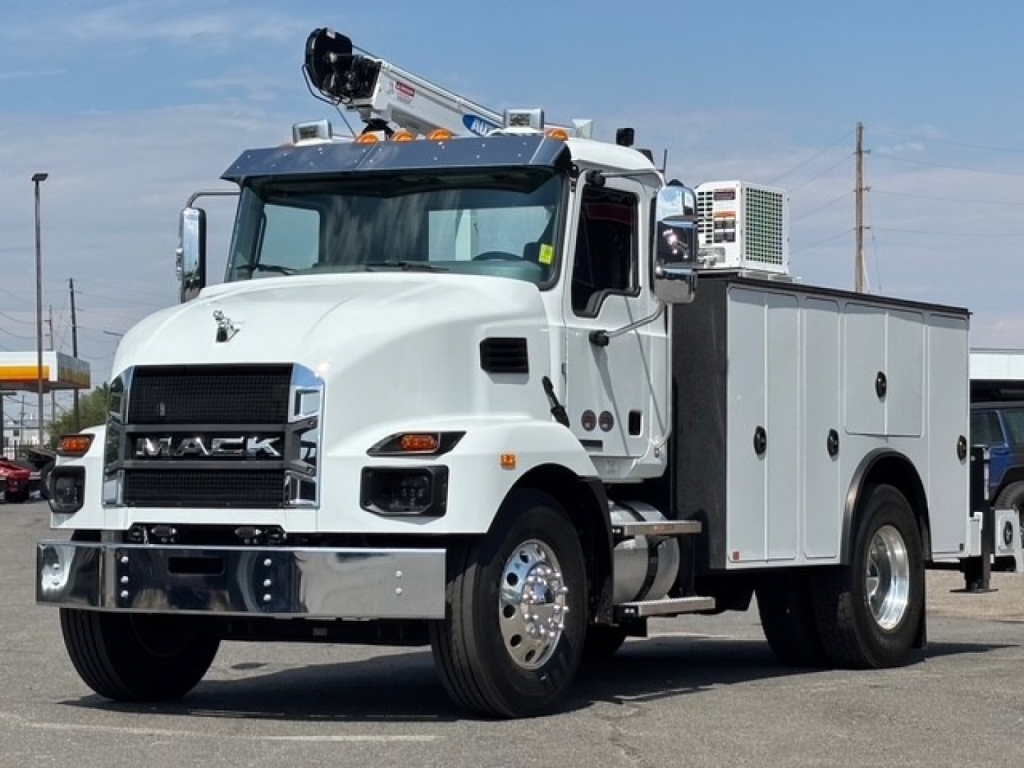
Selling a new 2026 service/utility truck? List your new 2026 service/utility truck for sale and reach thousands of commercial buyers.
New 2026 Service/Utility Trucks
A typical 2026 service truck in this class rides on a Class 6 or Class 7 chassis with diesel power, an automatic transmission, and front and rear axle ratings selected around body weight, crane load, tools, fluids, and parts inventory. Common powertrains include medium-duty diesel engines in the 280 to 300 horsepower range paired with Allison automatics for predictable low-speed control and easier operation in stop-and-go jobsite conditions. Mechanics bodies from builders such as Stellar and Palfinger are often configured with tall side packs, reinforced work decks, internal drawer systems, and compartment lighting. Many units add air compressors, welders, inverter systems, work lights, backup cameras, and winch bumpers. If a crane is included, pay close attention to rated capacity, hydraulic reach, boom elevation range, rotation, outriggers, and stability requirements with the body fully loaded.
The best spec depends on how the truck earns money. Field service for heavy equipment usually calls for a stronger crane, a larger compressor, and enough drawer and bin space to carry wear parts, hoses, fittings, and diagnostic tools without overloading the rear axle. Utility and municipality work often prioritizes secure compartmentation, reliable PTO performance, and a manageable overall GVWR for registration and driver qualification reasons. Wheelbase matters because it affects body length, turning radius, bridge law compliance, and crane placement. Suspension choice also matters. Air-ride can improve ride quality for tools and equipment, while spring setups may appeal to fleets that want simplicity and lower maintenance.
A smart comparison between new 2026 service and utility trucks goes beyond horsepower. Look at usable payload after the body and crane are installed, compartment dimensions, crane chart details, compressor CFM and pressure, electrical system capacity, and how easily technicians can access tools from the curbside and streetside. Also review frame reinforcement, PTO compatibility, tie-down points, bumper and towing options, and whether the truck is derated for a specific operating requirement. For buyers focused on uptime, the strongest value usually comes from a chassis and body combination that fits the technician's daily workflow, carries the right inventory without wasting weight, and provides enough lifting and air power to complete common repairs in the field.
Frequently Asked Questions about New 2026 Service/Utility Trucks
What is the difference between a service truck and a utility truck?
In the medium-duty market, the terms are often used interchangeably, but service truck usually refers to a mechanic-style body built for field repair with compartments, a work deck, and often a crane and compressor. Utility truck can refer more broadly to any vocational truck with enclosed side compartments for tools, materials, and mobile jobsite support. The actual body layout and installed equipment matter more than the label, so buyers should compare crane prep, storage design, payload, and PTO-driven accessories.
What chassis class is most common for a new service or utility truck?
Most mechanic and utility body trucks are built on Class 5 through Class 7 chassis, with Class 6 and Class 7 especially common when a crane, compressor, and heavy tool load are involved. The right class depends on the finished curb weight of the upfit, expected payload, and any driver licensing or registration limits the fleet needs to manage. A body and crane package can consume a large portion of the available GVWR, so axle ratings and real payload capacity should be verified on the completed build, not just the bare chassis.
How much crane capacity do I need on a mechanic truck?
Crane size should be based on the heaviest components the technician lifts in the field and the radius at which those lifts occur. A truck that only handles light service parts may need far less capacity than a field repair unit pulling engines, final drives, or hydraulic components from construction equipment. Buyers should read the load chart, not just the headline maximum rating, because lifting capacity drops as reach increases. Outrigger spread, body reinforcement, and the truck's loaded stability are just as important as the crane's advertised peak number.
Which specs matter most when comparing new 2026 service trucks?
The most important specs are finished GVWR, front and rear axle ratings, usable payload, body dimensions, compartment configuration, crane rating and reach, compressor output, and PTO compatibility. Engine horsepower and transmission model matter, but they do not tell you whether the truck can legally and safely carry the intended load every day. Buyers should also compare wheelbase, suspension type, frame reinforcement, work lighting, inverter or welder provisions, and how the service body is laid out for technician efficiency.
Are diesel engines and automatic transmissions standard in this category?
They are the dominant configuration in new medium-duty service and utility trucks because they deliver the torque, durability, and low-speed control needed for vocational work. Diesel engines in the mid-200 to 300 horsepower range are common, and Allison automatic transmissions remain popular for their reliability and ease of use in stop-and-go operation, jobsite maneuvering, and PTO-driven applications. The exact engine and transmission pairing should still be matched to terrain, payload, and how much idling or accessory operation the truck will see.