
Service/Utility Trucks For Sale in California
Browse service and utility trucks for sale in California, including mechanic bodies, cranes, compressors, PTO setups, and secure tool storage.

Selling a service/utility truck? List your service/utility truck for sale and reach thousands of commercial buyers.
Service/Utility Trucks in California
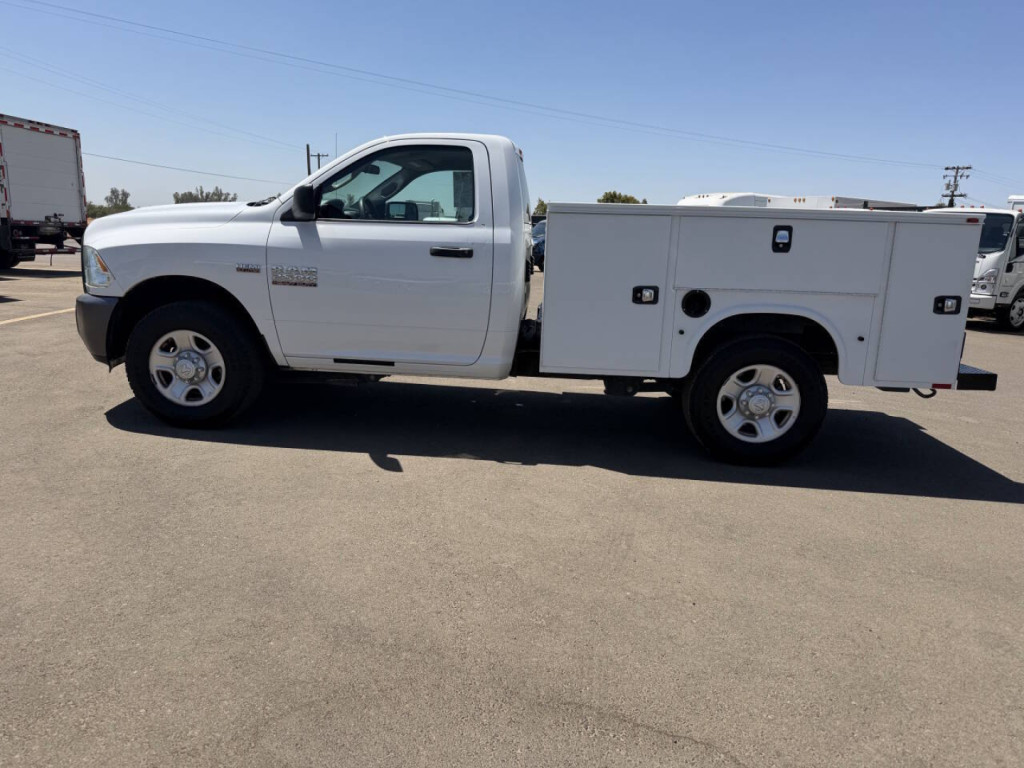
The body and onboard equipment matter more than the badge on the hood. Buyers usually start with compartment layout, crane rating, compressor type, generator output, and whether the truck has a PTO-driven or underdeck system. A typical service body includes multiple side compartments, locking tool storage, work benches or slide-outs, ladder or material racks, and rear lighting for night work. Mechanic truck configurations often add an electric or hydraulic crane, stabilizers, an air compressor, hose reels, welders, and inverter or generator packages. California buyers should pay close attention to how the body is wired and protected, especially if the truck will spend time on utility easements, urban streets, or dusty off-pavement jobsites where lighting, beacon visibility, compartment sealing, and corrosion protection affect daily uptime.
Chassis specification should match payload and duty cycle. Front axle capacity, rear axle rating, suspension type, brake setup, transmission choice, and GVWR all affect how well a service truck handles a fully loaded body with parts bins, fluids, compressors, and crane gear onboard. If the truck includes a crane, confirm boom reach, maximum lifting capacity, and the stability system in use, including outriggers or stabilizers. If it includes a compressor, verify output in CFM and PSI and confirm whether it is PTO-driven, hydraulic, gas-powered, or underdeck-mounted. Service trucks used in California fleets also benefit from clear documentation on emissions equipment, PTO installation, idle hours, and accessory maintenance, since auxiliary systems can be just as important as engine mileage.
A good service or utility truck should be evaluated as a complete working platform, not just a chassis with boxes. Check compartment floors, latch condition, door seals, harness routing, body mount integrity, crane inspection records, hydraulic leaks, and signs of overloading around the rear suspension and frame. Interior cab condition matters too, especially for fleets that use these trucks as mobile workstations. For buyers comparing multiple listings, the best value usually comes from a truck with the right service body layout, a proven PTO and auxiliary package, and enough remaining capacity to handle tools and field repairs without running overloaded every day.
Frequently Asked Questions about Service/Utility Trucks in California
What is the difference between a service truck and a utility truck?
The terms overlap, but a service truck usually refers to a mechanic-style truck equipped for field repair, parts storage, air supply, and often a crane. A utility truck can describe a broader range of vocational bodies used by electrical, telecom, municipal, and maintenance crews. The key difference is the body and equipment package. Some utility trucks are focused on enclosed storage and work access, while service trucks are often built around repair capability with compressors, PTO systems, cranes, and heavy tool storage.
What should I look for in a used service or utility truck?
Start with the body, not just the engine. Check compartment condition, lock function, rust or corrosion, body mounts, lighting, and signs of frame stress near the rear. Then inspect all auxiliary equipment such as the crane, PTO, compressor, generator, hose reels, welders, and stabilizers. Ask for service records on both the chassis and the upfit. A truck with moderate mileage and well-maintained vocational equipment is often a better buy than a lower-mile unit with neglected hydraulics, electrical issues, or worn compartments.
How important is PTO equipment on a service truck?
PTO equipment is central on many service trucks because it powers the compressor, hydraulic crane, winch, or other auxiliary systems directly from the transmission. A properly installed PTO setup can be more efficient and durable than separate engine-driven accessories, but it needs to match the transmission, operating RPM range, and duty cycle. Buyers should confirm when the PTO was installed or serviced, how it is controlled in-cab, and whether the truck has any operational issues under load.
What crane capacity is common on mechanic and service trucks?
Crane sizes vary widely based on chassis class and application, but many mechanic truck bodies carry cranes in the roughly 2,000 to 6,000 pound class, with heavier units going beyond that on larger chassis. Capacity alone does not tell the full story. Buyers should review boom length, lift chart, rotation type, stabilizer design, and how much lifting capacity remains at full reach. Matching the crane to the actual field work is more important than choosing the biggest rating on paper.
Are California-specific factors important when buying a service truck?
Yes. California buyers should pay close attention to emissions compliance, especially on diesel medium-duty trucks, along with registration requirements, idling practices, and the condition of emissions components. Operating environment also matters. Trucks working in coastal regions may show more corrosion around body hardware and electrical connectors, while inland and desert use can be hard on seals, paint, and cooling systems. For vocational trucks, local compliance and environmental exposure can affect long-term operating cost as much as engine condition.