
Freightliner Rolloff Trucks For Sale in Texas
Shop Freightliner rolloff trucks for sale in Texas. Compare M2 specs, hoist setups, GVWR, axle options, and refuse-ready configurations.
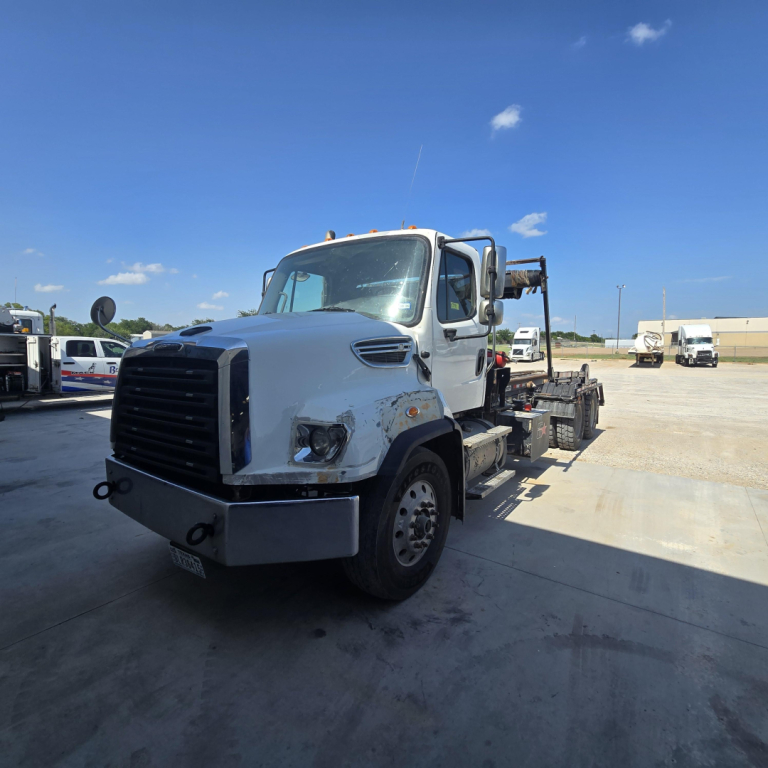

Have freightliner rolloff truck to sell? List it here to reach thousands of buyers.
Freightliner Rolloff Trucks in Texas
The hoist package matters as much as the chassis. On a Freightliner rolloff truck, buyers should confirm whether the unit is a cable hoist, hook hoist, or hooklift style setup, then match that system to the container fleet already in service. Key details include hoist capacity, rail length, hook height, reeving configuration, and clear body length. PTO operation, pump condition, hydraulic leaks, and cycle speed all affect uptime. For Texas operators running frequent loads in heat and dust, hydraulic hose condition, reservoir cleanliness, and wear at the rollers, saddles, and hinge points deserve a close look. An operable tarp system, pintle provision, and backup camera can also matter depending on route and transfer station requirements.
Freightliner vocational trucks are often spec'd with Cummins diesel power, though some rolloff units were built with alternative fuel engines such as CNG. Transmission choice is typically Allison automatic for stop-and-go work, driver consistency, and PTO integration. Buyers should verify GVWR, bridge spacing, suspension rating, rear axle ratio, and front axle capacity before comparing prices across listings. If the truck will spend time on transfer routes or highway pulls between disposal sites, horsepower and torque become more important than they are on short urban container service. Frame condition, crossmember integrity, and evidence of past body or hoist reinforcements should be inspected carefully, especially on older refuse and scrap applications.
In Texas, climate and duty cycle put extra emphasis on cooling system condition, air conditioning performance, and brake system health. A truck that spends its life in commercial roll-off trash service can show hard wear in the cab, suspension, and body mounting points even if it still runs well. Maintenance records, engine hours, PTO hours if available, and signs of regular greasing are often better indicators than odometer mileage alone. Buyers comparing Freightliner rolloff trucks for sale should focus on legal payload, hoist compatibility, service history, and how well the chassis spec fits the exact container size and route profile they plan to run.
Frequently Asked Questions about Freightliner Rolloff Trucks in Texas
What is the difference between a Freightliner rolloff truck and a hooklift truck?
A rolloff truck traditionally uses a cable hoist system to load and unload roll-off containers, while a hooklift uses a hydraulic hook arm to pick up bodies or bins with a standardized hook bar. Some listings use the terms loosely, so buyers should confirm the actual hoist style on the truck. That decision affects container compatibility, loading speed, versatility, and replacement body cost.
Which Freightliner models are most common for rolloff applications?
The Freightliner M2 106 and M2 112 are among the most common chassis used for rolloff work. The M2 106 is often chosen for lighter or more urban applications where maneuverability matters, while the M2 112 is better suited to heavier vocational specs with higher GVWR, larger hoists, and tandem-axle configurations. Final suitability depends on axle ratings, frame spec, and the installed hoist, not just the model badge.
What specs matter most when buying a used Freightliner rolloff truck?
The most important specs are GVWR, axle configuration, hoist type, hoist capacity, usable rail length, engine rating, transmission, and suspension capacity. Buyers should also verify PTO operation, hydraulic condition, frame integrity, brake wear, tire condition, and whether the tarp system works. On a used rolloff truck, compatibility with your existing container sizes and body style is just as important as engine or chassis brand.
Are Freightliner rolloff trucks a good fit for Texas waste and debris routes?
Freightliner rolloff trucks are widely used in Texas because they offer strong parts support, vocational chassis availability, and configurations that suit waste, demolition, scrap, and municipal work. Texas operators should still pay close attention to cooling system performance, AC operation, and hydraulic condition because heat and long duty cycles can expose weak points quickly. The best fit is a truck spec'd for the route, payload, and container size you actually run.
Is mileage the best way to judge a used rolloff truck?
Mileage is only one part of the picture on a vocational truck. A rolloff truck may have relatively moderate miles but very high idle time, PTO use, and stop-start wear from loading cycles. Maintenance history, engine hours, hydraulic system condition, frame wear, hoist performance, and brake and suspension condition usually tell you more about remaining service life than odometer reading alone.