
Freightliner Rolloff Trucks For Sale
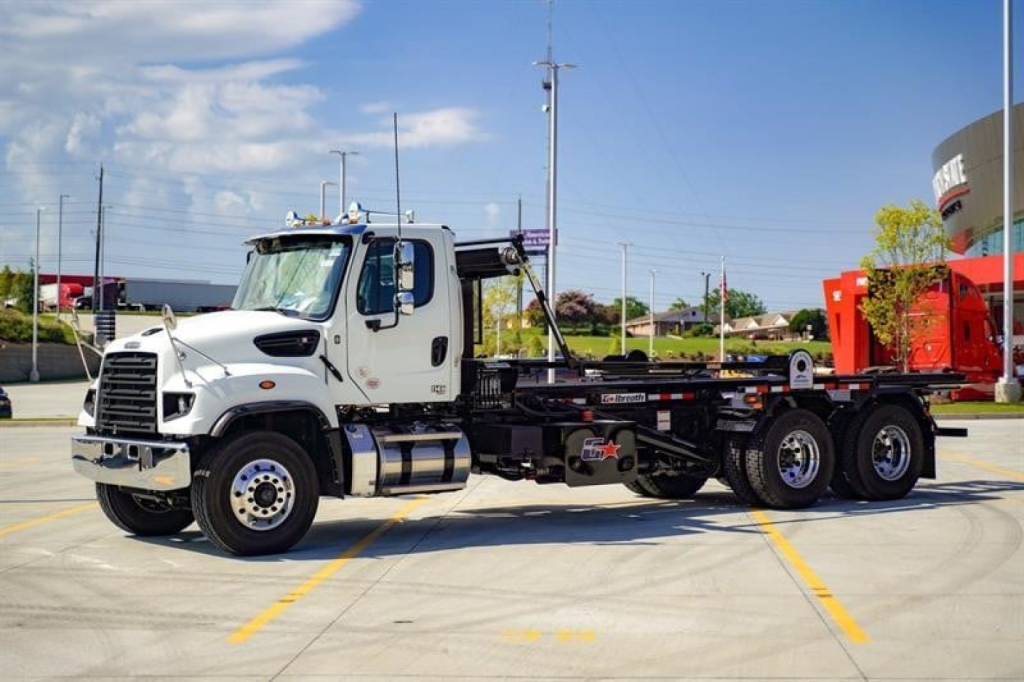
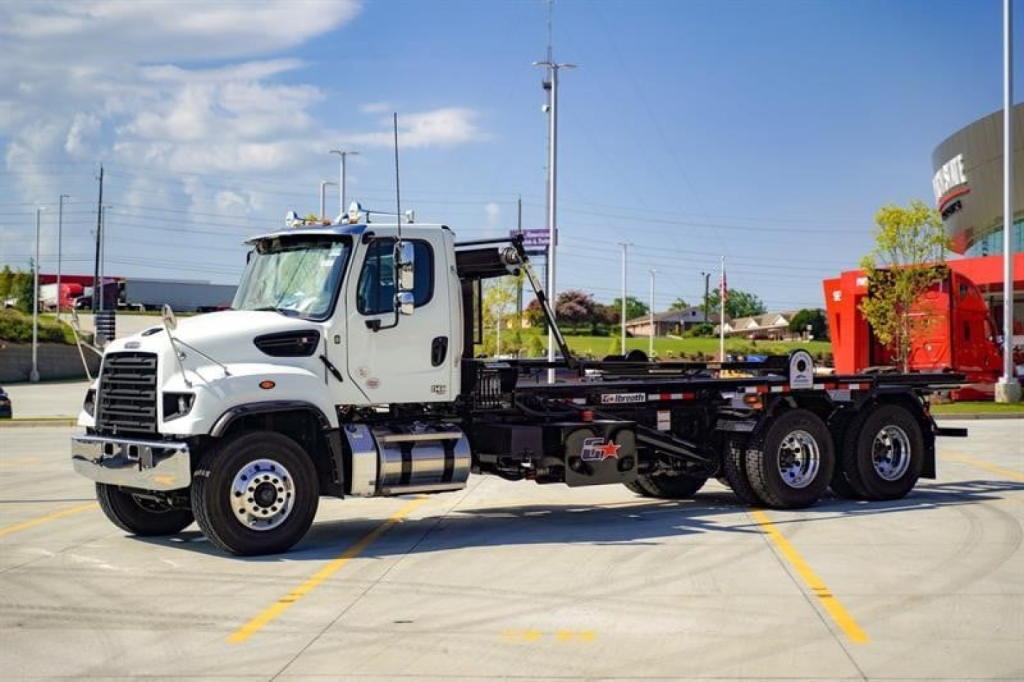
Freightliner rolloff trucks on M2 106 or 114SD chassis with cable hoist or hooklift, 60k-75k lb ratings, Detroit or Cummins power, tandem or tri-axle.
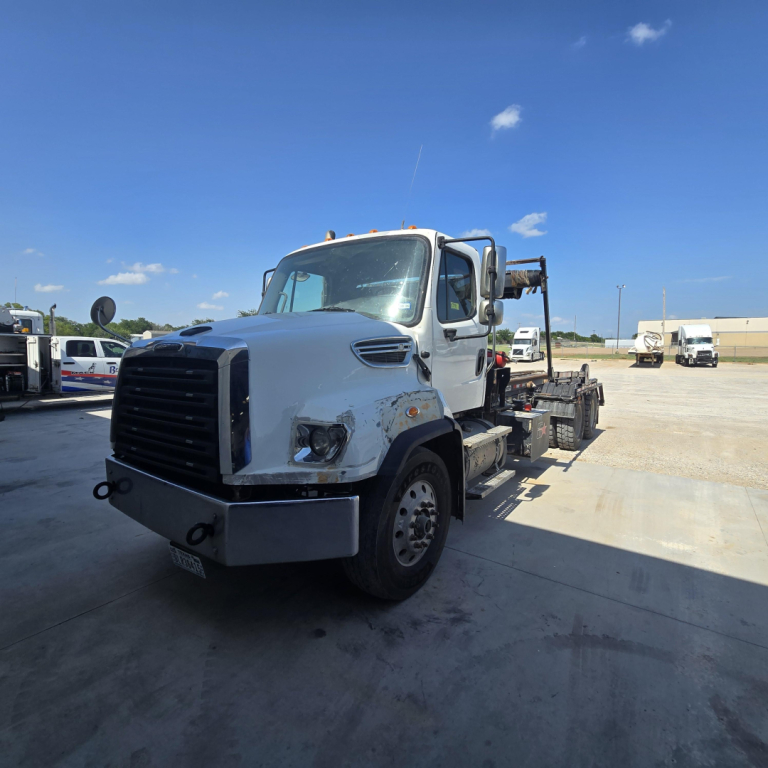

Selling a freightliner rolloff truck? List your freightliner rolloff truck for sale and reach thousands of commercial buyers.
Freightliner Rolloff Trucks
Chassis choice sets the ceiling for GVWR and durability. Freightliner M2 106 is common for municipal and light demo duty with Cummins L9 power and Allison 3000 RDS. The 108SD and 114SD move into severe duty with higher RBM frame rails, double-frame options, Detroit DD13 or Cummins X12 power and Allison 4500 RDS for higher PTO torque. Set-forward steer axles on 114SD help with bridge weight rules and front axle loading under heavy hoists. Typical specs include 16k to 20k front axles, 40k to 46k rears, and liftable pusher or tag axles in weight-restricted regions. Gear ratios in the mid 4s balance startability with highway segments. Double-frame and heavy suspensions increase durability but eat into payload, so compare tare weights carefully.
Hydraulics and controls determine cycle times and driver effort. A transmission PTO on an Allison with a 30 to 50 gpm pump usually delivers consistent hoist speed at curb idle. Look for in-cab electric-over-hydraulic controls, hoist-up and PTO interlocks, back-up alarms, and optional radio remotes. Tarp systems such as Pioneer, Donovan or Roll-Rite protect loads and reduce spillage fines, with arm and flip styles most common. For traction and site work, drivers value full lockers or inter-axle diff locks, steel spring or walking beam suspensions, 315 steer tires and 11R22.5 drives. Safety and uptime add-ons worth pricing include load scales, camera systems, heated mirrors, LED work lights, on-board diagnostics and aftermarket auto-lube.
Application and region shape the right wheelbase, CA and axle plan. A 22 to 24 ft rail typically wants a CA in the 186 to 210 in range and wheelbases that often land between 250 and 300 in, depending on bumper-to-back-of-cab, axle sets and hoist model. Northeast and Great Lakes operations often run tri-axle or quad setups to meet bridge formulas and maximize legal payload on short hauls. California buyers should confirm engine model year, CARB compliance and aftertreatment health. For used units, inspect subframes, hoist pins and sheaves, wear pads, crossmembers, frame liners near the hoist saddle, and look for hydraulic leaks. A well-spec’d tandem 114SD with a 60k hoist, double frame and tarp can still deliver 18 to 22 tons of payload depending on container and region. Freightliner rolloff trucks balance parts availability, dealer support and vocational ergonomics with the versatility needed for waste, recycling, demolition and scrap fleets.
Frequently Asked Questions about Freightliner Rolloff Trucks
Which Freightliner chassis is best for a rolloff application?
For lighter municipal and transfer work, the M2 106 with a Cummins L9 and Allison 3000 RDS is common and cost efficient. For heavier demo, scrap or off-road site work, the 108SD or 114SD provides higher RBM frame rails, double-frame options, front axle ratings up to 20k, rears to 46k, and Allison 4500 RDS for higher PTO torque. Legacy 122SD units appear in the market and suit extreme duty but carry more tare weight.
Should I choose a cable hoist or a hooklift on a Freightliner rolloff truck?
Cable hoists in the 60k to 75k class handle the widest range of 20 to 26 ft boxes and are preferred for demolition and scrap because they tolerate abuse and heavy loads. Hooklifts, typically 20k to 30k with a 54 in hook height, excel at fast swaps, precise body placement and multi-application fleets using flatbeds, tanks or service bodies. Cable systems usually win on maximum capacity and container availability, while hooklifts win on speed and versatility across body types.
What axle configuration and wheelbase work for 22 to 24 ft containers?
A common setup is a 16k to 20k steer axle with 40k to 46k tandem rears, often with a 13k to 20k pusher or tag in bridge law states. CA often falls between 186 and 210 in for 22 to 24 ft rails, with overall wheelbases roughly 250 to 300 in depending on bumper-to-back-of-cab and hoist geometry. Verify approach angle, tail clearance and frame overhang with your chosen hoist.
What transmission is best for stop-and-go refuse and demo routes?
Allison 3000 or 4500 RDS automatics dominate because they pair well with transmission PTOs, offer smooth low-speed control and reduce driver fatigue. Eaton manual or UltraShift units can work in lighter duty or longer haul use, but in tight urban routes or muddy jobsites, the Allison’s torque converter and PTO packaging are usually the most productive and durable choice.
How much payload can I expect from a Freightliner rolloff truck?
Payload depends on chassis, hoist rating, frame reinforcement, axle count and regional weight limits. A well-spec’d tandem 114SD with a 60k cable hoist, double frame and tarp system often nets 18 to 22 tons. Tri-axle or quad configurations can add legal payload in bridge states, but every additional axle, liner and heavier suspension increases tare, so confirm scale tickets on comparable builds.