
Refrigerated Trucks For Sale in Missouri
Refrigerated trucks for sale in Missouri: compare cooling capacity, payload, liftgates, and used-unit inspection needs for demanding food delivery routes.
Selling a refrigerated truck? List your refrigerated truck for sale and reach thousands of commercial buyers.
Refrigerated Trucks in Missouri
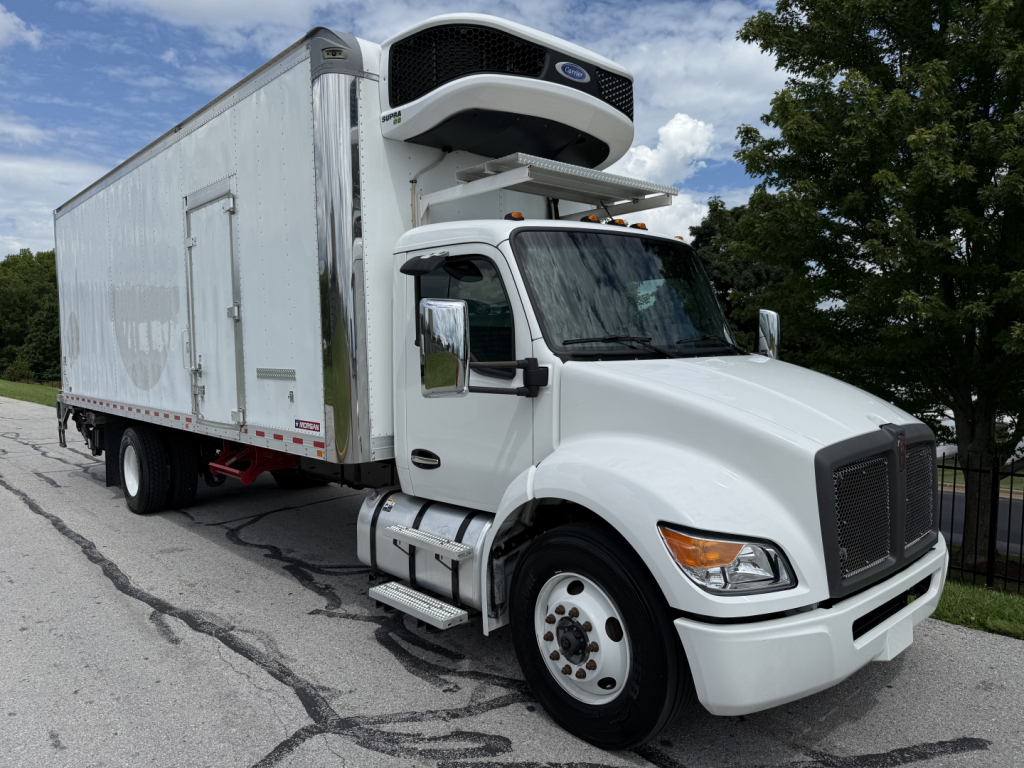
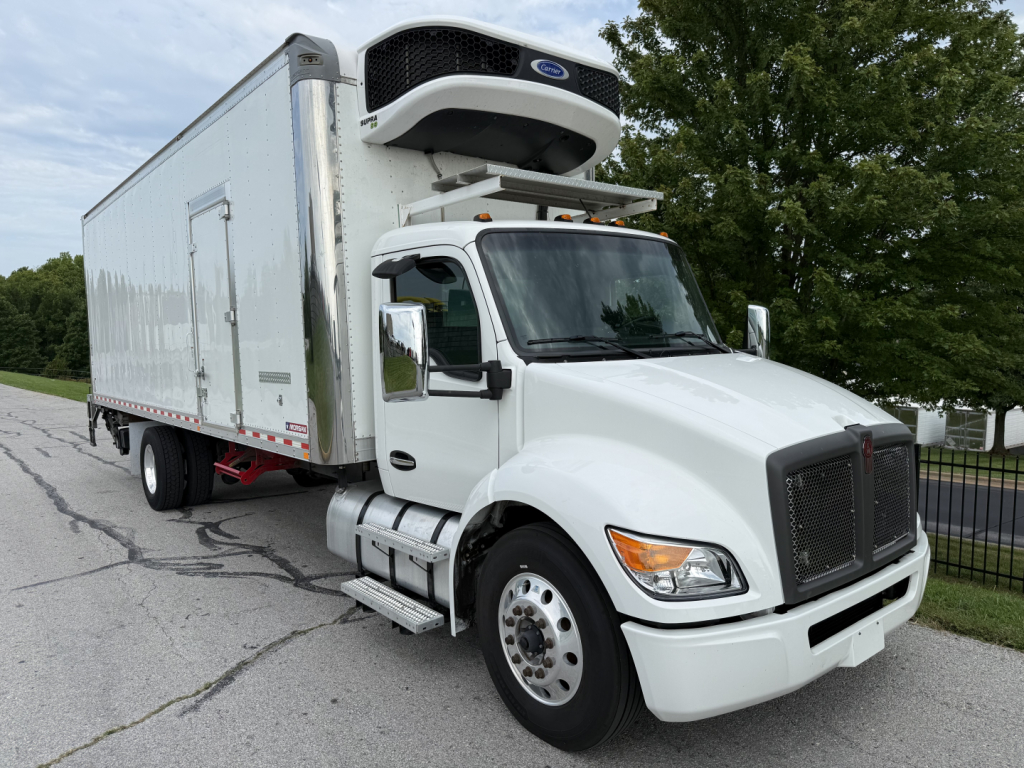
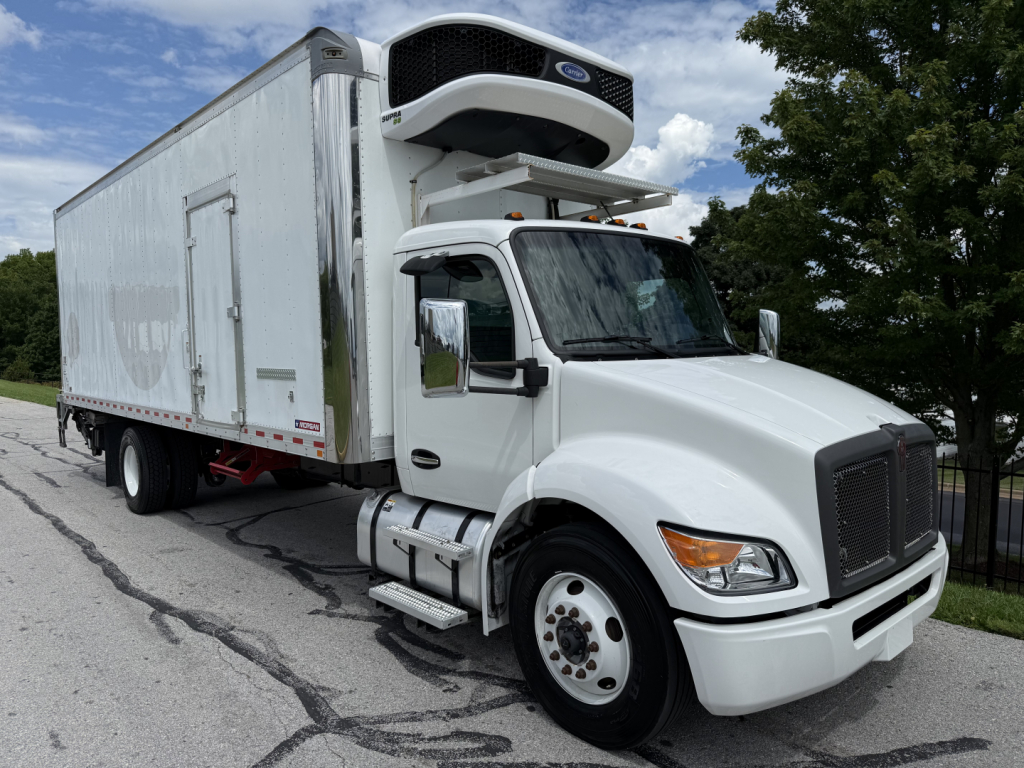
Common chassis choices include Freightliner M2, International MV, Kenworth T280/T380, Peterbilt 536/537, and Isuzu N-Series trucks, spanning conventional and cabover layouts. Diesel medium-duty chassis commonly pair Cummins or PACCAR engines with Allison automatics; Isuzu cabovers also offer gasoline configurations. Choose wheelbase and turning radius for delivery stops, and match axle gearing and transmission capacity to loaded regional work. Compare insulated interior dimensions rather than advertised exterior length. Evaporators, insulation, and airflow clearance reduce usable cube, and pallet placement must leave the return-air path open.
Usable payload starts with the completed truck's empty weight, not the bare chassis rating. The insulated body, refrigeration equipment, liftgate, fuel, driver, and accessories all consume carrying capacity. Dense meat or dairy loads may justify tandem rear axles even when a single-axle truck has enough cargo space. Missouri axle limits, registered weight, and posted bridges can restrict loads below the truck's GVWR. Match liftgate capacity to the heaviest loaded pallet plus handling equipment, and check platform dimensions and load-center requirements.
Used reefer trucks need separate chassis, body, and refrigeration inspections. Missouri winter road salt warrants close checks of frame rails, crossmembers, brake lines, liftgate mounts, and electrical connections. Inspect door seals, floor joints, drain openings, and damaged wall panels for moisture intrusion and insulation deterioration. Test cooling performance and temperature recovery after door openings, and review refrigeration service records alongside chassis ECM data. Many 2007-era and newer diesel engines use DPFs, while many 2010-era and newer engines add SCR and DEF; verify the actual engine certification and hardware. Older units deserve particular scrutiny of compressor condition, coolant hoses, charging systems, and emissions maintenance history.
For a new truck, specify body insulation, door arrangement, cargo restraints, electrical capacity, and refrigeration performance before approving the build. Confirm completed axle weights and payload after all equipment is installed. Chassis, body, refrigeration unit, and liftgate warranties may have different terms and service networks, which matters on statewide delivery routes. Qualifying new heavy truck chassis and bodies can incur the 12% federal excise tax; obtain an itemized tax determination rather than assuming every refrigerated straight truck is taxable.
Frequently Asked Questions about Refrigerated Trucks in Missouri
Should I choose self-powered or engine-driven refrigeration for a Missouri delivery truck?
A self-powered refrigeration unit can keep cooling a Missouri reefer truck while the chassis engine is shut down. That capability suits long delivery days with frequent engine-off stops. Engine-driven systems can suit smaller trucks, but confirm how cooling continues during unloading. Electric standby can reduce refrigeration engine hours when parked at a facility with the correct electrical connection.
Do I need a CDL to drive a refrigerated truck in Missouri?
A single refrigerated truck rated or operated at 26,001 pounds or more generally requires a Class B CDL in Missouri. A qualifying combination with a trailer over 10,000 pounds generally requires Class A instead. Air brakes do not create a separate CDL class, but a driver with an air-brake restriction cannot operate an air-braked truck. Smaller trucks can still carry commercial-driver qualification requirements.
What axle weight limits apply to refrigerated trucks on Missouri Interstates?
Missouri Interstate limits generally allow 20,000 pounds on a single axle and 34,000 pounds on a tandem, subject to bridge-formula limits. The 80,000-pound gross ceiling does not mean a refrigerated straight truck can legally carry that weight. Chassis ratings, tire ratings, axle spacing, registration, and posted roads can impose lower limits. Evaluate loaded axle weights, not just total truck weight.
Can one refrigerated truck carry frozen and chilled food together?
A multi-temperature body with insulated bulkheads and separate temperature control is the standard solution for carrying frozen and chilled freight together. Confirm that each compartment has adequate cooling capacity and airflow, rather than relying on a partition alone. Missouri winter routes may also require heating capability in the chilled compartment. Compartment dimensions and separate access doors should match the delivery sequence.
What temperature and sanitation records should a refrigerated food truck keep?
Keep temperature records, cleaning records, and pretrip refrigeration checks appropriate to the shipper's requirements for the refrigerated food truck. For food covered by FDA's Sanitary Transportation rule, written procedures must address applicable temperature control and sanitation responsibilities. A dashboard temperature display alone does not document the entire trip. Confirm logger accuracy, record retention requirements, and responsibility for reviewing temperature excursions before accepting freight.