
Freightliner Refrigerated Trucks For Sale in Georgia
Browse Freightliner refrigerated trucks for sale in Georgia. Compare M2 reefer specs, body lengths, GVWR, refrigeration units, and delivery features.
Have freightliner refrigerated truck to sell? List it here to reach thousands of buyers.
Freightliner Refrigerated Trucks in Georgia
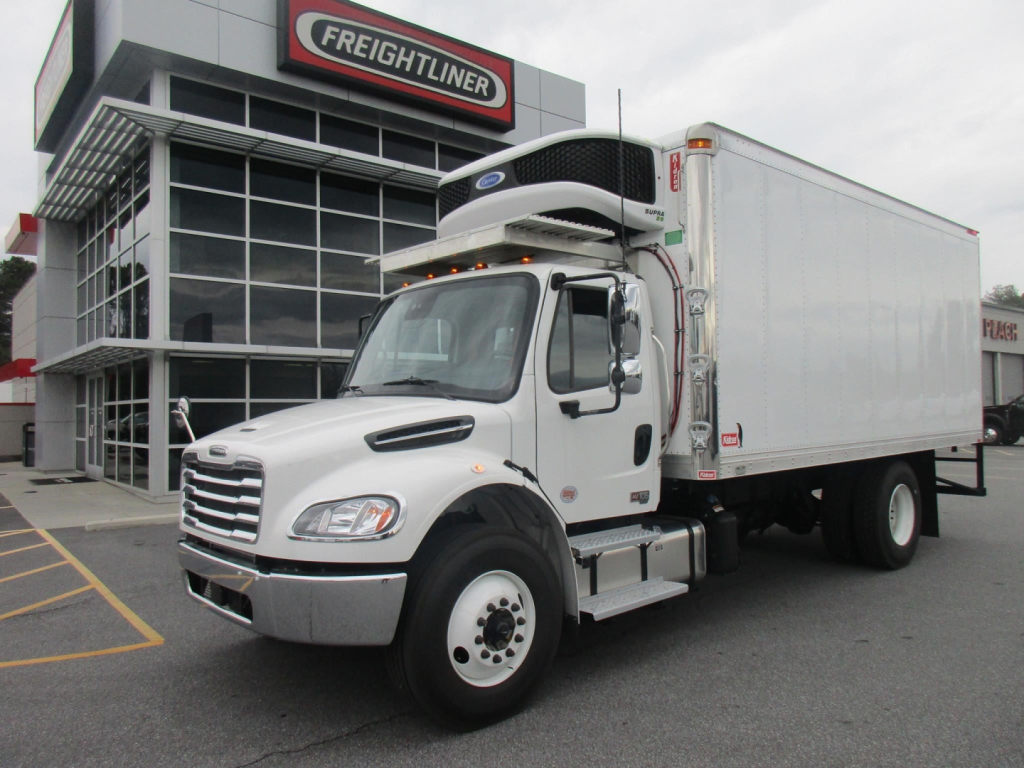
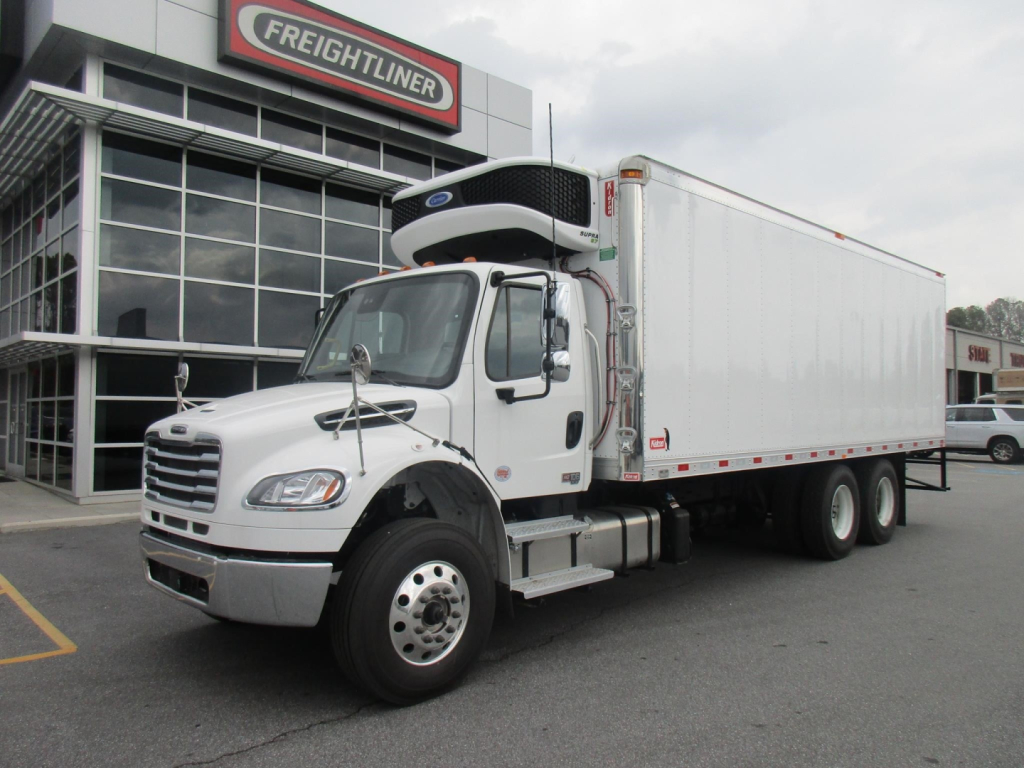
A buyer should first look at body size and chassis class. An 18-foot single-axle reefer on a Class 7 chassis is a practical fit for urban and suburban delivery where dock access, tighter turns, and stop frequency matter more than maximum cube. A 24-foot tandem-axle setup on a heavier GVWR chassis makes more sense when payload, route consolidation, or forklift loading is part of the job. Common specs in this segment include Cummins B6.7 or L9 diesel engines, Allison automatic transmissions such as the 2500HS or 3000HS, and rear axle ratios chosen to balance launch performance with city-route fuel economy. Wheelbase and cab-to-axle dimensions matter because they affect body fit, turning radius, and liftgate or ramp usability at customer stops.
The reefer body deserves as much attention as the truck itself. Buyers should check insulation package, floor construction, door style, interior lighting, E-track placement, scuff protection, and whether the body is built for hand unload, palletized freight, or mixed service. Wood floors with forklift packages are common on heavier applications, while roll-up rear doors and walk ramps help with frequent delivery work. The refrigeration unit should be matched to the cargo profile, ambient temperatures, and pull-down expectations. Carrier Supra units are widely used in this class, and the important questions are operating hours, maintenance history, setpoint stability, and whether the unit is sized for frozen, chilled, or multi-temp service. If the route includes a lot of door openings, pay close attention to recovery time and air management inside the box.
Freightliner reefer trucks also tend to appeal to fleets because service access, parts support, and driver familiarity are strong points. Many late-model examples are equipped with active safety systems such as collision mitigation, lane departure warning, adaptive cruise control, backup cameras, and side object detection, which can be valuable on dense delivery routes. For Georgia buyers, cooling performance in summer heat, idle strategy, fuel capacity, and stop-and-go durability should be part of the evaluation. The best refrigerated truck is not simply the one with the biggest box or highest horsepower. It is the one with the right GVWR, body dimensions, reefer spec, and loading features for the freight being moved every day.
Frequently Asked Questions about Freightliner Refrigerated Trucks in Georgia
What body length is most common for a Freightliner refrigerated truck?
The most common body lengths in this category are usually 18-foot and 24-foot insulated bodies. An 18-foot reefer truck is often the better fit for city delivery, restaurants, medical routes, and tighter loading areas because it is easier to maneuver and park. A 24-foot body offers more cube and can support higher-volume grocery, produce, and wholesale distribution, especially when paired with a tandem-axle chassis and higher GVWR.
What engine and transmission combinations are typical in Freightliner reefer trucks?
Freightliner refrigerated trucks commonly use Cummins B6.7 or Cummins L9 diesel engines with Allison automatic transmissions such as the 2500HS or 3000HS. The B6.7 is often found in lighter single-axle delivery applications, while the L9 is better suited for heavier payloads, larger bodies, and more demanding stop-and-go service. Allison automatics remain popular in reefer work because they are well matched to urban delivery cycles and frequent starts, stops, and backing maneuvers.
How do I choose between a single-axle and tandem-axle Freightliner reefer?
A single-axle Freightliner reefer is usually the right choice when maneuverability, lower operating weight, and easier access to urban stops are more important than maximum payload. A tandem-axle truck is a better fit when the truck carries dense freight, uses a longer body, or needs higher axle ratings and GVWR for route efficiency. The decision should be based on loaded weight, packaging density, dock conditions, and whether the truck will be hand unloaded, ramp unloaded, or forklift loaded.
What should I inspect on the reefer body and refrigeration unit before buying?
Focus on insulation integrity, floor condition, door seals, interior lining, and signs of water intrusion or impact damage. On the refrigeration side, review engine or unit hours, service records, temperature performance, and any history of repairs to compressors, evaporators, or controls. It is also smart to confirm the truck has the right interior setup for the freight, such as E-track, scuff liners, forklift-rated flooring, or a ramp, because those features affect both productivity and long-term body wear.
Are Freightliner refrigerated trucks a good fit for Georgia routes?
Yes, Freightliner reefer trucks are well suited for Georgia delivery work because they are commonly spec'd for local and regional food and cold-chain applications and have broad service support. In a hot and humid market, the important factors are refrigeration capacity, door-seal condition, box insulation, and the truck's ability to handle repeated stops without losing temperature control. Buyers running metro Atlanta or other dense routes should also value visibility, turning radius, and driver-assist systems that reduce risk in traffic.