
2026 Freightliner Refrigerated Trucks For Sale in Georgia
Shop 2026 Freightliner refrigerated trucks in Georgia. Compare M2 106 Plus reefer specs, body sizes, refrigeration units, and GVWR options.
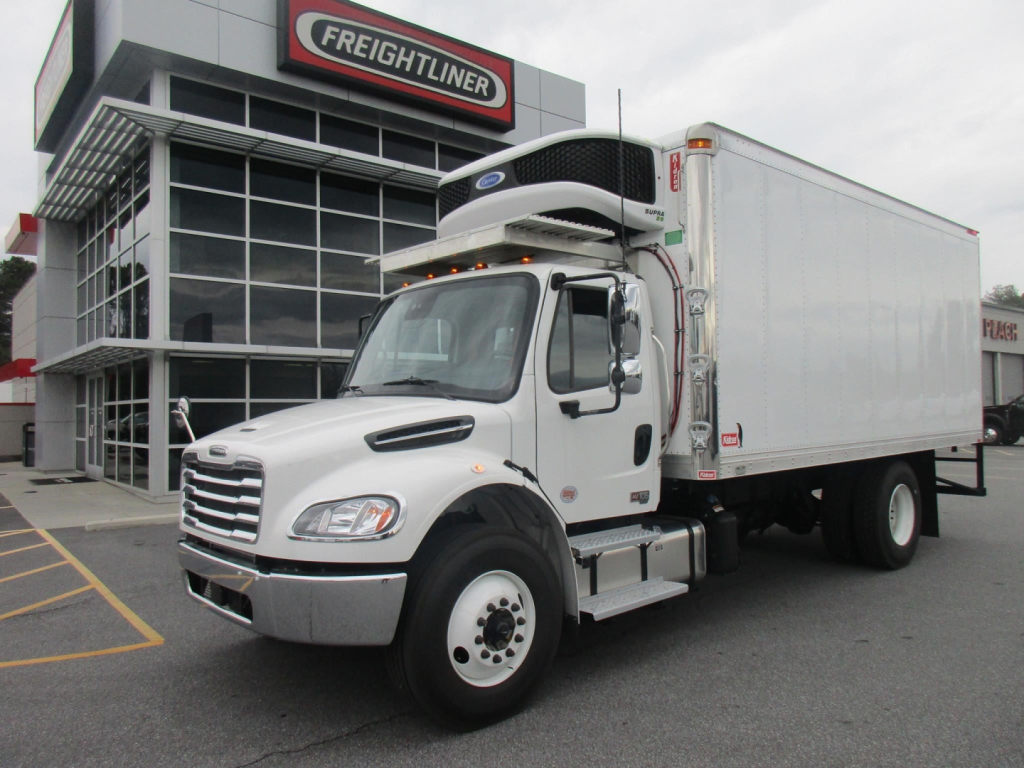
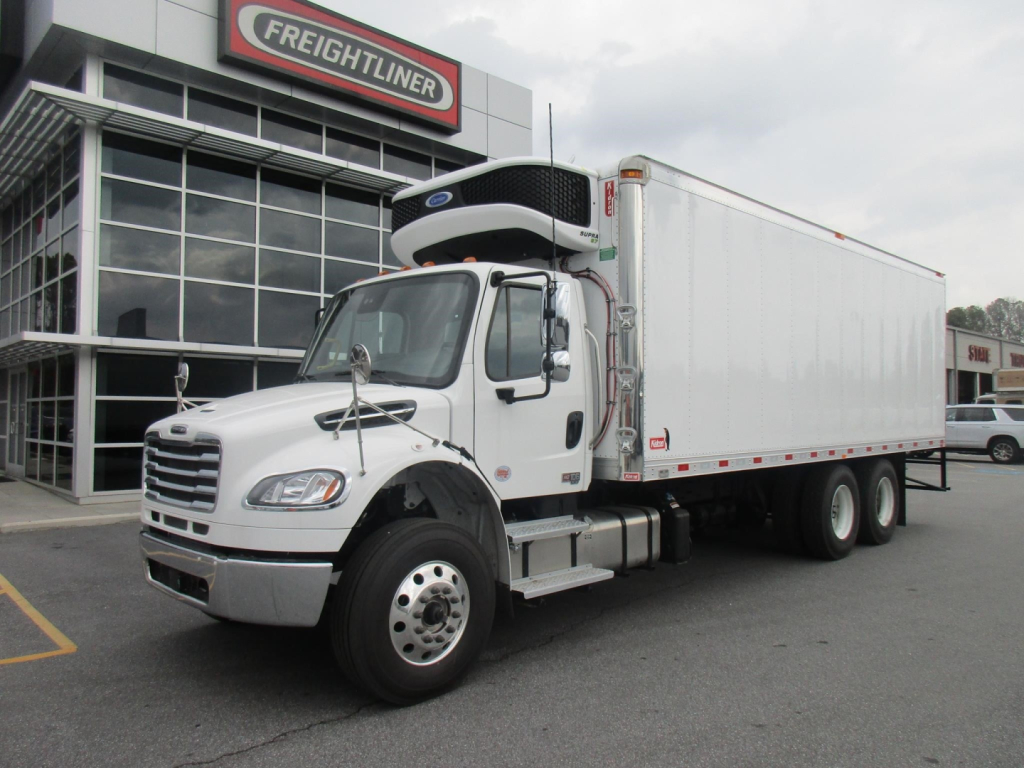
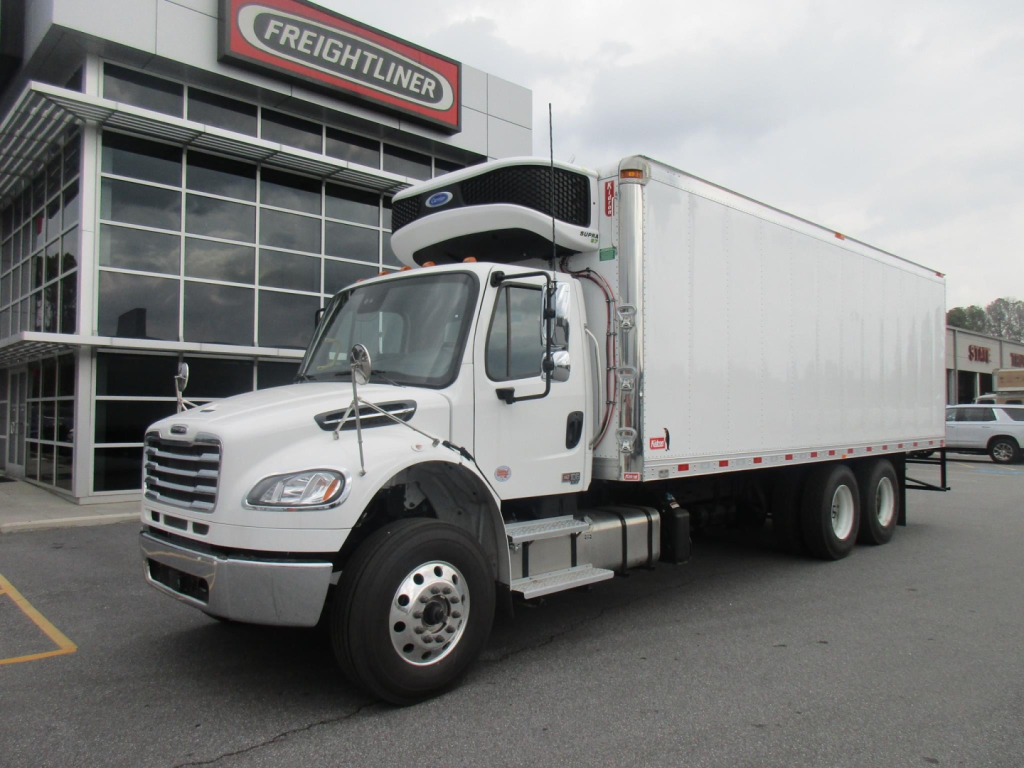
Selling a 2026 freightliner refrigerated truck? List your 2026 freightliner refrigerated truck for sale and reach thousands of commercial buyers.
2026 Freightliner Refrigerated Trucks in Georgia
The first buying decision is usually body length and GVWR. An 18-foot reefer body on a single-axle M2 106 Plus can be a strong fit for tighter city routes, restaurant delivery, and multi-stop work where maneuverability matters. A 24-foot tandem-axle truck gives more cube, more payload capacity, and better fit for palletized freight, higher stop counts, and mixed-temperature style routing when body partitioning is added. Buyers should pay attention to cab-to-axle length, rear axle rating, suspension type, and floor construction. Wood floors with forklift packages, E-track, walk ramps, and locking roll-up doors are common practical specs because reefer trucks are often loaded hard every day. Air-ride suspension and air-ride seating also matter more in this segment than many buyers expect because they help protect cargo and reduce driver fatigue over repetitive routes.
Powertrain choices on 2026 Freightliner reefer trucks commonly center on the Cummins B6.7 or L9 with Allison automatic transmissions such as the 2500HS or 3000HS. The B6.7 is a solid match for lighter 18-foot applications and urban delivery, while the L9 is the better tool for heavier payloads, tandem-axle builds, and routes with more highway time or steeper terrain. In Georgia, where trucks may split time between Atlanta metro traffic and longer runs across the state, axle ratio and horsepower deserve close review. A higher horsepower L9 with the right rear ratio can improve launch, maintain road speed with a loaded insulated body, and reduce strain on the truck in hot-weather operation. Buyers should also review refrigeration unit hours separately from chassis miles when applicable, along with fuel type, maintenance access, standby options, and evaporator configuration inside the box.
Safety and driver-assist content is another real differentiator in newer Freightliner refrigerated trucks. Many 2026 models include Detroit Assurance features such as active brake assist, adaptive cruise control, lane departure warning, side object detection, and backup cameras. Those systems are valuable on reefer routes because these trucks spend so much time in traffic, alleys, loading docks, and tight commercial lots. A strong spec in this category is not just about keeping cargo cold. It is about matching body insulation, refrigeration capacity, axle ratings, door configuration, and engine-transmission combination to the actual delivery profile. Buyers comparing multiple Freightliner reefer trucks should look closely at body builder quality, reefer unit brand and model, payload capacity after upfit, and how the truck was intended to run day after day in a true cold-chain environment.
Frequently Asked Questions about 2026 Freightliner Refrigerated Trucks in Georgia
What is the best body size for a Freightliner refrigerated truck?
The best body size depends on route density, payload, and dock access. An 18-foot reefer body is usually better for urban delivery, narrow lots, and frequent stops where turning radius matters. A 24-foot body is better for palletized freight, higher cube demand, and regional routes where more product per trip improves efficiency. Buyers should match body length to cab-to-axle measurement, axle ratings, and the typical number of pallets or rolling carts carried per route.
What is the difference between a Cummins B6.7 and Cummins L9 in a 2026 Freightliner reefer truck?
The Cummins B6.7 generally fits lighter-duty refrigerated applications with lower GVWR, smaller bodies, and dense local delivery. It offers a practical balance of fuel economy and capability. The Cummins L9 is the stronger choice for heavier insulated bodies, tandem-axle configurations, and operations that need more horsepower and torque for loaded starts, highway cruising, or demanding climates. In reefer service, engine selection should be based on payload and duty cycle, not just advertised horsepower.
Which reefer unit features matter most on a refrigerated straight truck?
Cooling capacity, pull-down performance, service network, and body integration matter most. Buyers should check the refrigeration unit model, temperature range, evaporator setup, and whether the truck has features such as standby power or multi-temp capability if the route requires it. It is also important to inspect insulation quality, door seals, bulkheads, and air circulation inside the body because the refrigeration unit can only perform as well as the box allows.
Are tandem-axle Freightliner reefer trucks worth it?
A tandem-axle setup is worth it when the operation needs higher GVWR, more payload, and a longer body such as a 24-foot refrigerated box. Tandems typically provide better support for heavier pallet counts and can improve stability under load. The tradeoff is higher acquisition cost, more tire and suspension maintenance, and less maneuverability than a single-axle truck. For lighter city routes, a single-axle reefer truck is often the more efficient choice.
What should buyers inspect on a used or new-spec refrigerated truck besides the chassis?
The refrigerated body and the cooling system deserve the same attention as the truck itself. Buyers should inspect insulation thickness, floor condition, wall damage, scuff areas, door hardware, roll-up or swing door sealing, and any signs of moisture intrusion. On the refrigeration side, review unit hours, maintenance records, operating temperature consistency, and the condition of belts, hoses, condenser components, and evaporator assemblies. A reefer truck is a chassis, a body, and a refrigeration system working together, so all three need to be evaluated as one package.