
2026 Freightliner Refrigerated Trucks For Sale
Shop 2026 Freightliner refrigerated trucks with reefer bodies, diesel power, and delivery-ready specs for cold chain and route work.
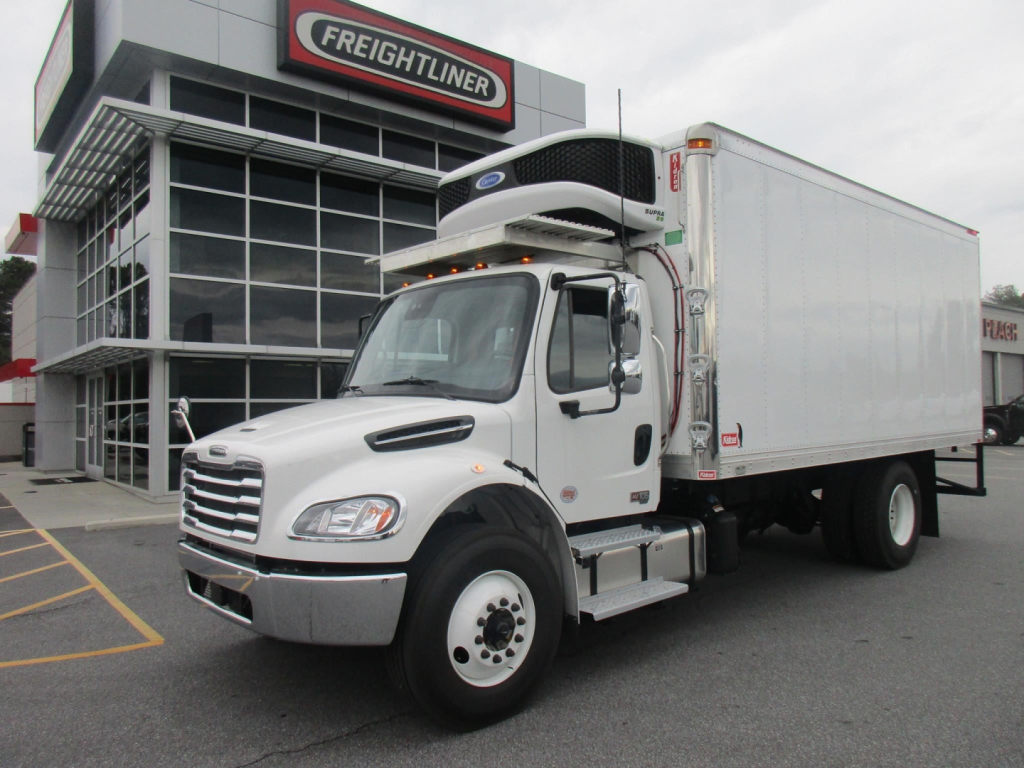
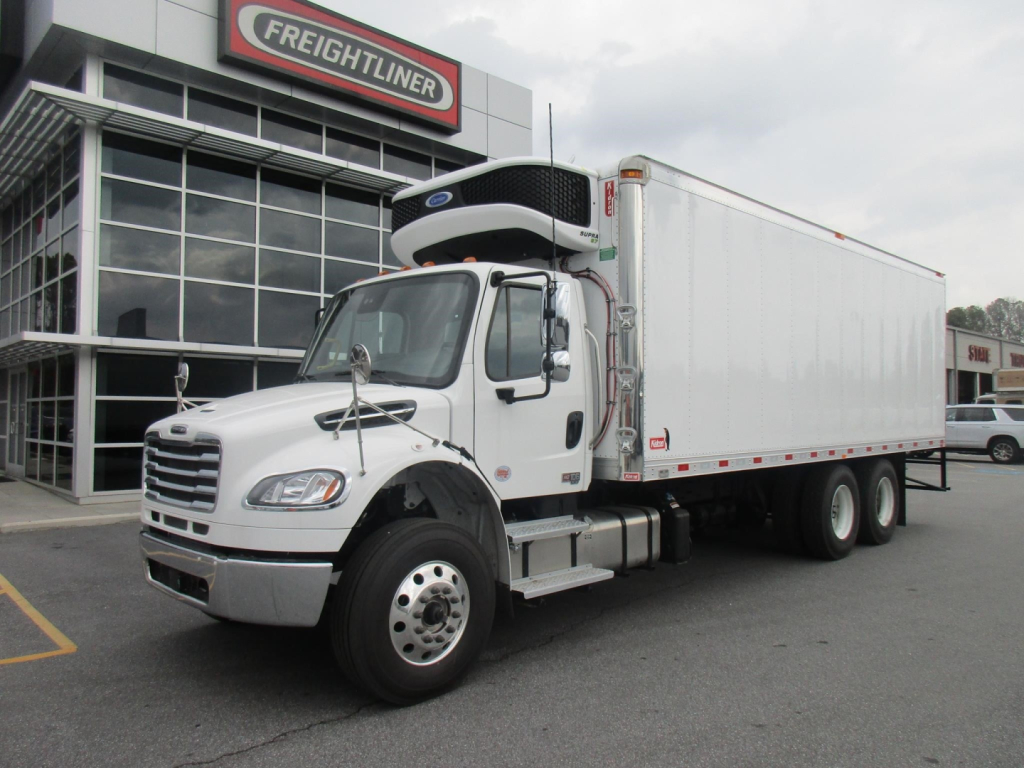
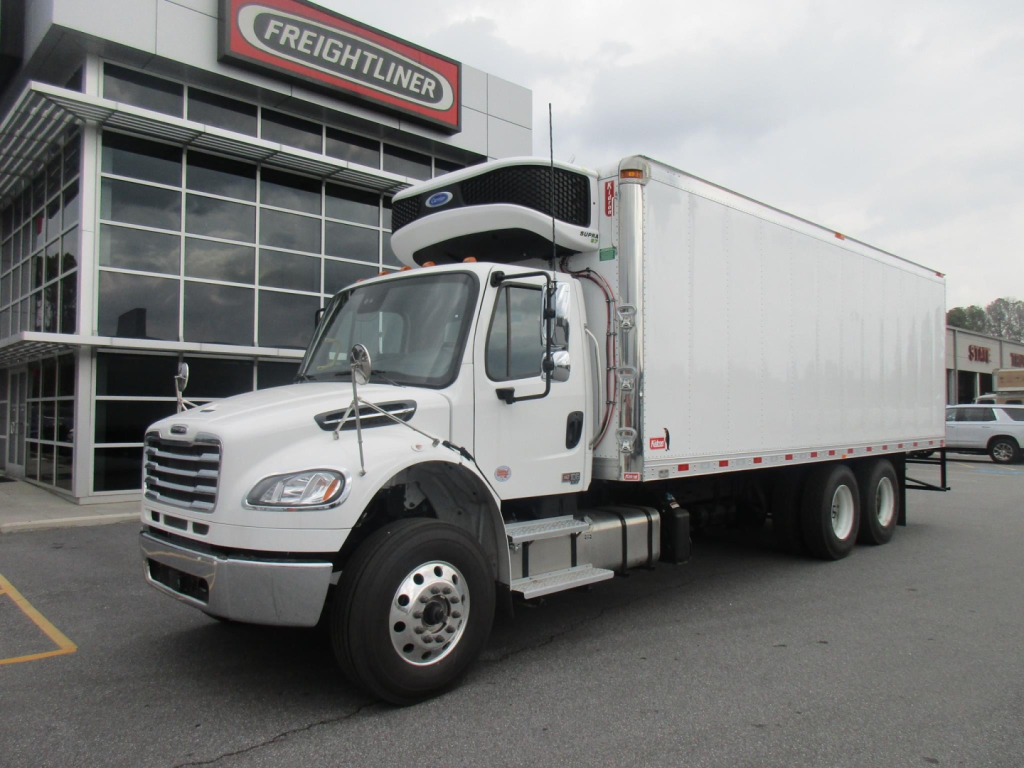
Selling a 2026 freightliner refrigerated truck? List your 2026 freightliner refrigerated truck for sale and reach thousands of commercial buyers.
2026 Freightliner Refrigerated Trucks
The first buying decision is usually body length and refrigeration package. An 18-foot reefer body is a strong fit for tighter city delivery, lighter route density, and easier dock access. A 24-foot or 26-foot body gives more cube and better revenue potential on multi-stop runs, but it also changes wheelbase, turning radius, payload strategy, and liftgate needs. Common body builders include Kidron and Morgan, with insulated bodies using features like ducted floors, scuff liners, E-track, forklift packages, curbside doors, and roll-up rear doors. Buyers moving palletized freight should pay close attention to floor construction, door opening height, and whether the truck includes a walk ramp or a liftgate sized for the product mix.
On the chassis side, many 2026 Freightliner reefer trucks are spec'd with the Cummins L9 and an Allison automatic such as the 3000HS or 3000RDS. That combination is popular because it balances durability, driver friendliness, and stop-and-go route performance. Tandem axle configurations and high GVWR specs are common on longer 24-foot and 26-foot bodies where payload and refrigeration unit weight start to add up. Buyers should review axle ratings, rear suspension type, axle ratio, and cab-to-axle measurement to make sure the body and chassis were matched correctly. Air-ride suspension, air-ride cab, and driver seat upgrades can make a real difference on routes with constant stops and long days behind the wheel.
The reefer unit deserves the same scrutiny as the truck itself. Carrier Supra and Thermo King units are both common in this class, and the right choice depends on temperature pull-down speed, maintenance support in your area, fuel use, and whether you need fresh, frozen, or multi-temp capability. Ask about reefer hours, unit service history, insulation thickness, and how well the body holds setpoint under frequent door openings. Safety and driver-assist features are also increasingly relevant on newer Freightliner refrigerated trucks, including collision mitigation, adaptive cruise control, lane departure warning, side object detection, and backup cameras. For buyers comparing 2026 Freightliner refrigerated trucks for sale, the best spec is the one that matches the route, dock conditions, product weight, and temperature demands without overbuying chassis or underbuilding the body.
Frequently Asked Questions about 2026 Freightliner Refrigerated Trucks
What is the most common Freightliner model used for refrigerated box trucks?
The Freightliner M2 106 and M2 106 Plus are among the most common platforms for refrigerated box trucks. They are widely used because they support a broad range of reefer body lengths, offer medium-duty maneuverability, and can be spec'd with engines and transmissions suited for city delivery or regional routes. Their service network and body-builder compatibility also make them a practical choice for cold chain fleets.
How do I choose between an 18-foot, 24-foot, or 26-foot reefer truck?
The right body length depends on delivery density, product size, loading method, and where the truck operates. An 18-foot body is easier in urban areas with tight streets and limited dock space. A 24-foot body often gives a strong balance of maneuverability and cargo capacity. A 26-foot body is better for maximizing cube and pallet count, but it may require more attention to wheelbase, axle ratings, liftgate capacity, and route access restrictions.
What engine and transmission are common in 2026 Freightliner refrigerated trucks?
A common setup in this category is the Cummins L9 paired with an Allison automatic transmission such as the 3000HS or 3000RDS. This spec is popular in reefer service because it handles repeated stop-and-go operation well, offers solid torque for loaded starts, and is easy for multiple drivers to operate. Exact horsepower, axle ratio, and suspension specs should be reviewed alongside body size and target payload.
What reefer unit details matter most when buying a refrigerated truck?
The most important reefer details are the brand, model, temperature capability, service history, and total unit hours. Buyers should also verify that the insulated body holds temperature efficiently, especially on routes with frequent door openings. Carrier Supra and Thermo King units are both common, but local dealer support and technician availability can be just as important as the nameplate when long-term uptime is the priority.
What body features should I look for on a refrigerated delivery truck?
Useful body features depend on the freight, but common priorities include scuff liners, E-track, ducted or heavy-duty flooring, curbside doors, forklift packages, and a properly matched liftgate. Roll-up rear doors are common for dock work, while walk ramps can help with hand-unload deliveries. If the truck will handle mixed stop types, the best body spec is one that protects insulation performance while also improving loading speed and cargo control.