
2026 Refrigerated Trucks For Sale in Georgia
Shop 2026 refrigerated trucks in Georgia. Compare reefer body sizes, GVWR, refrigeration units, and delivery-ready specs for cold-chain work.
Selling a 2026 refrigerated truck? List your 2026 refrigerated truck for sale and reach thousands of commercial buyers.
2026 Refrigerated Trucks in Georgia
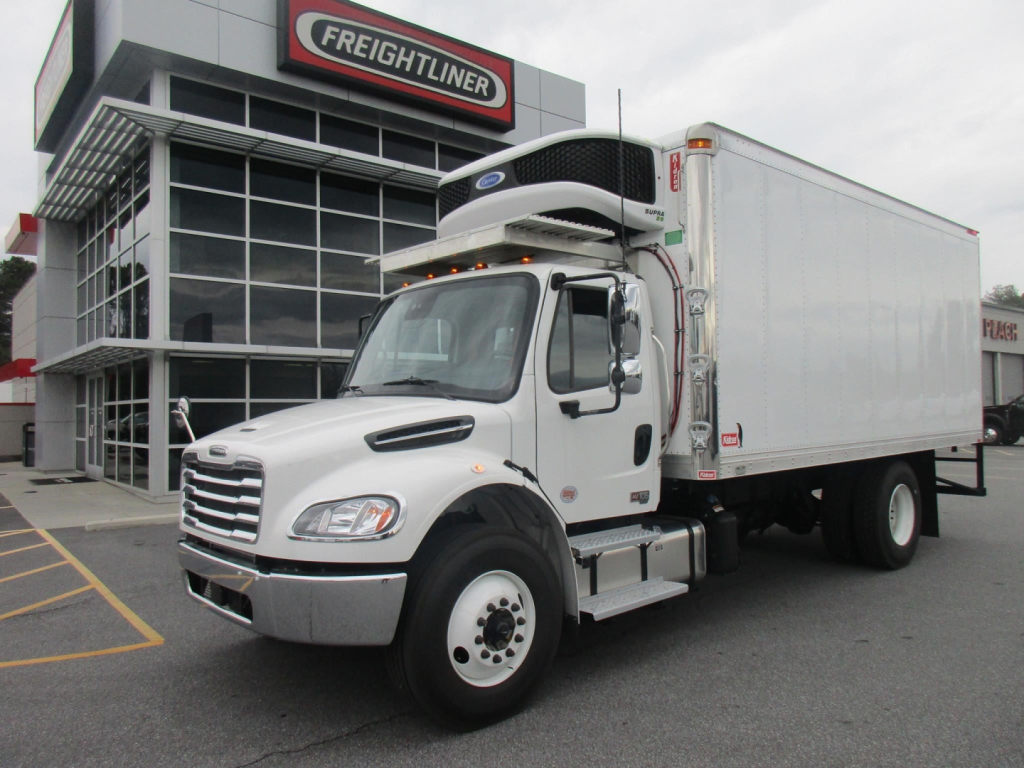
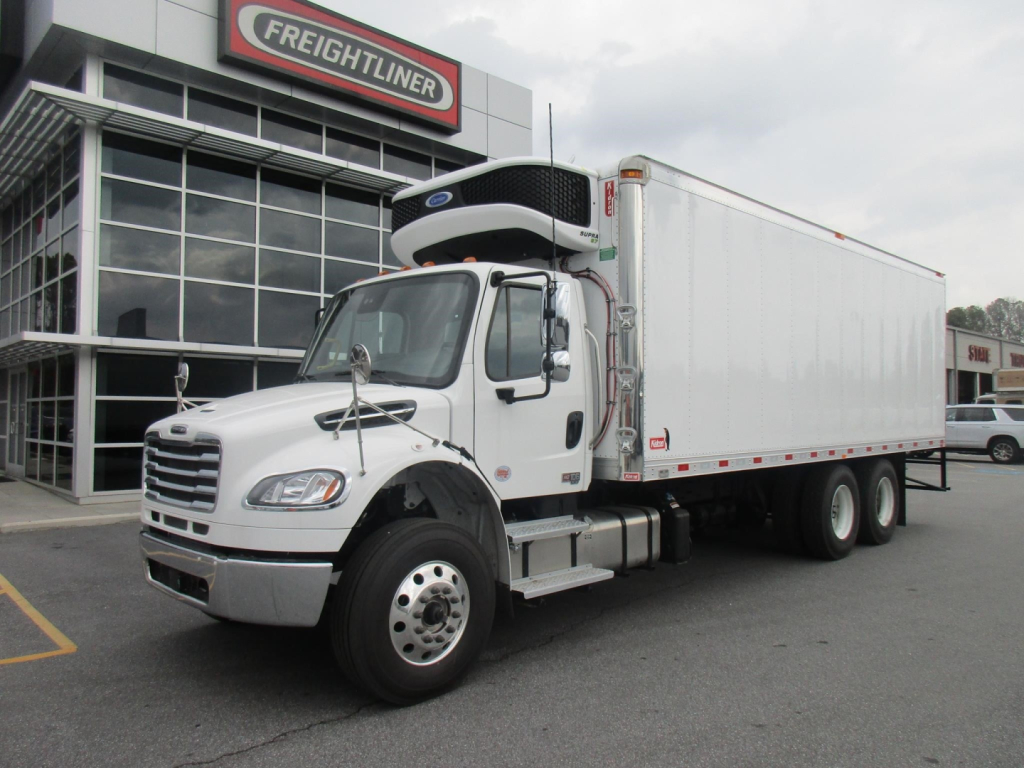
The refrigeration package is the next major decision. Truck-mounted units such as Carrier Supra systems are common in this segment because they provide dependable cooling capacity for local and regional operations with frequent door openings. If the freight mix includes frozen product, look closely at pulldown performance, insulation quality, door seal condition, and whether the body is spec'd for multi-temp capability or single-zone operation. Body construction details matter more than many first-time buyers expect. Kidron and similar insulated bodies are often spec'd with features like scuff liners, E-track, wood or composite flooring, forklift packages, walk ramps, and locking roll-up rear doors. Those details affect load securement, dock compatibility, sanitation, and long-term repair cost.
Chassis specs should match the route and payload, not just the body. In this category, engines such as the Cummins B6.7 and Cummins L9 are typical, with Allison automatic transmissions like the 2500HS or 3000HS commonly chosen for stop-and-go delivery work. A lighter single-axle reefer truck may be ideal for urban grocery or restaurant routes, while a tandem-axle setup with higher GVWR, heavier rear axle ratings, and air-ride suspension makes more sense for dense payloads and longer regional runs. Wheelbase, cab-to-axle measurement, axle ratio, and suspension spec all influence turning radius, body fit, ride quality, and grade performance. For Georgia fleets running Atlanta metro, coastal routes, or mixed interstate work, driver-assist systems like collision mitigation, adaptive cruise control, lane departure warning, side object detection, and backup cameras can also add value in high-traffic delivery environments.
The best 2026 refrigerated truck is the one that fits your freight profile, dock conditions, route density, and service expectations. Focus on cargo temperature range, body dimensions, reefer unit brand and service network, payload capacity, and how the interior is equipped for your product mix. A clean reefer spec for beverage, dairy, meat, frozen foods, or medical distribution is not just about staying cold. It is about maintaining temperature recovery, minimizing downtime, and giving the driver a truck that is easy to maneuver, load, and service over a full delivery day.
Frequently Asked Questions about 2026 Refrigerated Trucks in Georgia
What body size is most common for a 2026 refrigerated truck?
In this category, 18-foot and 24-foot insulated bodies are common because they cover two very different delivery profiles. An 18-foot reefer truck is easier to maneuver in urban areas, alleys, and tight loading zones, which makes it a strong fit for restaurant supply, floral, and smaller grocery routes. A 24-foot refrigerated truck offers more cargo cube and is better suited for higher-volume food distribution, regional delivery, and operations that need more pallet positions without moving into a tractor-trailer.
What is the difference between a Cummins B6.7 and a Cummins L9 in a reefer truck?
The Cummins B6.7 is typically selected for lighter medium-duty refrigerated truck applications where maneuverability, lower acquisition cost, and urban delivery efficiency are priorities. The Cummins L9 is a better fit for heavier bodies, tandem-axle configurations, higher GVWRs, and routes with more payload, more highway time, or more demanding grade performance. The right choice depends on body length, loaded weight, route terrain, and how often the truck will operate at or near maximum capacity.
What reefer body features matter most to a buyer?
The most important reefer body features are insulation quality, interior durability, and loading practicality. Buyers should pay close attention to the body manufacturer, wall and roof construction, floor type, rear door design, and cargo control equipment such as E-track. Features like scuff liners, forklift packages, walk ramps, and locking roll-up doors can make a major difference in daily usability and maintenance cost. If the truck will handle mixed freight or frequent loading cycles, those body details often matter as much as the chassis spec.
Are tandem-axle refrigerated trucks better than single-axle models?
Tandem-axle refrigerated trucks are not automatically better, but they are better for heavier payloads, larger bodies, and operations that need higher GVWR and improved load support. They are often used for 24-foot bodies and denser freight where axle capacity and suspension stability matter. Single-axle reefer trucks remain the practical choice for lighter local delivery work because they are generally easier to maneuver, simpler to maintain, and better suited to tight route conditions.
What should buyers in Georgia look for in a refrigerated truck?
Georgia buyers should match the truck to both climate and route pattern. High heat and humidity increase the importance of reefer unit performance, body insulation, and door seal integrity, especially on multi-stop foodservice routes with frequent door openings. Buyers should also consider local service support for the refrigeration unit brand, traffic conditions in metro Atlanta, and whether the truck will spend more time in urban delivery, regional distribution, or a mix of both. A strong Georgia reefer spec balances cooling performance, driver visibility, maneuverability, and reliable uptime.