
2023 Refrigerated Trucks For Sale
Compare 2023 refrigerated trucks for sale by usable payload, reefer capacity, emissions service history, and separate chassis and refrigeration warranties.
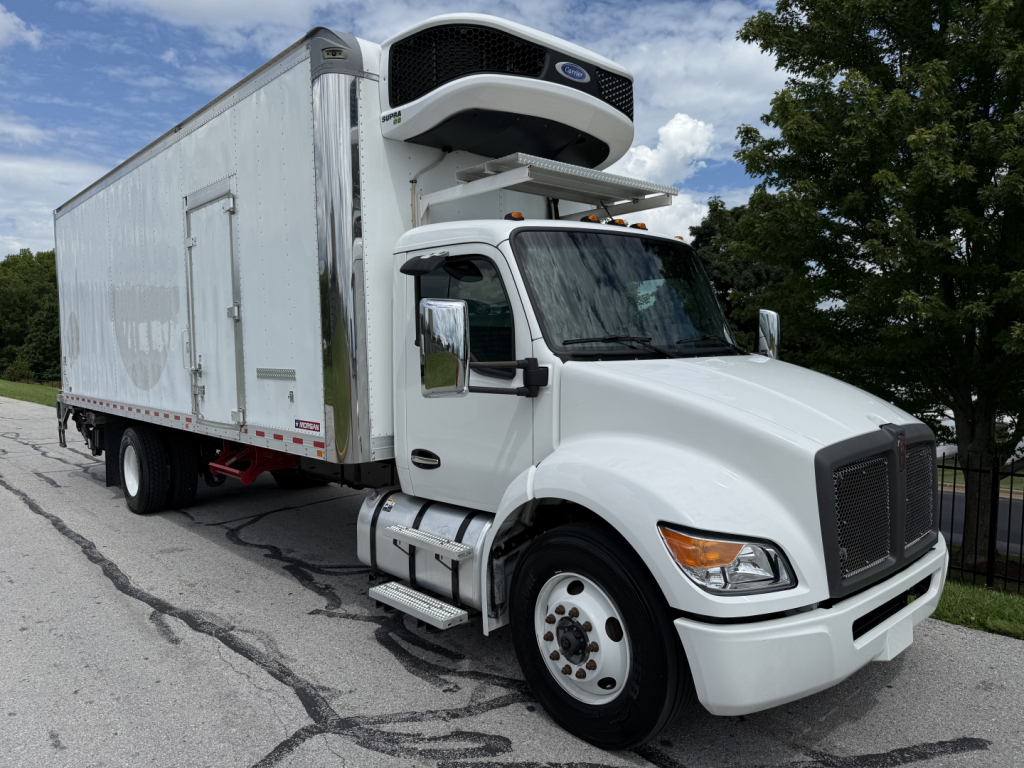
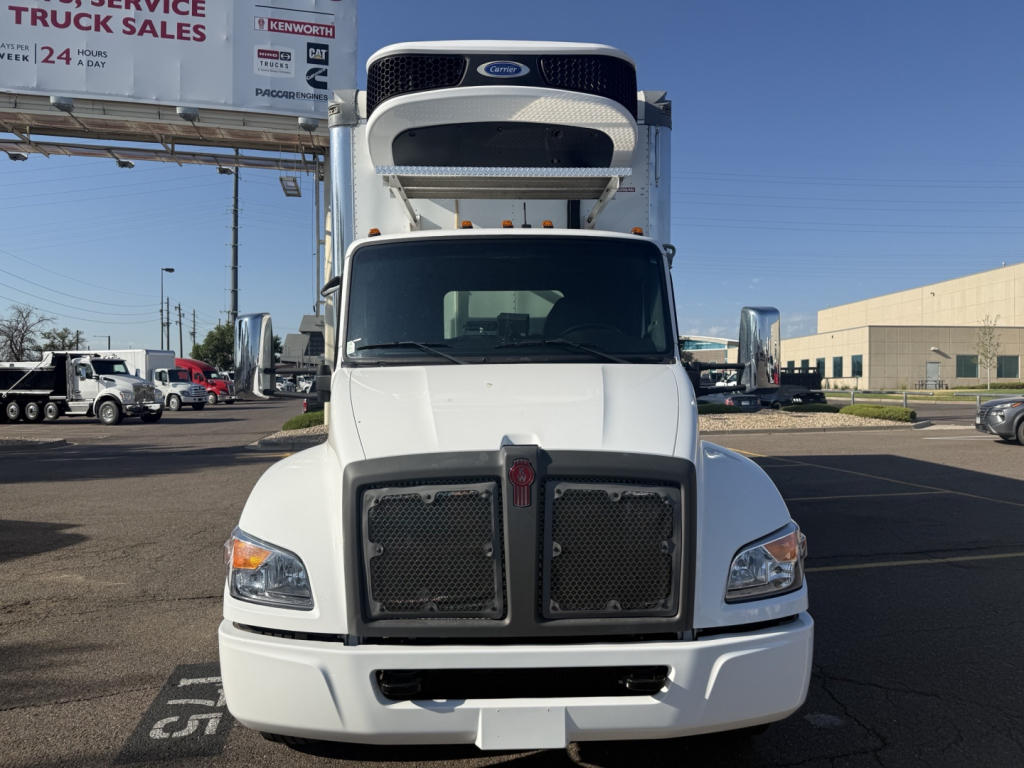
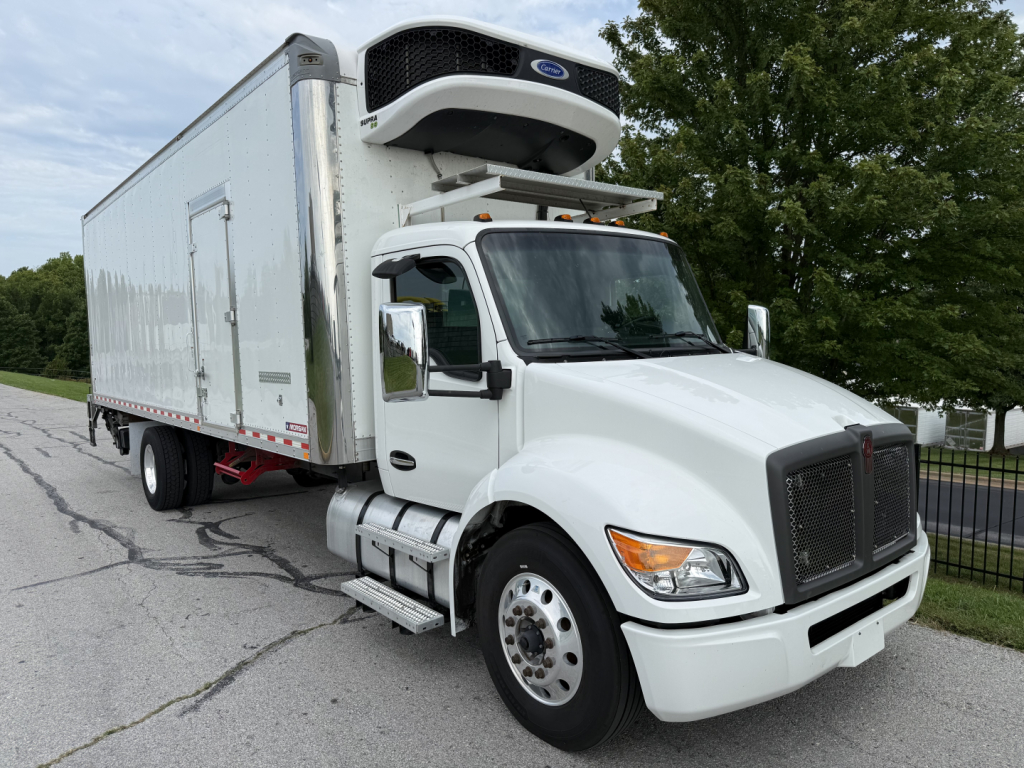
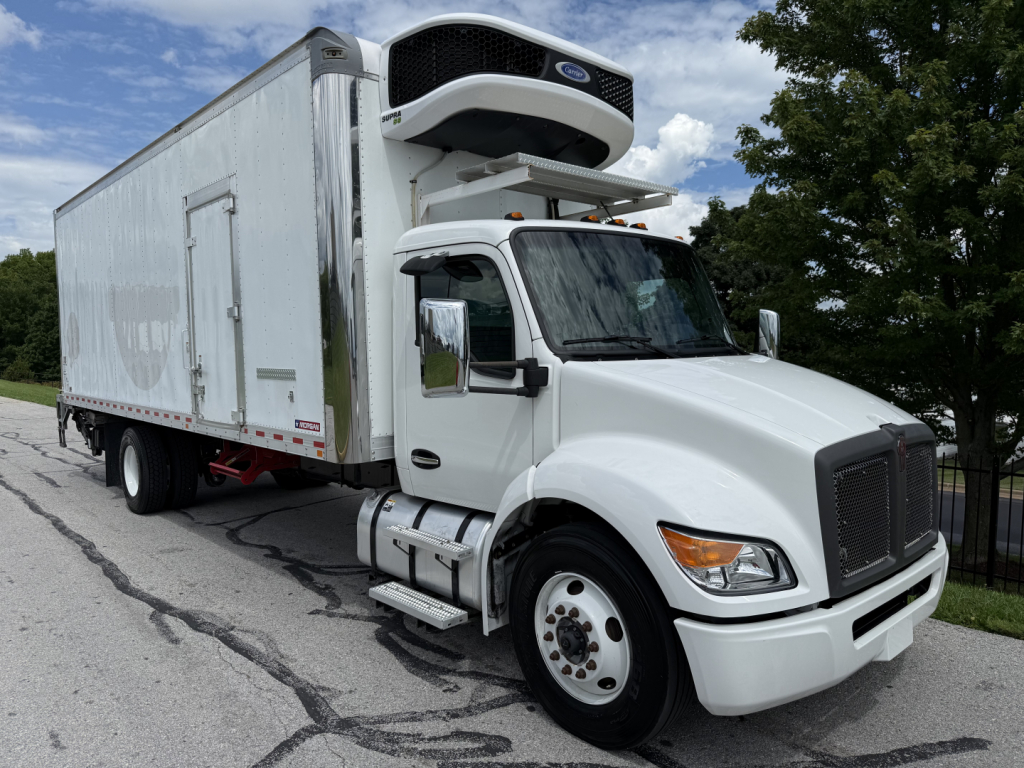
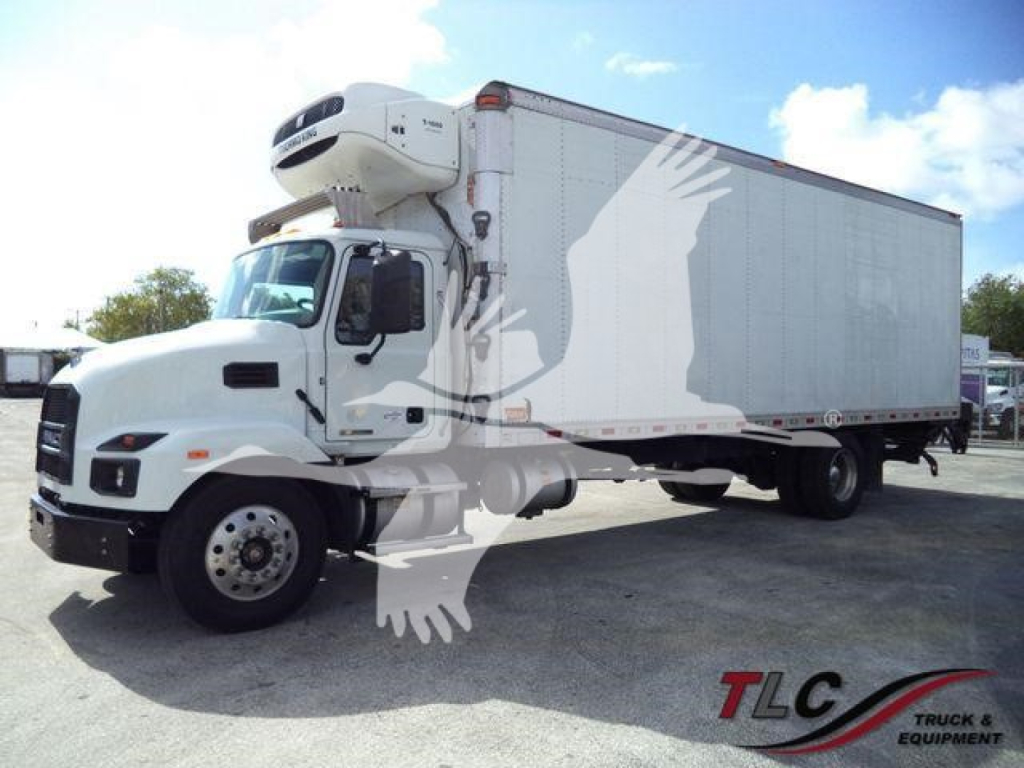
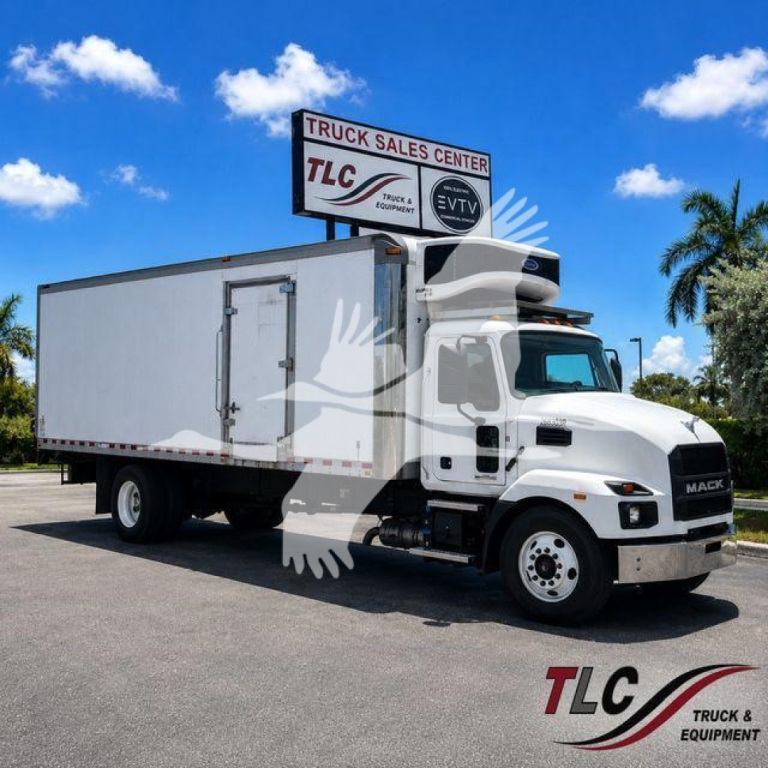
Selling a 2023 refrigerated truck? List your 2023 refrigerated truck for sale and reach thousands of commercial buyers.
2023 Refrigerated Trucks
The 2023 model year includes Kenworth's newer-generation T380 and Mack's MD series, alongside Freightliner M2, International MV, and Isuzu N-Series and F-Series chassis. The Mack MD6 commonly pairs a Cummins B6.7 diesel with an Allison automatic, while the T380 can pair a PACCAR PX-7 with an Allison automatic. Conventional cabs and cabovers offer different access, visibility, and maneuverability characteristics. Match wheelbase, rear overhang, axle ratio, and suspension to the route rather than selecting solely by engine horsepower. Longer refrigerated bodies need particular attention to rear-axle loading after the liftgate is installed.
Most diesel-powered 2023 chassis use DPF and SCR emissions systems requiring DEF. On used trucks, compare ECM mileage, engine hours, idle time, fault history, and regeneration records with maintenance invoices. Refrigeration operating hours can tell a different story from chassis mileage, especially on delivery trucks that spend long periods parked with the reefer running. Have a refrigeration technician test pull-down performance, temperature control, defrost operation, and any standby function. Inspect door seals, evaporator airflow, floor damage, roof seams, and moisture intrusion into insulation. A cold empty box does not prove the system can maintain product temperature during repeated delivery stops.
For a new 2023 truck, verify storage history, tire condition, warranty start dates, and whether the body and refrigeration equipment were installed later than the chassis build. Chassis, engine, transmission, body, refrigeration unit, and liftgate coverage may have separate terms. Specify temperature range, door placement, liftgate platform size, and electric standby before accepting an upfit. The 12% US federal excise tax applies to qualifying new heavy trucks, not every refrigerated chassis; confirm the completed vehicle's tax treatment rather than assuming all reefer trucks are taxed alike.
Across the United States and Canada, hot-weather delivery routes demand adequate cooling capacity for frequent door openings, while winter routes may require heating capability to keep sensitive freight from freezing. Snow Belt service warrants close inspection of frame rails, brake plumbing, body mounts, liftgate wiring, and corrosion around dissimilar-metal joints. State and provincial axle limits can restrict usable payload below the truck's combined component ratings. Check loaded axle weights with the intended cargo distribution, and verify refrigeration-emissions requirements wherever the truck will operate.
Frequently Asked Questions about 2023 Refrigerated Trucks
Do I need a CDL to drive a 2023 refrigerated truck?
In the United States, a single refrigerated truck with a GVWR or actual gross weight of 26,001 pounds or more generally requires a Class B CDL. A single 26,000-pound-rated truck operating within its rating generally falls below that federal threshold. Air brakes alone do not trigger the federal CDL requirement. Trailer combinations and state-specific licensing rules can change the requirements, while Canadian licensing and air-brake qualifications follow provincial rules.
What electrical supply does a reefer truck need for electric standby?
Electric standby requires a shore-power supply matching the refrigerated truck's refrigeration-unit voltage, phase, amperage, and connection specifications. Verify the unit's data plate and installation manual before planning a depot connection. A qualified electrician should confirm circuit capacity, protection, and cable suitability. Test standby operation under cooling demand, because a working diesel refrigeration engine does not establish that the electric motor, controls, or changeover system operates correctly.
Can a 2023 refrigerated truck cool warm food during delivery?
A refrigerated truck is primarily designed to maintain the temperature of pre-cooled cargo, not rapidly chill warm product. Load freight at its required shipping temperature and pre-cool the body according to the refrigeration manufacturer's procedures. Leave the specified airflow paths around the load and keep the evaporator return unobstructed. Product temperature measurements are more useful than relying solely on the controller's displayed air temperature.
How much liftgate capacity do I need for pallet deliveries?
Liftgate capacity must cover the heaviest pallet plus the pallet jack and any operator permitted on the platform. Check the refrigerated truck liftgate's rated load center, because capacity can decrease when weight sits farther from the platform's supporting structure. Platform dimensions must accommodate the complete load safely. Confirm that the gate's added weight and rearward cargo position do not overload the rear axle.
Does a 2023 reefer truck automatically comply with California rules?
No, a 2023 refrigerated truck chassis does not establish compliance with California's separate Transport Refrigeration Unit regulation. Identify the refrigeration engine's model year, applicable registration requirements, and compliance status before assigning California work. Refrigeration fleets can also face zero-emission transition requirements under CARB rules. Check the requirements for the specific refrigeration unit and fleet, and evaluate the truck engine's compliance separately.