
2016 Refrigerated Trucks For Sale in Pennsylvania
Shop 2016 refrigerated trucks in Pennsylvania. Compare reefer body sizes, liftgates, refrigeration units, GVWR, insulation, and delivery specs.
Learn more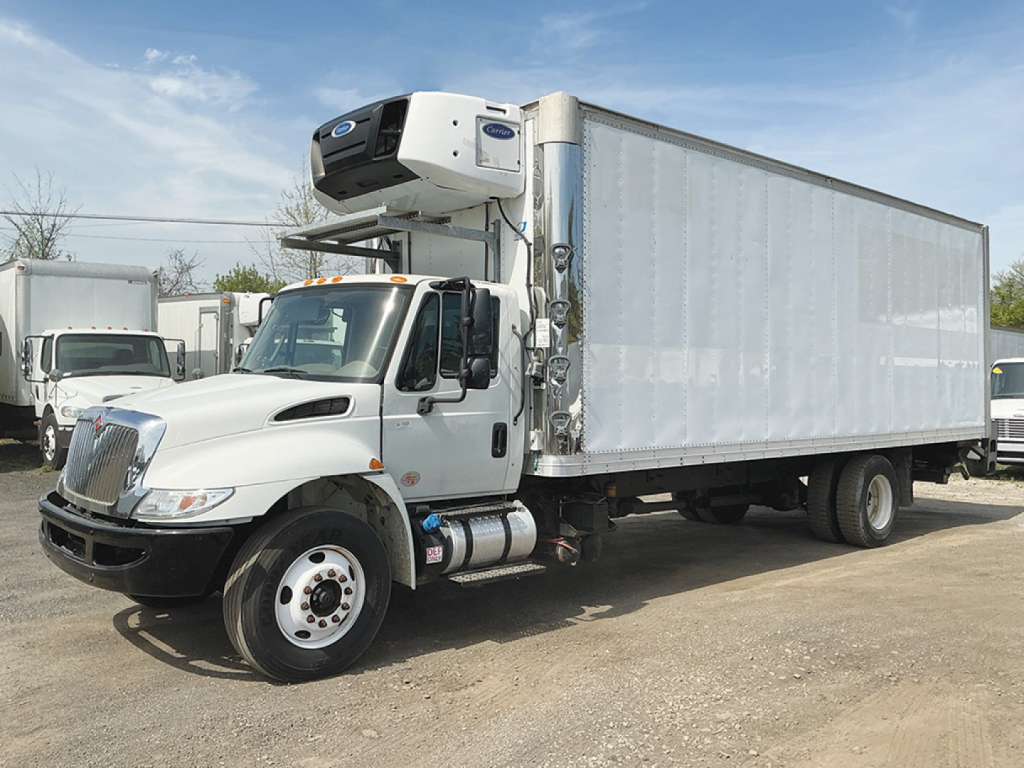
Have 2016 refrigerated truck to sell? List it here to reach thousands of buyers.
About 2016 Refrigerated Trucks in Pennsylvania
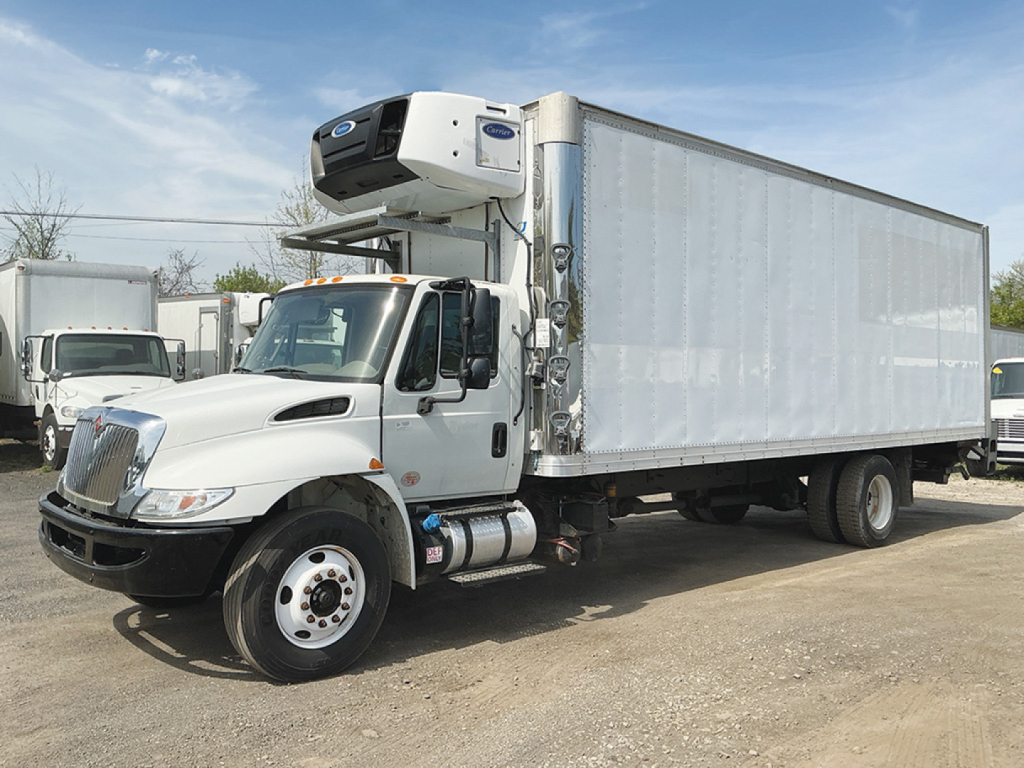
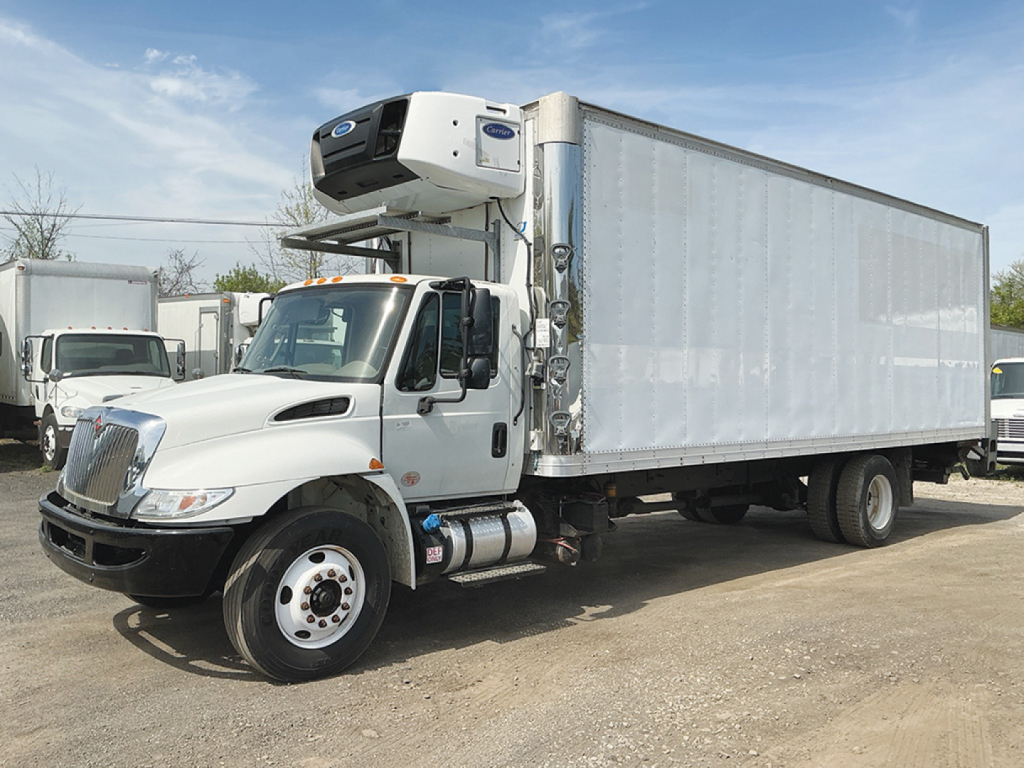
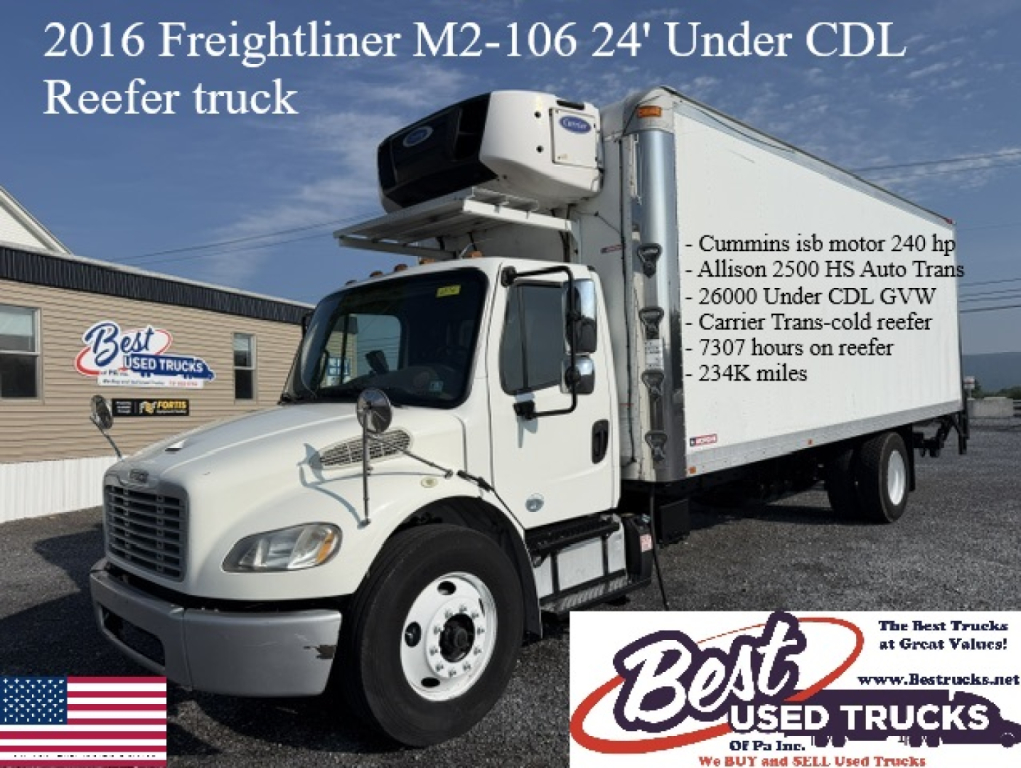
The first buying decision is usually GVWR and route type. Many 2016 reefer trucks were spec'd at 26,000 GVWR for under-CDL operation, which can be a major advantage for private fleets and final-mile delivery. Others may be set up with heavier suspensions, longer wheelbases, or 26 foot bodies to maximize cube and pallet count. Buyers should look closely at axle ratings, wheelbase, door configuration, and liftgate capacity because these details affect dock access, neighborhood delivery, and multi-stop efficiency. A 24 foot body with a 3,000 lb liftgate can be easier to maneuver in older Pennsylvania towns, while a 26 foot body may better suit higher-volume distribution.
Body construction and refrigeration performance deserve as much attention as the chassis. Common features on 2016 refrigerated trucks include Kemlite or fiberglass-reinforced interior liners, scuff plates, E-track, flat or ducted aluminum floors, curbside doors, and roll-up rear doors. Reefer units such as a Carrier Supra or Transicold system are often judged by hours, maintenance history, pull-down performance, and how well they hold setpoint under load. Buyers should inspect insulation integrity, door seals, floor condition, drain layout, and any signs of moisture intrusion or panel damage. If frozen product is part of the route, confirm the unit's temperature range, bulkhead setup, and whether the body and floor were spec'd for true frozen-service duty rather than cooler-only work.
At this age, overall operating condition matters more than brand name alone. Engine and transmission combinations like the Cummins ISB with an Allison automatic are popular because they are familiar to many service shops and well suited to stop-and-go delivery work. Review reefer hours separately from chassis miles, and pay attention to recent state inspection status, PM records, liftgate service, tire date codes, and suspension type. A well-kept 2016 refrigerated truck can still be a productive asset if the box is tight, the reefer unit cycles correctly, and the spec matches the route. For buyers comparing multiple trucks, the strongest value usually comes from the right body configuration, documented refrigeration service, and a chassis that fits your payload and driver requirements.
Frequently Asked Questions
What is the most common size for a 2016 refrigerated truck?
Most 2016 refrigerated straight trucks on the market fall in the 24 to 26 foot body range on medium-duty single-axle chassis. That size works well for palletized food and beverage delivery, local wholesale routes, and regional distribution. The right length depends on your dock access, turning radius needs, and target payload, not just cubic capacity.
Can a 2016 refrigerated truck be operated without a CDL?
Many 2016 reefer trucks were built at 26,000 GVWR, which is commonly referred to as under CDL spec. That can make them attractive for businesses that want more driver flexibility. Buyers still need to verify the exact GVWR on the door tag and confirm any state, route, or cargo-specific compliance requirements before purchase.
What should I check on the refrigeration unit of a used 2016 reefer truck?
Check reefer unit hours, service records, temperature pull-down time, setpoint accuracy, defrost function, and any active alarms or fault history. It is also important to inspect the condenser, evaporator, fuel system if diesel-powered, and the overall condition of wiring and controls. A unit with acceptable hours but poor maintenance history can cost more in downtime than one with higher hours and documented service.
Which specs matter most on a 2016 refrigerated delivery truck?
The key specs are GVWR, body length, refrigeration unit model, insulation quality, liftgate rating, axle ratings, wheelbase, and interior cargo securement such as E-track. Buyers should also look at suspension type, tire size, rear door opening, curbside access, and floor construction. These details determine how efficiently the truck handles multi-stop delivery, pallet counts, dock work, and temperature-sensitive freight.
Are 2016 refrigerated trucks a good fit for Pennsylvania routes?
Yes, if the truck is spec'd for the service area and product type. Pennsylvania routes often combine urban delivery, suburban dock work, and hilly regional travel, so maneuverability, brake condition, liftgate performance, and reefer reliability matter. A properly maintained 2016 reefer truck can still be a cost-effective option for local and regional cold-chain operations.