
New Ford Moving Van Trucks For Sale
Shop new Ford moving van trucks with enclosed van bodies, attic storage, dock-ready specs, and commercial chassis built for local delivery.
Learn more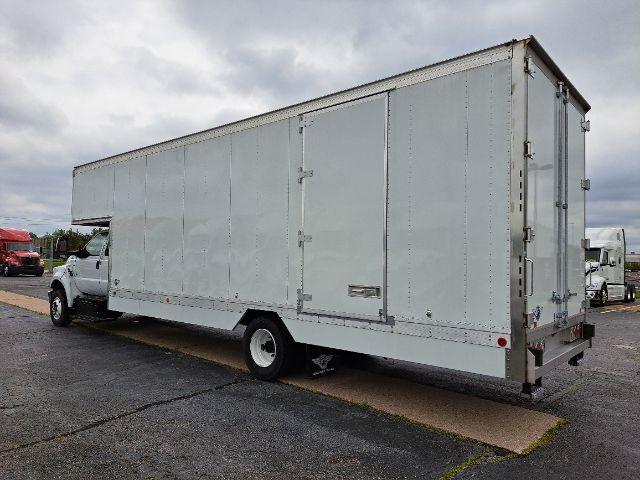
Have new ford moving van truck to sell? List it here to reach thousands of buyers.
About New Ford Moving Van Trucks
Body specification is the first decision point because it directly affects usable cube, loading speed, and damage control. Many moving van bodies in this class are built 96 inches wide with interior heights around 102 to 103 inches, giving crews enough room for stacked pads, upright furniture, and tall appliances. Features like laminate hardwood flooring, scuff-resistant interior walls, fiberglass walkboards, and curbside or streetside access doors are common on moving applications because they support hand-loading and frequent stops. Rubber dock bumpers, rear cameras, and backup alarms also matter on this type of truck, since these units spend a lot of time backing into tight docks, alleys, and residential driveways.
On the chassis side, new Ford moving vans are typically spec'd as single-axle 4x2 trucks with automatic transmissions, hydraulic brakes with ABS, and gas or diesel power depending on fleet preference and operating cycle. Ford's 7.3L gas engine is a common choice for local and regional work because it offers straightforward serviceability, solid low-speed performance, and lower upfront cost than a diesel in many applications. Buyers should compare front and rear axle ratings, suspension type, wheelbase, fuel capacity, tire size, and cab configuration against the finished body length and expected payload. A spring suspension and 19.5-inch rubber are common in this class, balancing load support with predictable handling for city routes and short-haul operation.
The best Ford moving van truck for a fleet is the one whose body and chassis are matched to the job. Household movers may prioritize attic space, side-door access, and interior height for pad-wrapped furniture. Delivery operators may focus more on cab comfort, camera visibility, and dock compatibility. New trucks also appeal to buyers who want factory warranty coverage, current safety equipment, and a clean maintenance baseline from day one. When comparing listings, pay close attention to body length, inside height, floor construction, door layout, overall height, and axle ratings, since those specs often determine daily productivity more than the badge on the hood.
Frequently Asked Questions
What is a Ford moving van truck typically used for?
A Ford moving van truck is typically used for household moving, furniture delivery, appliance delivery, rental fleets, and commercial relocation work. Its enclosed high-cube body protects cargo from weather and road debris while giving crews standing room and organized loading space. Compared with a standard dry freight box truck, a moving van is usually spec'd with body features that better support hand-loaded, damage-sensitive cargo.
What body size is common on a new Ford moving van?
A common body size is 24 to 26 feet long, about 96 inches wide, with interior height around 102 to 103 inches. Many moving van bodies also include an attic over the cab for pads, cartons, and lightweight items. The right size depends on route density, dock access, cargo profile, and whether the truck will be used for residential moves or commercial delivery.
Is the Ford 7.3 gas engine a good fit for a moving van truck?
The Ford 7.3 gas engine is a strong fit for many moving van applications, especially local and regional routes with frequent stops. It offers solid torque for city driving, lower initial cost than many diesel options, and simpler emissions-related maintenance in some fleets. For buyers running moderate annual miles and prioritizing ease of service, it is often a practical medium-duty power choice.
What specs matter most when comparing Ford moving van listings?
The most important specs are body length, interior height, floor construction, side-door configuration, overall truck height, axle ratings, wheelbase, and engine choice. These details affect cubic capacity, loading speed, maneuverability, and legal payload more directly than cosmetic features. Buyers should also review dock equipment, rear access design, camera systems, and visibility features because these trucks spend much of their life in tight operating environments.
What is the difference between a moving van truck and a standard box truck?
A moving van truck is a type of box truck, but it is usually built specifically for furniture and household goods rather than palletized freight. Moving vans often include an attic, hardwood or laminate flooring, walkboards, multiple side-access doors, and body layouts designed for hand-loading and cargo protection. A standard box truck may be better suited to general freight, while a moving van is typically better for bulky, damage-sensitive loads.