
2014 Peterbilt Grapple Trucks For Sale in Florida
Browse 2014 Peterbilt grapple trucks in Florida. Compare tri-axle specs, loader setups, dump body sizes, and refuse-ready configurations.
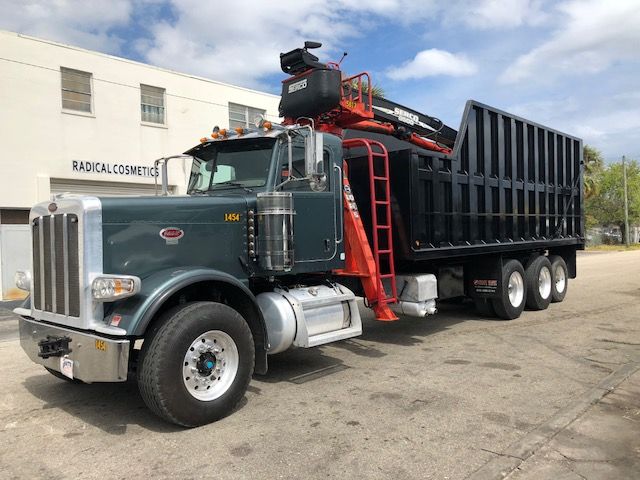
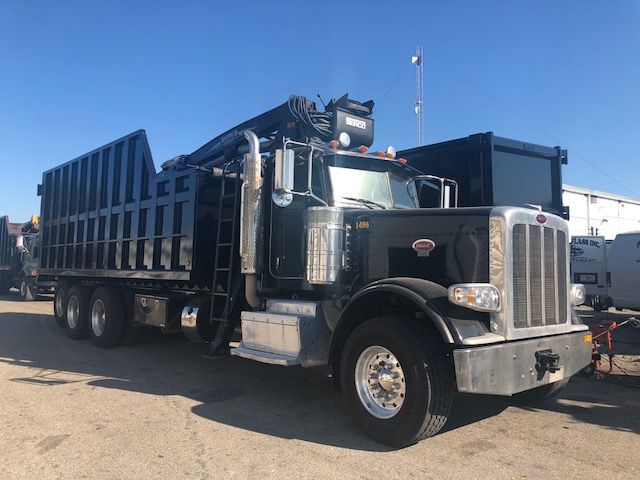
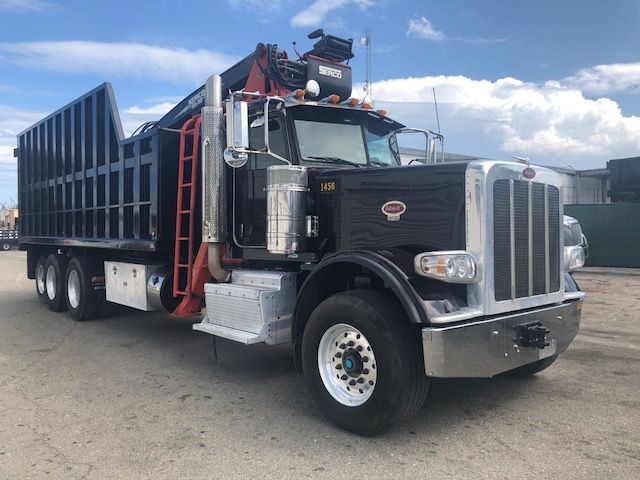
Selling a 2014 peterbilt grapple truck? List your 2014 peterbilt grapple truck for sale and reach thousands of commercial buyers.
2014 Peterbilt Grapple Trucks in Florida
On a 2014 unit, the powertrain deserves close attention because grapple trucks spend much of their life in stop-and-go service, PTO operation, and jobsite loading rather than steady highway miles. Cummins ISX or similarly spec'd high-horsepower diesel engines are common in this class, often paired with 8LL manual transmissions for low-speed control and backing precision. A Jake brake is a valuable feature on heavier tri-axle trucks, especially in mixed urban and transfer-station work. Check engine hours along with miles, since hydraulic loading time can tell a different story than odometer readings alone. PTO engagement, hydraulic pump performance, outriggers if equipped, and loader swing smoothness are all just as important as the engine spec.
Florida buyers often look at corrosion exposure differently than northern markets, but regional use still matters. A grapple truck that has spent its life in storm debris, landfill service, or coastal municipal work should be inspected carefully for body floor wear, hinge area fatigue, tailgate sealing, frame modifications, and hydraulic hose condition. Hardox or other abrasion-resistant body material is a plus if the truck has handled demolition or mixed waste. Rear hitches are common on some builds and can add flexibility for support equipment. On tri-axle Peterbilts, verify axle spacing, bridge compliance, tire condition across all positions, and how the weight distribution works with a full body and loader mounted behind the cab.
The best 2014 Peterbilt grapple trucks are the ones with a balanced vocational spec, not just big horsepower. Loader brand and model, boom reach, grapple style, body cubic-yard capacity, and hydraulic system condition should line up with the material stream you actually haul. Brush and storm debris favor a different setup than C&D or commercial waste. A well-matched Peterbilt grapple truck can deliver fast cycle times, strong driver visibility, and a durable chassis that still fits demanding municipal and private fleet work years after its original build.
Frequently Asked Questions about 2014 Peterbilt Grapple Trucks in Florida
What should I look for first on a 2014 Peterbilt grapple truck?
Start with the loader, hydraulic system, and dump body, because those components drive productivity and repair cost in this category. Check boom pins and bushings, grapple rotation, cylinder leakage, PTO operation, pump noise, and overall cycle speed. Then inspect the body floor, sidewalls, tailgate, hoist, and frame reinforcement for cracking, rust, or signs of repeated overloading. Engine and transmission condition matter, but on a grapple truck the work equipment can make the biggest difference in total ownership cost.
Are tri-axle 2014 Peterbilt grapple trucks better for waste and debris work?
Tri-axle configurations are often preferred because they support larger bodies, better weight distribution, and higher legal working capacity for bulky loads. They are especially useful for municipal debris, storm cleanup, and construction waste where cubic capacity is a major factor. The tradeoff is added complexity in tires, suspension, axle components, and turning radius, so the right choice depends on route density, disposal distances, and local bridge laws.
How important are engine hours on a grapple truck compared with mileage?
Engine hours are very important because grapple trucks often spend long periods operating hydraulics at low road speed or while stationary on PTO. A truck with moderate miles can still have substantial wear if it has seen heavy loader use every day. Compare miles, engine hours, idle time if available, and the condition of the hydraulic components to get a more accurate picture of how the truck was used.
What body size is common on a 2014 Peterbilt grapple truck?
In this class, 50-yard debris bodies are a common target because they offer strong volume for brush, refuse, and storm debris without moving into a niche spec that is harder to route efficiently. Some trucks may be built with larger bodies for lighter material streams, but body size should always be matched to axle ratings, loader weight, and the density of the material hauled. Bigger is not always better if the truck reaches legal weight before it reaches cubic capacity.
Which loader features matter most on a used Peterbilt grapple truck?
Boom reach, lift capacity, smooth rotation, and parts support are the main priorities. Extended boom setups can improve loading flexibility on storm and roadside jobs, while a well-matched grapple attachment helps with material control and cycle time. Buyers should also look at loader mounting condition, subframe integrity, hydraulic oil cooling, and how easily wear items such as pins, hoses, seals, and rotators can be serviced.