
2014 Peterbilt Grapple Trucks For Sale
Shop 2014 Peterbilt grapple trucks for debris, waste, storm cleanup, and loading work. Compare tri-axle specs, loaders, bodies, and drivetrains.
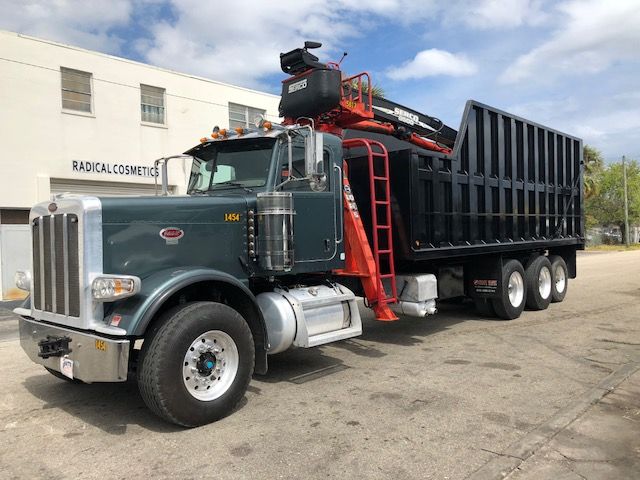
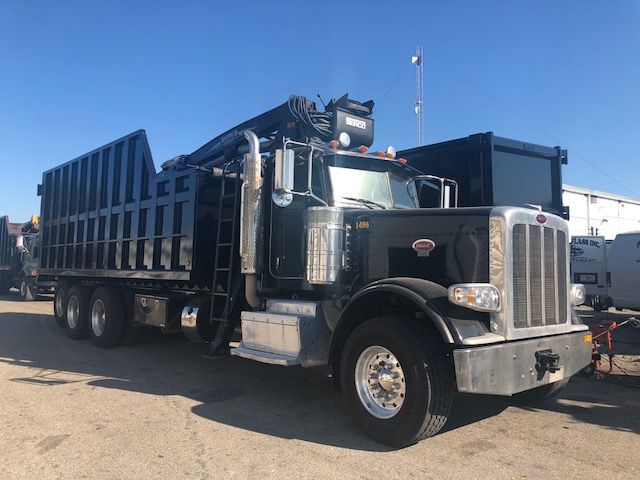
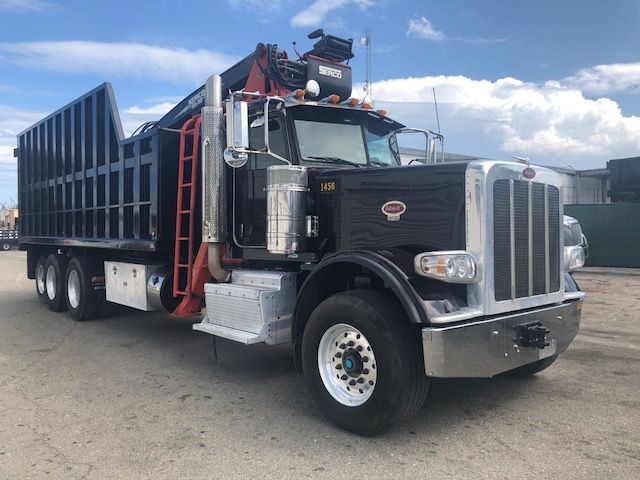
Selling a 2014 peterbilt grapple truck? List your 2014 peterbilt grapple truck for sale and reach thousands of commercial buyers.
2014 Peterbilt Grapple Trucks
The key buying decision is how the truck balances payload, reach, and maneuverability. Many 2014 Peterbilt grapple trucks were spec'd with Cummins diesel power, often in higher horsepower ratings, along with Allison automatics or manual transmissions such as an 8LL for low-speed jobsite control. A tri-axle setup helps support higher GVWR and larger body capacities, often in the 40 to 50-plus yard range depending on application and body material. Hardox or other abrasion-resistant body construction is common on debris units because brush, C&D material, and storm waste are hard on floors and sidewalls. Loader details matter just as much as the truck itself, including boom length, extension, lift capacity, swing performance, grapple type, and hydraulic cooling.
A buyer comparing 2014 units should pay close attention to the loader and hydraulic system first, then the chassis. Check for boom pin and bushing wear, turntable play, cylinder seepage, hose condition, pump performance, and signs of heat in the hydraulic oil. On the truck side, review front axle ratings, pusher or tag axle configuration, suspension type, frame condition around the body mounts, PTO operation, and brake life. If the truck has a rear hitch, that can add flexibility for towing support equipment or trailers, but it also makes overall spec matching more important. Mileage matters, but engine hours and loader hours often tell the real story on a grapple truck because these units spend so much time working stationary at high idle.
For many buyers, a 2014 Peterbilt grapple truck sits in a useful middle ground between acquisition cost and modern vocational capability. It is old enough to offer pricing advantages over late-model units, but new enough to deliver strong chassis support and familiar driveline options in many fleets. The best fit depends on the material being handled. Waste and storm debris operations often want a larger body and extended boom reach, while tree service and heavier brush applications may prioritize grapple strength, hydraulic speed, and axle capacity over sheer box volume. A well-matched 2014 Peterbilt grapple truck can still be a productive revenue unit if the loader, body, and chassis were spec'd for the work it is expected to do.
Frequently Asked Questions about 2014 Peterbilt Grapple Trucks
What should I look at first on a used 2014 Peterbilt grapple truck?
Start with the loader, hydraulic system, and body condition before focusing on cab cosmetics. Grapple trucks live hard lives through repetitive loading cycles, so boom wear, turntable looseness, leaking cylinders, cracked welds, PTO engagement, and hydraulic temperature control are critical. After that, inspect axle ratings, frame condition, suspension, transmission operation, and engine hour history. Loader hours and hydraulic maintenance records are often more important than odometer mileage alone.
Are 2014 Peterbilt grapple trucks usually tri-axle trucks?
Many are. Tri-axle configurations are common because grapple applications often require a combination of high body capacity, loader weight, and legal payload support. A lift axle or tag axle helps distribute weight and makes larger debris bodies more practical. The exact setup still needs to match the material being hauled, local bridge laws, and route conditions, especially for municipal or transfer work.
What engines and transmissions are common in a 2014 Peterbilt grapple truck?
Cummins diesel engines are common in this class, often paired with either Allison automatic transmissions or manual gearboxes such as an 8LL. Automatic transmissions are popular in stop-and-go routes and municipal work because they reduce driver fatigue and provide smooth PTO integration. Manual transmissions remain attractive for some fleets that want direct control at low speed or have technicians already familiar with that driveline setup.
How important is body material on a grapple truck?
Body material is a major durability factor. Many debris and waste bodies use Hardox or similar abrasion-resistant steel because grapple loading creates impact stress and material abrasion on the floor, sides, and tailgate areas. A stronger body can hold up better in brush, storm debris, and construction waste service, but buyers should still inspect crossmembers, hinge points, hoist mounts, and sidewall repairs. Capacity alone does not tell the full story if the body has fatigue or patchwork damage.
Is a 2014 Peterbilt grapple truck a good fit for storm cleanup and debris work?
Yes, if the truck is spec'd correctly. A 2014 Peterbilt grapple truck with a rear-mount loader, extended boom, and large debris body is well-suited for storm cleanup, land clearing, municipal bulk pickup, and vegetative waste hauling. The important factor is matching boom reach, grapple type, body volume, and axle capacity to the material stream. Light brush, mixed storm debris, and heavier wood waste each place different demands on the loader and chassis.