
Autocar Garbage Trucks For Sale in Texas

Have autocar garbage truck to sell? List it here to reach thousands of buyers.
Autocar Garbage Trucks in Texas
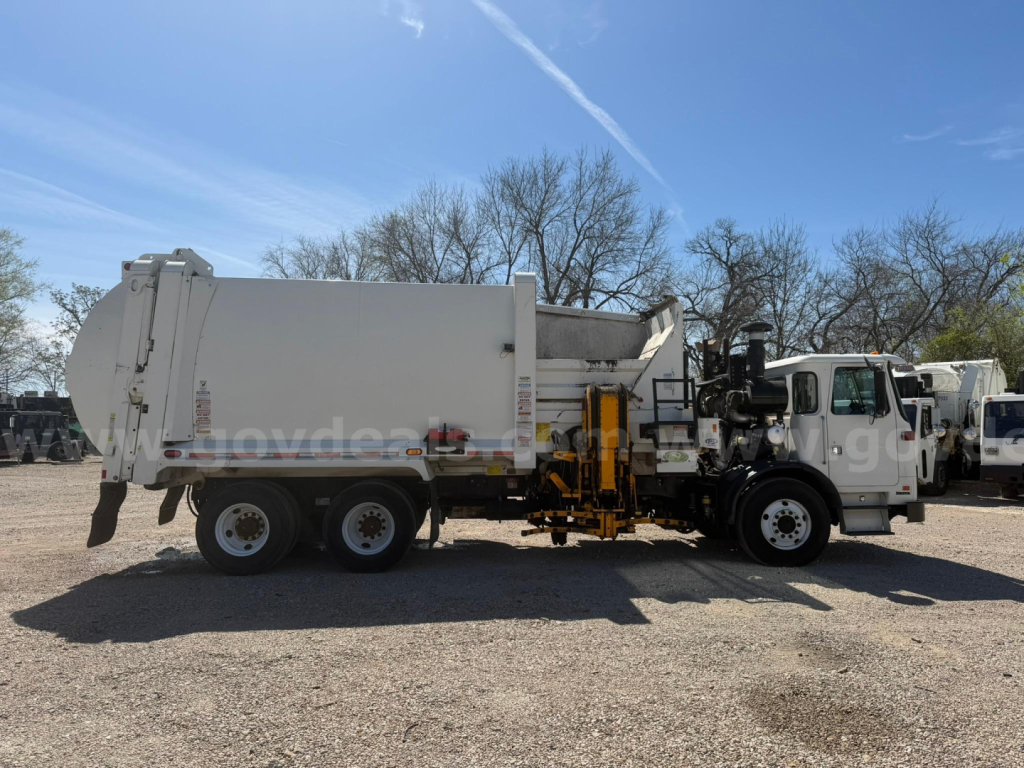
A buyer should start with the body style and route type. Automated side loaders are popular for residential collection because they cut labor requirements and keep the operator in the cab, while front loaders are better suited for commercial dumpsters and heavier repetitive lifts. Many Autocar refuse trucks in this class carry bodies from major manufacturers such as Heil or McNeilus, often in the 30 to 33-yard range. On side loader units, arm speed, reach, packing cycle time, and hopper design matter as much as engine specs. On front loaders, look closely at fork ratings, frame reinforcement, body floor wear, and hydraulic response under load.
Common powertrains on used Autocar garbage trucks include Cummins ISL or ISL9 engines paired with Allison automatic transmissions such as the 3000 or 4500 RDS. GVWR often falls in the 62,000 to 66,000-pound range with tandem rear axles, 20,000-pound front axles, and 46,000-pound rears. Rear ratios around 5.38 are typical for stop-and-go refuse service where launch performance matters more than highway speed. Some units are diesel and some are CNG, which can be attractive for municipal compliance or fuel-cost strategy, but CNG buyers should pay close attention to tank certification dates, fuel system service history, and local support for Cummins natural gas platforms.
The real value in a used Autocar garbage truck comes from route readiness, not just age or miles. Hour meter readings, PTO and hydraulic performance, packer condition, body corrosion, tailgate seal wear, arm bushings, steering components, and suspension condition tell the story. Refuse trucks live hard lives with constant starts, stops, and hydraulic cycling, so maintenance records matter more than appearance. In Texas, buyers should also inspect for heat-related wear in cooling systems, AC performance, and hydraulic hoses, especially on trucks that have spent years in municipal or residential service. A well-maintained Autocar refuse truck can be a productive long-term asset, but the right match depends on route density, container type, payload targets, and body support in your region.
Frequently Asked Questions about Autocar Garbage Trucks in Texas
What makes Autocar garbage trucks popular in refuse service?
Autocar garbage trucks are popular because the chassis is designed specifically for severe-duty vocational work, especially refuse applications. The cabover layout on many Xpeditor models improves maneuverability and visibility, which is valuable on residential streets, alleys, and tight commercial sites. Buyers also tend to value the compatibility with leading refuse body manufacturers, heavy front axle ratings, and powertrain combinations that are proven in stop-and-go collection work.
What is the difference between an automated side loader and a front loader on an Autocar garbage truck?
An automated side loader is typically used on residential routes where carts are picked up by a hydraulic arm from the side of the truck. It reduces labor needs and helps keep the driver inside the cab for faster, safer collection. A front loader is built for commercial refuse service and uses front forks to lift dumpsters over the cab into the body. The right choice depends on the containers you service, route density, labor model, and the weight and volume of the waste stream.
Are CNG Autocar garbage trucks a good buy?
CNG Autocar garbage trucks can be a strong option for buyers operating in areas with natural gas fueling infrastructure or fleets targeting emissions goals and fuel-cost control. The key is verifying the condition of the CNG tanks, fuel lines, regulators, and engine controls, along with checking tank certification dates and service records. A lower purchase price can be attractive, but buyers should confirm that qualified CNG service support is available in their operating area before committing.
What specs matter most when comparing used Autocar refuse trucks?
The most important specs are body type, body capacity, axle ratings, GVWR, engine and transmission model, wheelbase, and suspension setup. On refuse trucks, hydraulic system condition and body performance are just as important as chassis numbers. Buyers should also compare rear ratio, arm configuration on side loaders, fork capacity on front loaders, and overall route fit. A truck with the right body and vocational gearing will usually outperform a higher-horsepower truck that is mismatched to the work.
How do I evaluate a used Autocar garbage truck before purchase?
Start with service records, engine hours, and a full inspection of the hydraulic and refuse body systems. Check PTO engagement, pack cycle operation, arm or fork wear, tailgate seals, frame condition, suspension, steering, and brake performance. Look for signs of body cracking, corrosion, fluid leaks, and electrical issues that are common in hard-use refuse service. If the truck is CNG-powered, include a fuel system inspection by a qualified technician. A pre-purchase inspection is especially important because refuse trucks often accumulate wear based on hours and route severity, not just odometer miles.