
Food Trucks For Sale
Compare food trucks for sale by finished payload, kitchen layout, power capacity, and health approvals for mobile food service across the U.S. and Canada.
Have food truck to sell? List it here to reach thousands of buyers.
Food Trucks
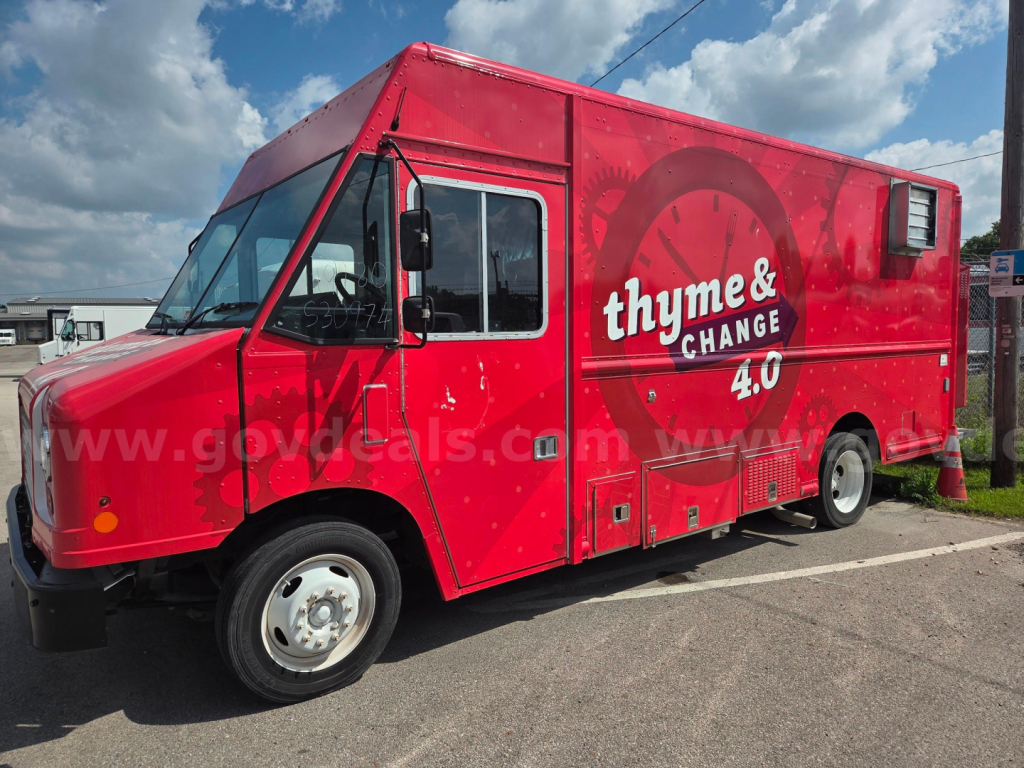
Step vans such as the Ford F-59 and Freightliner MT chassis offer standing room and broad interior layouts, while Chevrolet Express and GMC Savana cutaways can support purpose-built kitchen bodies. Wheelbase, rear overhang, service-window height, and doorway placement affect curbside service and access to appliances. Match ceiling height and aisle width to the crew, and keep cooking, cold storage, handwashing, and utensil washing workable during a rush. Body configuration matters more than the badge when equipment access or cleaning space is tight.
Grease-producing cooking equipment usually needs an approved hood and fire-suppression system, not just a roof vent. Confirm that the appliance layout, propane installation, electrical distribution, and plumbing meet the destination health and fire authorities' requirements, and size generator and shore-power capacity for simultaneous operating loads. Refrigeration should hold required temperatures during a full service shift, while cleanable floors, sealed wall joints, and accessible drains should make sanitation practical.
Used mobile kitchens need two inspections: the chassis and the food-service conversion. Check service records and ECM hours against mileage, then inspect brakes, tires, suspension, roof seams, floor structure, and wiring altered during the build. Ford F-59 chassis transitioned from the 6.8L gasoline V10 to the 7.3L V8 for 2020; later diesel emissions generations commonly bring DPF and SCR maintenance requirements. Run every appliance under load and look for refrigerant leaks, damaged propane lines, overdue fire-suppression inspections, and water damage beneath sinks.
New builds should be ordered around a written menu, equipment schedule, finished-weight estimate, and responsibility for health and fire approval. Chassis, kitchen equipment, generator, and conversion warranties may come from separate suppliers, so identify who handles each claim. The U.S. 12% federal excise tax generally applies to qualifying new heavy trucks, while typical lighter food-truck chassis fall below the taxable weight threshold. For northern U.S. and Canadian work, prioritize plumbing freeze protection and inspect salt-exposed frames and tank mounts; hot-region operation demands refrigeration recovery and ventilation under sustained kitchen heat. Canadian buyers should confirm provincial vehicle and propane requirements before transferring a U.S.-built conversion.
Also known as: Catering Truck, Lunch Truck, Mobile Kitchen Truck
Frequently Asked Questions about Food Trucks
Is a gas or diesel engine better for a food truck?
Gasoline is often the simpler choice for a food truck making short trips followed by long parked service periods. Frequent short trips can make diesel particulate filter regeneration harder, while heavier mobile kitchens may benefit from a diesel engine's torque. Compare loaded performance, local service support, and engine maintenance requirements. Kitchen electrical power should come from properly sized shore power or a generator rather than prolonged chassis-engine idling.
Do I need a CDL to drive a food truck?
In the United States, a single food truck rated or weighing 26,001 pounds or more generally requires a Class B CDL. A lighter truck does not require a CDL solely because the body contains a kitchen. Trailer combinations can change the required class, and air-brake restrictions affect driver eligibility. Canadian buyers must check provincial licence classes and air-brake endorsement requirements rather than applying the U.S. threshold.
How big should the fresh-water and wastewater tanks be on a food truck?
The FDA Food Code calls for a mobile food establishment's wastewater tank to be at least 15% larger than its water supply tank. The Food Code is a model standard, so confirm the locally adopted rule before specifying tanks. Fresh-water capacity must support handwashing, utensil washing, food preparation, and the planned service period. Canadian food-truck requirements must be checked with the applicable health authority.
What shore-power connection does a food truck need?
A 50-amp, 120/240-volt shore connection can supply up to 12,000 watts, while a 30-amp, 120-volt connection supplies up to 3,600 watts. A food truck's actual requirement comes from appliance nameplate loads, compressor starting demand, and applicable electrical sizing rules. Confirm voltage, plug configuration, circuit protection, and available site capacity. A qualified electrician should verify load balancing and safe transfer between generator and shore power.
Does a food truck need a commissary kitchen?
Many jurisdictions require a food truck to use an approved commissary for servicing, storage, or food preparation. Some allow a fully self-contained mobile kitchen to operate without one if specific conditions are met. Ask the destination health authority about potable-water filling, wastewater disposal, overnight storage, ingredient preparation, and cleaning arrangements. A seller's existing commissary agreement or operating permit may not transfer to a new owner.