
New Mack Flatbed Trucks For Sale in Texas
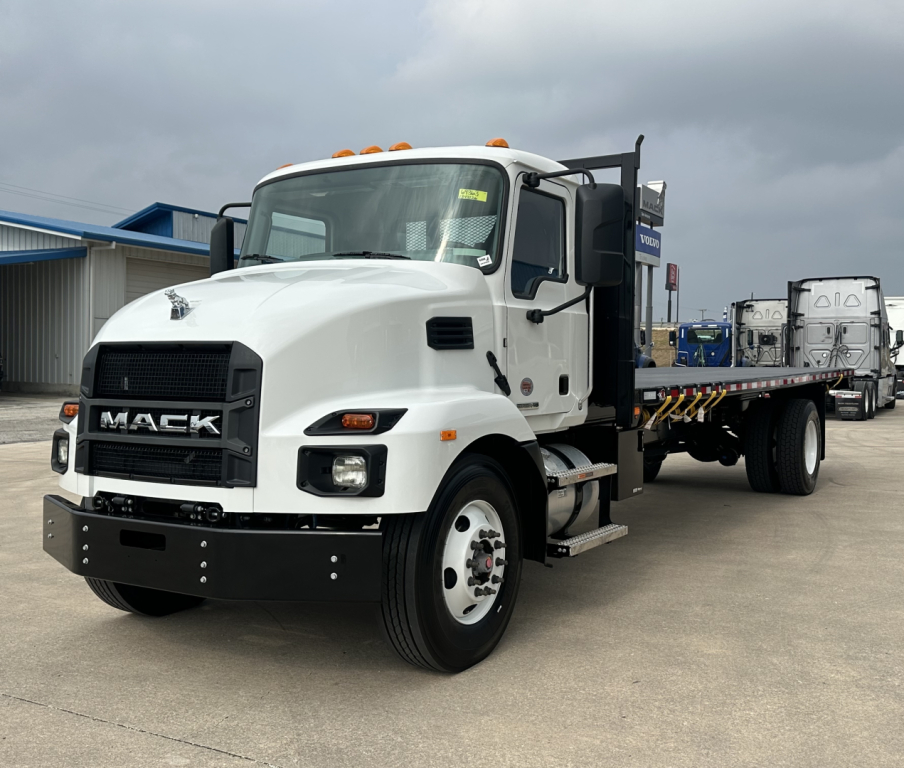
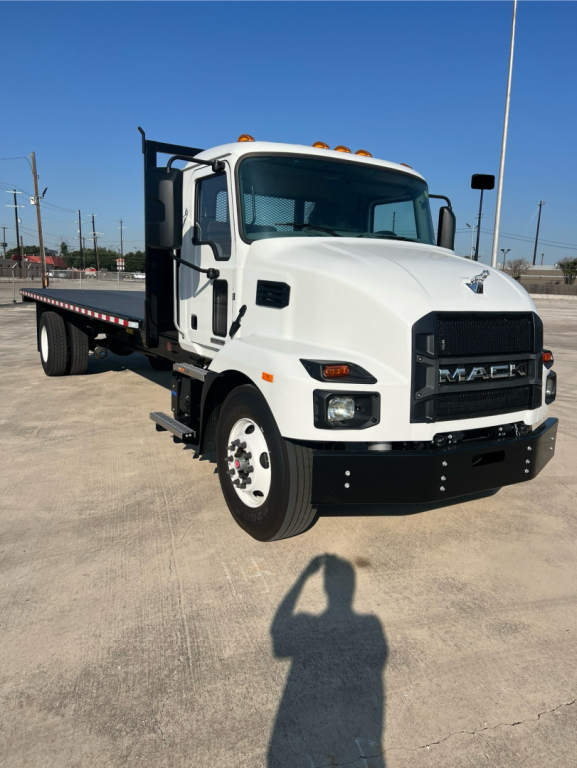
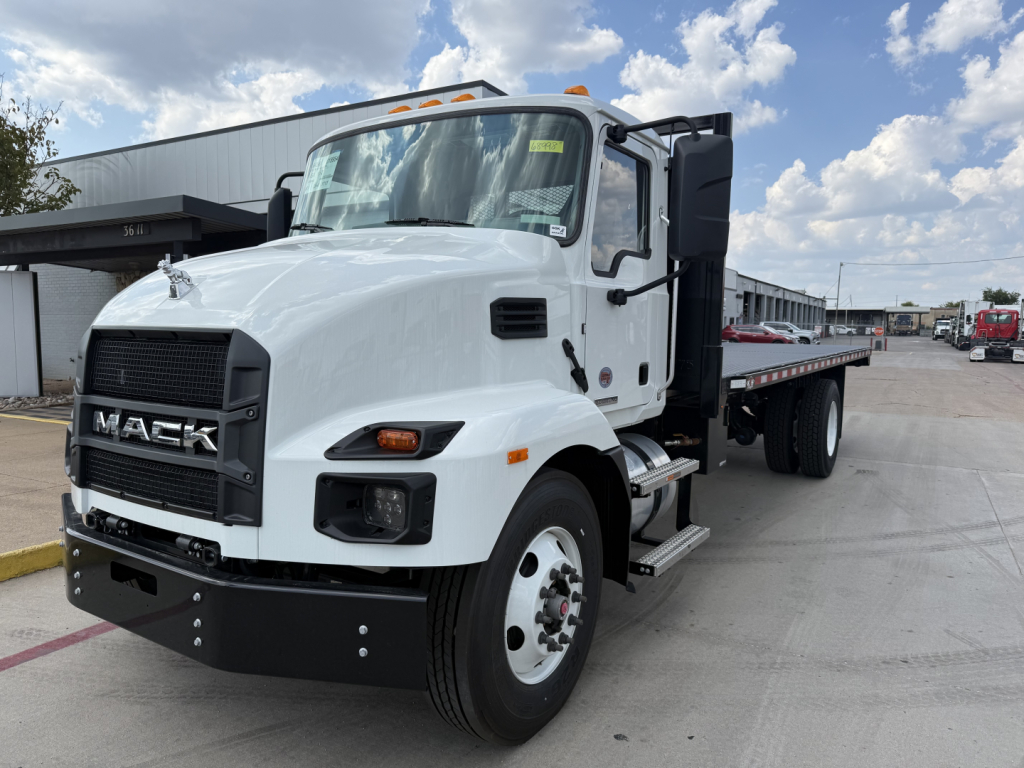
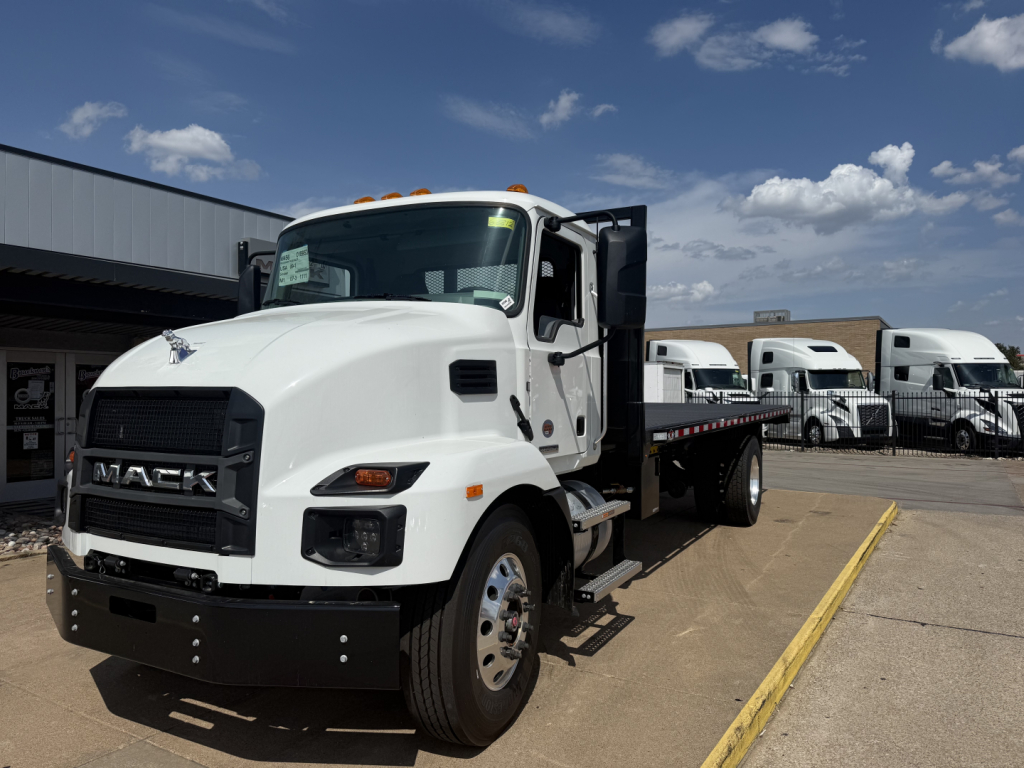
New Mack flatbed trucks for sale in Texas, including Mack MD6 models built for material hauling, jobsite delivery, and medium-duty flatbed work.

Selling a new mack flatbed truck? List your new mack flatbed truck for sale and reach thousands of commercial buyers.
New Mack Flatbed Trucks in Texas
On newer Mack flatbed trucks, one of the first things to evaluate is how the chassis and body were matched. Common specs in this class include wheelbases around the mid-200-inch range up to about 274 inches, single rear axles, 10,000-lb front axles, and rear axles in the 17,000-lb to 21,000-lb range. Many are powered by the Cummins ISB 6.7L engine in the 250 to 300 horsepower range with torque suited for stop-and-go vocational service, paired with an Allison 2500 RDS automatic transmission. That combination is popular because it is straightforward to run, durable in urban and jobsite duty cycles, and often easier to place with mixed-experience drivers than a manual setup. Rear axle ratios such as 5.29 or 5.57 are common when low-speed pulling power and loaded launch performance are priorities.
Body details matter as much as the cab and drivetrain. Texas buyers should look closely at deck length, deck material, floor thickness, tie-down points, rub rail design, headache rack construction, and whether the body is a fixed flatbed or a dumping flatbed. Many new units in this segment use steel beds around 23 to 24 feet long, which work well for lumber, bundled materials, generators, compact equipment, and fabricated products. If the truck will spend time on rough sites, a spring suspension and steel body can be a practical fit. If weight savings is more important, compare body construction carefully because every pound in the upfit affects legal payload. It is also worth confirming PTO provisions, trailer wiring, hitch setup, underbody toolbox layout, and clearance for forklifts or cranes if the truck may be used in a multi-role fleet.
For Texas operations, climate and route profile should influence the purchase decision. Hot-weather cooling performance, easy cab entry for frequent stops, and durable interior materials all matter on local and regional delivery routes. Buyers trying to stay under CDL thresholds should verify GVWR, body weight, and expected payload together rather than relying on the badge alone. A new Mack flatbed truck makes the most sense when the spec is tight to the work: wheelbase matched to body length, axle ratings matched to material density, and bed design matched to how freight is loaded and secured every day.
Frequently Asked Questions about New Mack Flatbed Trucks in Texas
What are new Mack flatbed trucks commonly used for?
New Mack flatbed trucks are commonly used for construction material delivery, equipment transport, palletized freight, steel and pipe hauling, municipal work, and contractor service. Their open deck makes them practical for loads that need side loading by forklift or top loading by crane. In medium-duty configurations such as the Mack MD6, they are especially well suited for local and regional routes with frequent stops and mixed jobsite access.
Is the Mack MD6 flatbed typically an under-CDL truck?
Many Mack MD6 flatbed trucks are designed to fit under CDL thresholds, but that depends on the final GVWR and the weight of the installed body and equipment. A steel flatbed, dump function, toolboxes, liftgate, or towing package can change the usable payload and compliance profile. Buyers should verify the actual GVWR on the completed truck and compare it to the intended cargo weight, driver requirements, and state operating rules.
What specs matter most when buying a new flatbed truck in this class?
The most important specs are GVWR, front and rear axle ratings, wheelbase, body length, engine horsepower and torque, transmission, rear axle ratio, and suspension type. On the body side, deck length, steel or aluminum construction, floor thickness, tie-down layout, headache rack design, and dump capability can have just as much impact on productivity as the chassis itself. The best setup is the one that matches the actual freight, loading method, and route conditions.
Why are Allison automatic transmissions common on Mack flatbed trucks?
Allison automatic transmissions are common in medium-duty flatbed applications because they are well suited for stop-and-go work, urban delivery, and jobsite operation. They reduce driver fatigue, simplify training, and provide smooth power delivery when maneuvering in tight spaces or pulling away with a load. In vocational service, that can improve uptime and make the truck easier to use across a wider driver pool.
Should I choose a fixed flatbed or a dumping flatbed?
A fixed flatbed is usually the better choice for general freight, palletized materials, and loads that are placed and removed by forklift or crane. A dumping flatbed adds versatility for loose materials, debris, and jobs where the operator needs to unload without external equipment, but it also adds weight, cost, and mechanical complexity. The right choice depends on whether the truck will spend most of its time hauling packaged materials or handling mixed-duty jobsite work.