
2002 Freightliner Conventional Sleeper Trucks For Sale
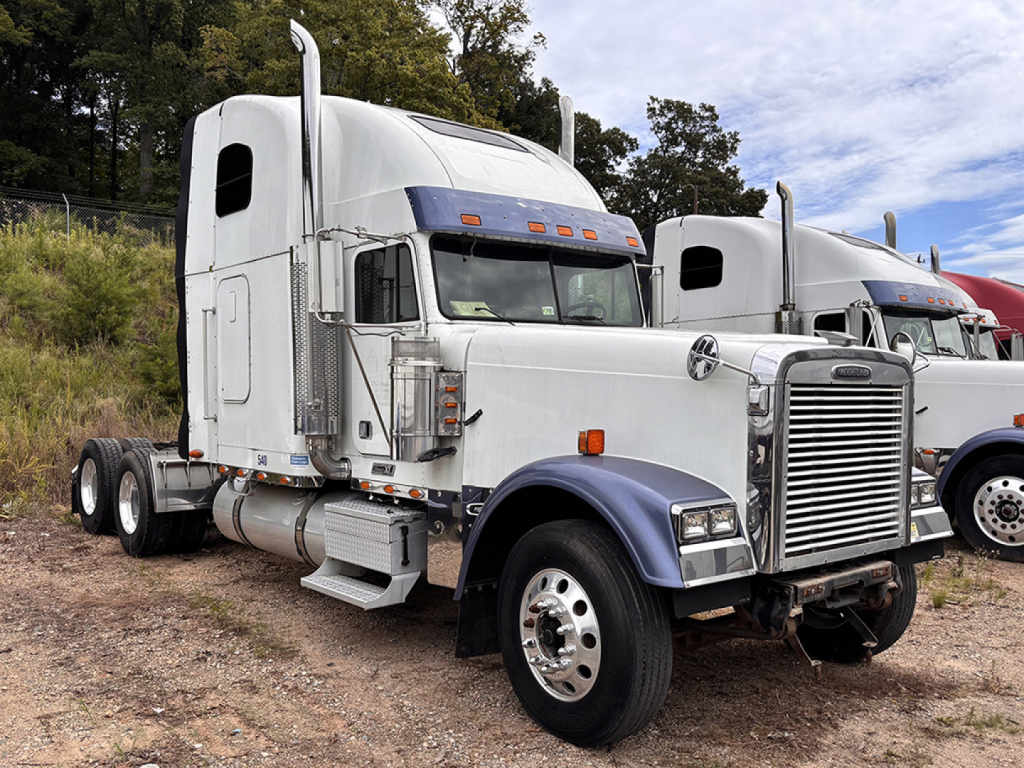

Have 2002 freightliner conventional sleeper truck to sell? List it here to reach thousands of buyers.
2002 Freightliner Conventional Sleeper Trucks
Most 2002 Freightliner sleeper trucks were spec'd with Detroit Diesel, Caterpillar, or Cummins power, often paired with Eaton Fuller manual transmissions or automated manual setups depending on the original application. Horsepower and torque ratings vary widely, so it is important to match the truck to the lane. A lighter regional or dry van spec may prioritize fuel economy with moderate horsepower and faster rear ratios, while a heavier flatbed, reefer, or multi-state haul truck may have higher horsepower, deeper gearing, and a heavier suspension package. Common buyer checkpoints include gross vehicle weight rating, rear axle capacity, wheelbase, fifth wheel configuration, fuel tank capacity, and suspension type.
Cab condition matters on a 2002 model as much as drivetrain condition. Freightliner conventionals from this era are known for roomy interiors and straightforward layouts, but the real value is in maintenance history, frame condition, wiring integrity, and signs of wear in the sleeper and dash. Look closely at bunk setup, HVAC performance, insulation, window seals, and storage if the truck will be used for extended time on the road. Air ride cab and suspension components, steering wear, brake type, and tire condition should also be reviewed carefully, especially on trucks that have spent years in heavy interstate service.
For many buyers, the appeal of a 2002 Freightliner conventional sleeper is that it can still deliver dependable over-the-road capability at a lower acquisition cost than newer aerodynamic highway tractors. It is also known as a sleeper cab semi truck or highway sleeper tractor. The best fit depends on freight type, annual mileage, and how much reconditioning has already been done. A well-spec'd truck with the right sleeper, proven engine platform, and documented repairs can still be a solid asset for general freight, livestock, refrigerated work, flatbed operations, and dedicated contract lanes.
Frequently Asked Questions about 2002 Freightliner Conventional Sleeper Trucks
What should I look for first on a 2002 Freightliner conventional sleeper truck?
Start with the major cost items: engine model, transmission, rear axle ratio, mileage, and maintenance records. On a truck of this age, documented repairs and overall mechanical condition often matter more than brand preference alone. Buyers should also inspect frame rails, suspension wear, sleeper condition, cooling system service history, brake components, and signs of electrical repairs or corrosion.
What engines are commonly found in 2002 Freightliner sleeper trucks?
Many 2002 Freightliner conventional sleepers were spec'd with Detroit Diesel, Caterpillar, or Cummins engines, depending on the original fleet or owner-operator order. The exact engine affects fuel economy, parts availability, service familiarity, and resale appeal. It is worth confirming horsepower, torque rating, emissions configuration for the era, and whether any major engine work has already been completed.
Are 2002 Freightliner conventional sleepers good for long-haul use?
They can still be a good fit for long-haul work if the truck has been maintained properly and the sleeper matches the application. A truck used on multi-day runs should have a functional bunk area, dependable HVAC, adequate fuel capacity, and a drivetrain spec that fits highway cruising and loaded terrain. Driver comfort becomes especially important on older trucks, so sleeper layout, seat condition, ride quality, and noise levels deserve close attention.
How important is wheelbase and axle ratio on a sleeper tractor?
Wheelbase and axle ratio have a direct effect on maneuverability, ride quality, bridge compliance, and highway efficiency. A longer wheelbase can improve ride and allow larger fuel capacity, but it may reduce maneuverability in tight docks or urban lanes. Axle ratio determines how the truck performs under load and at cruising speed, so the right ratio depends on trailer type, terrain, and target fuel economy.
Is a 2002 Freightliner conventional sleeper better suited to an owner-operator or a small fleet?
It can work for either, but the buying criteria are slightly different. An owner-operator may prioritize sleeper comfort, service records, and a known engine platform that can be maintained economically. A small fleet may focus more on standardization, uptime, parts commonality, and whether the truck can be integrated into existing maintenance practices. In both cases, a thorough inspection is critical because age-related issues can outweigh a low purchase price.