
Mack Conventional Daycab Trucks For Sale in Illinois
Browse Mack conventional daycab trucks with MP7 or MP8 power, mDrive or manual transmissions, and specs suited for regional and local haul work.
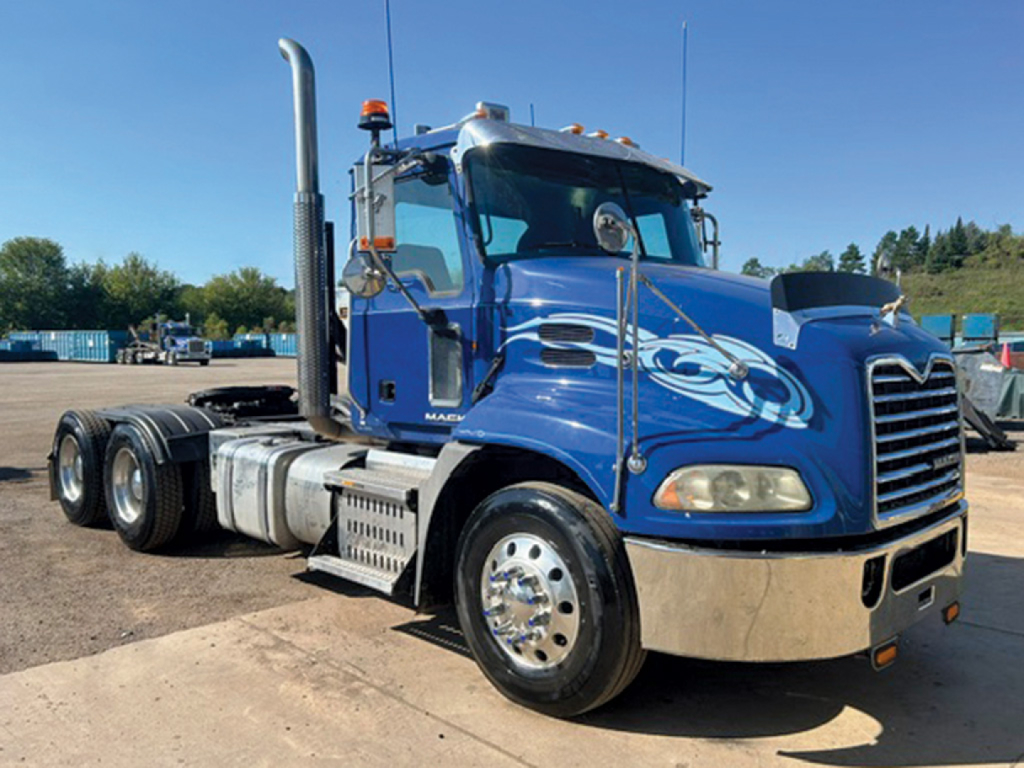

Have mack conventional daycab truck to sell? List it here to reach thousands of buyers.
Mack Conventional Daycab Trucks in Illinois
Two of the most common Mack daycab platforms are the CXU series and the Anthem. Older CXU613 and CXU612 models are well known in regional fleet service, while newer Anthem daycabs bring a more updated aerodynamic package and driver environment. Typical engine choices in this class include the Mack MP7 and MP8. MP7-powered trucks often land in the mid-300 to low-400 horsepower range and are a strong match for regional van, reefer, and lighter bulk applications. MP8-powered daycabs step up for heavier gross weights, more aggressive terrain, and buyers who want stronger torque reserves. Transmission choices usually come down to Mack mDrive automated manual or a traditional 10-speed manual, and that decision should be based on driver preference, route type, maintenance philosophy, and stop-and-go frequency.
The main spec decisions on a Mack conventional daycab are axle layout, rear axle rating, wheelbase, and rear ratio. A single-axle setup with a 23,000-pound rear is often chosen for lighter regional work, better fuel economy, and easier urban operation. Tandem-axle trucks with 40,000-pound rears are more common for general freight, heavier trailers, and operations that need broader versatility. Ratios such as 2.64, 2.67, and 3.08 tell you a lot about the truck’s intended job. Lower numerical ratios generally favor highway fuel economy, while a higher ratio helps with startability and heavier loads. Wheelbases in this segment often range from the upper 150-inch range into the 180-inch range, which affects trailer swing clearance, bridge law flexibility, ride quality, and how the truck works with different kingpin settings.
A serious buyer should also pay attention to suspension type, fifth wheel configuration, brake spec, and cab equipment. Air ride suspension is common and preferred for ride quality and cargo protection. Adjustable or air-slide fifth wheels add flexibility if the truck will pull different trailer lengths or needs kingpin adjustment across a mixed fleet. Low-profile 22.5 tires, aluminum or disc wheels, roof fairings, cab extenders, and quarter fenders are all typical highway-focused features on Mack daycabs. Inside the cab, tilt and telescoping steering, cruise control, power windows, and air conditioning matter more than they may seem on high-frequency regional routes. For buyers comparing used Mack daycab trucks, the best value usually comes from matching engine rating, transmission type, axle capacity, and gearing to the exact lane the truck is expected to run.
Frequently Asked Questions about Mack Conventional Daycab Trucks in Illinois
What is a Mack conventional daycab truck best used for?
A Mack conventional daycab truck is best suited for regional haul, local freight, dedicated route work, drayage, and terminal-to-terminal operations where the driver returns home daily or does not need sleeper accommodations. The conventional hood design gives easier engine access than a cabover, and the daycab layout reduces weight and overall cost compared with a sleeper tractor. This class is commonly used for dry van, reefer, flatbed, tank, and general freight applications depending on the axle and gearing spec.
What is the difference between a Mack MP7 and MP8 in a daycab?
The Mack MP7 is typically chosen for fuel-conscious regional service and moderate gross combination weights, while the Mack MP8 is better suited for heavier freight, stronger torque demand, and routes with more grade or start-stop load stress. Both are proven heavy-duty diesel platforms, but the MP8 generally gives more pulling power and a broader comfort margin under load. A buyer should match the engine to trailer type, average payload, and terrain instead of choosing strictly by horsepower.
Should I choose a Mack mDrive or a 10-speed manual in a daycab?
Mack mDrive is often the better fit for high-frequency regional and urban work because it reduces driver fatigue, helps standardize shifting behavior across a fleet, and can support fuel-efficiency goals. A 10-speed manual still appeals to operations that prefer simpler driver control, have technicians familiar with manual drivetrains, or run applications where the operator wants direct gear selection. The right choice depends on driver pool, route conditions, service support, and fleet maintenance practices.
What rear axle ratio is common on Mack conventional daycab trucks?
Ratios such as 2.64, 2.67, and 3.08 are common in this category, and each serves a different purpose. A 2.64 or 2.67 ratio is generally aimed at highway-oriented regional work where lower engine rpm and fuel economy are priorities. A 3.08 ratio gives better launch feel and can be a better match for heavier loads or more demanding terrain. Rear ratio should always be evaluated with transmission type, tire size, horsepower, and typical gross weight.
What should I inspect first on a used Mack daycab tractor?
Start with the engine, transmission, and aftertreatment history, then confirm axle ratings, suspension type, wheelbase, and fifth wheel setup match the intended application. On a regional Mack daycab, it is also important to inspect cab mounts, steering components, air ride suspension wear, brake condition, and tire wear patterns for signs of alignment or suspension issues. Service records and fault-code history are especially valuable because a daycab can look clean cosmetically while still having expensive drivetrain or emissions-related needs.