
Used 2018 International Conventional Daycab Trucks For Sale
Shop used 2018 International conventional daycab trucks. Compare LT625 specs, Cummins X15 or A26 power, wheelbase, axle ratings, and driveline setup.
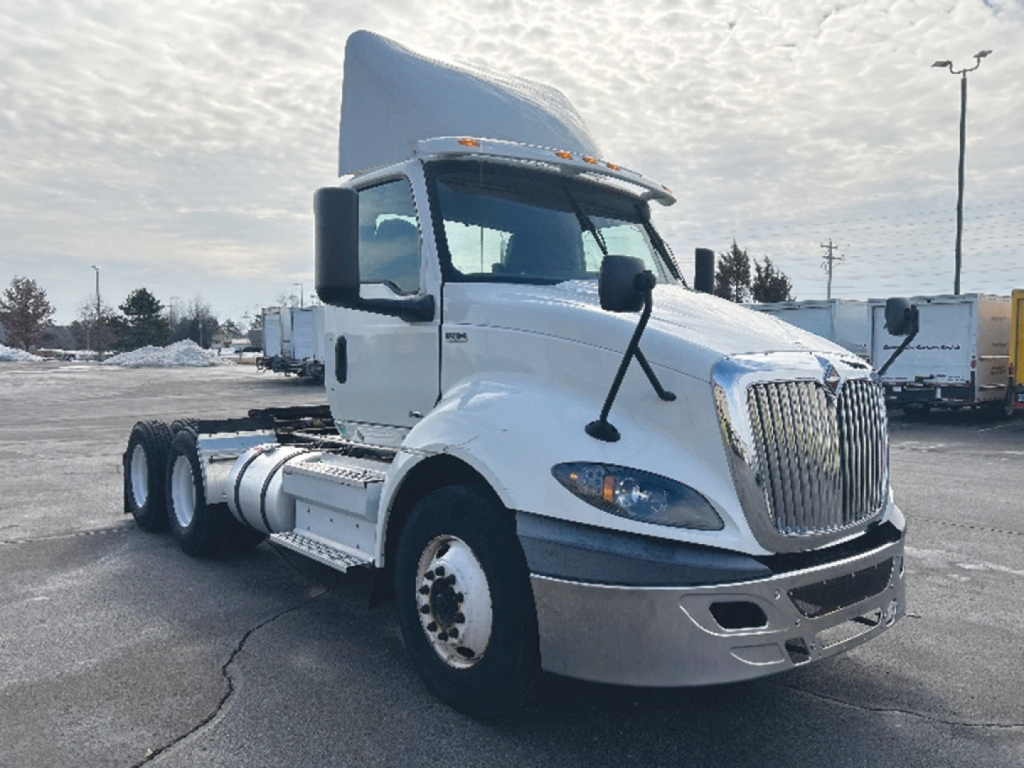
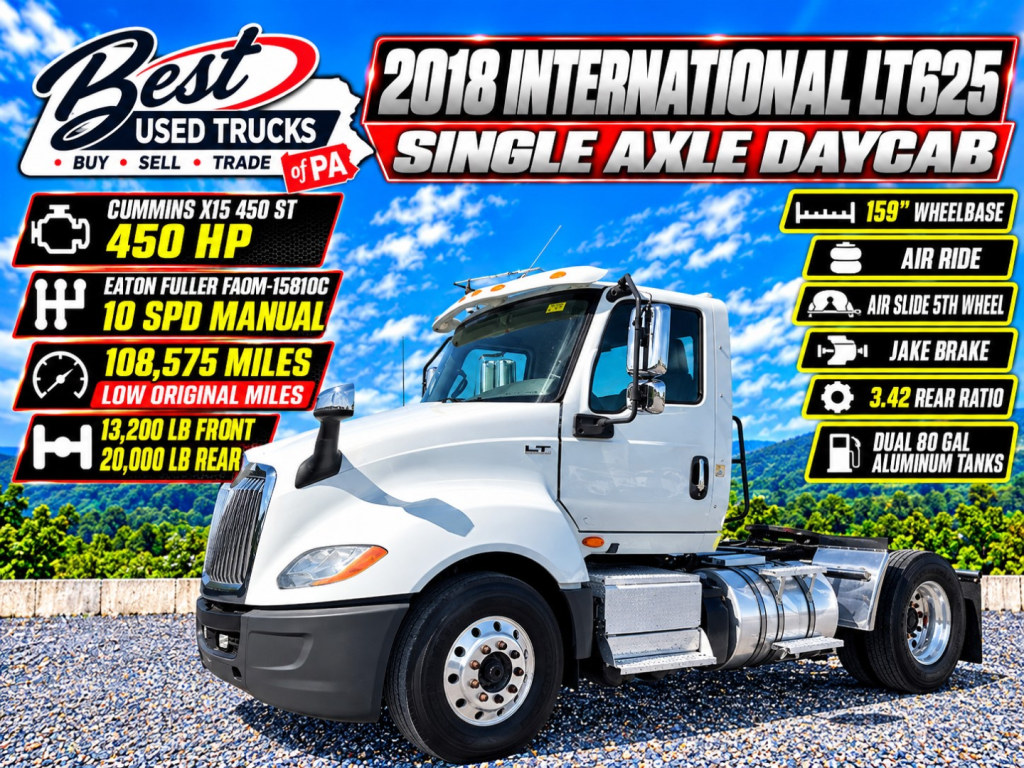
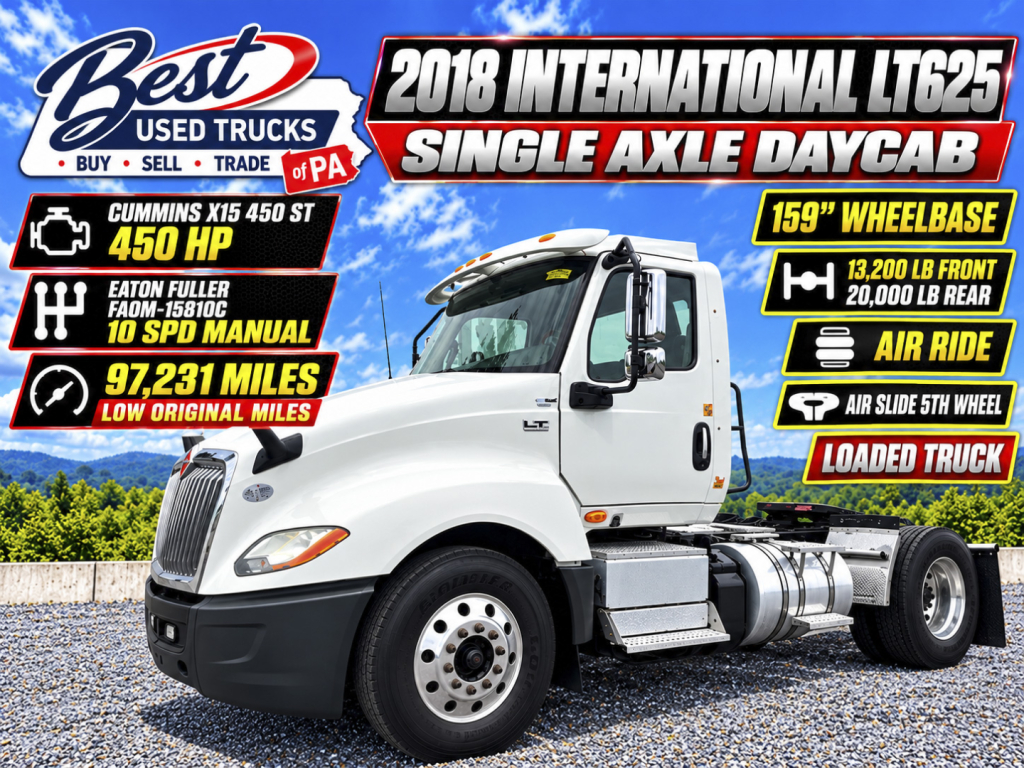

Selling a used 2018 international conventional daycab truck? List your used 2018 international conventional daycab truck for sale and reach thousands of commercial buyers.
Used 2018 International Conventional Daycab Trucks
For most fleets and owner-operators, the spec decisions that matter most are rear axle ratio, wheelbase, suspension, and fifth wheel setup. A 3.25 or 3.36 ratio is common on road-spec daycabs and can make a noticeable difference in cruise RPM, fuel economy, and startability depending on load and terrain. Many 2018 International daycabs are built with 40,000 lb rears, air ride suspension, and air slide fifth wheels, which gives them flexibility for van, reefer, and general freight work. Wheelbases in the mid-170 inch range are common and usually strike a good balance between trailer gap, ride quality, and turning radius.
Condition matters more than badge or horsepower on a used daycab. Buyers should pay close attention to emissions history, engine fault activity, transmission calibration, clutch wear on manual units, and the health of aftertreatment components including DPF, SCR, and DEF systems. Service records for EGR, turbo, injector, and NOx sensor work can tell you a lot about how the truck was maintained. Also inspect cab mounts, steering components, suspension bushings, kingpins, frame condition, fifth wheel wear, and brake type since many trucks from this era may be equipped with either drum or disc brakes depending on original spec.
A 2018 International conventional daycab can be a strong fit for buyers who want a later-model aerodynamic tractor without stepping into new-truck pricing. The cab is generally easy to enter and exit during multi-stop work, and many examples include practical fleet specs such as dual aluminum tanks, power windows, cruise control, tilt and telescoping steering, and aluminum wheels. The best unit for the job is not just the cleanest truck on the lot. It is the one with the right horsepower, gearing, axle capacity, and maintenance history for the lanes it will actually run.
Frequently Asked Questions about Used 2018 International Conventional Daycab Trucks
What engine is most common in a used 2018 International conventional daycab?
The most common engines in a 2018 International conventional daycab are typically the Cummins X15 and, in some configurations, the Navistar A26. The Cummins X15 is widely recognized for broad service support and is often preferred in linehaul and heavier regional applications. The A26 can be attractive for fuel-conscious fleets and buyers familiar with International powertrains. The right choice depends less on brand preference and more on horsepower rating, torque curve, emissions service history, and how the truck was originally spec'd.
Is a 2018 International daycab good for regional freight work?
Yes, a 2018 International daycab is commonly used for regional freight, dedicated lanes, and local hauling. The aerodynamic cab design, highway gearing, and typical 40,000 lb rear axle setup make it well suited for van and reefer service. It can also work in tanker or other vocational-adjacent applications if the wheelbase and PTO provisions match the job. Buyers should confirm that the axle ratio, transmission, and fifth wheel position align with the trailer lengths and payloads they expect to pull.
What should I inspect first on a used 2018 International LT625 daycab?
Start with the engine and aftertreatment history, then move to the transmission, rear ends, and chassis. Pull fault codes if possible and review records for DPF cleaning, DEF system repairs, NOx sensors, EGR work, and turbo replacement. After that, inspect the fifth wheel, frame rails, suspension, kingpins, brakes, tires, and steering system. Cab condition also matters on a daycab because frequent entry and exit can accelerate wear on seats, door hardware, window regulators, and interior controls.
What axle ratio is best in a used International conventional daycab?
A common ratio such as 3.25 or 3.36 is often a good fit for highway and regional daycab work, but the best ratio depends on terrain, trailer weight, tire size, and transmission type. Lower numerical ratios can help reduce engine RPM at cruise and improve fuel economy on flatter lanes. Slightly deeper ratios may improve launch and grade performance in heavier service. The smartest approach is to match the ratio to the truck's actual route profile instead of assuming one setup works for every operation.