
2027 Conventional Daycab Trucks For Sale in Kansas

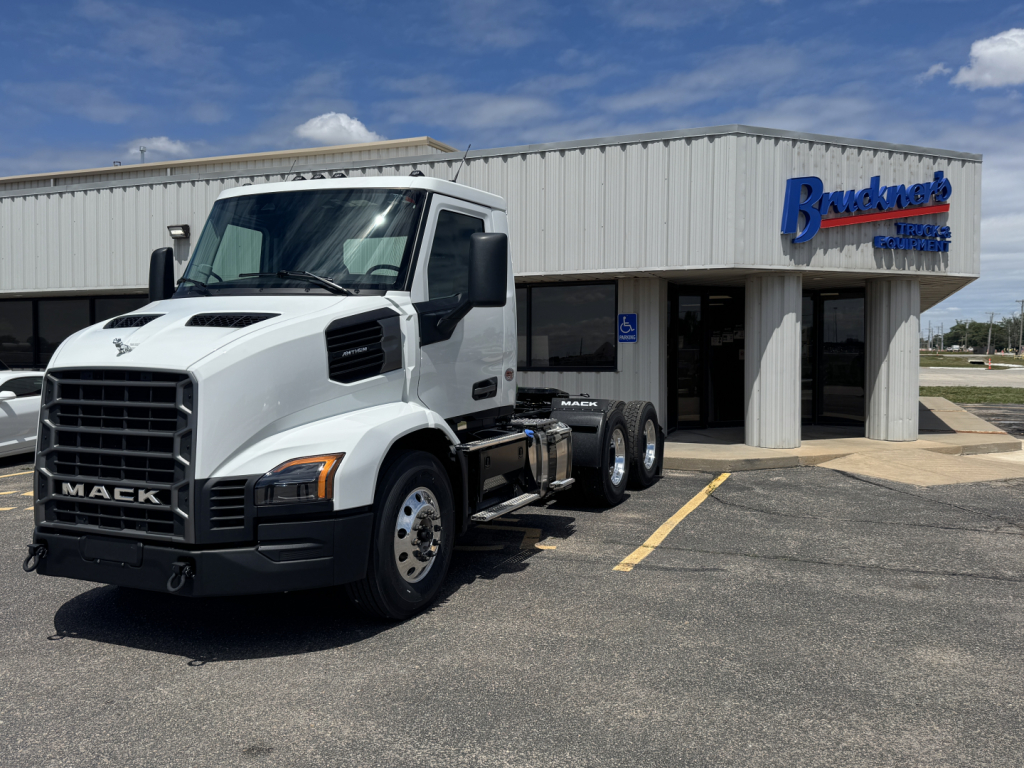
Have 2027 conventional daycab truck to sell? List it here to reach thousands of buyers.
2027 Conventional Daycab Trucks in Kansas
The biggest buying decisions usually start with axle and wheelbase setup. Most conventional daycabs in this class are 6x4 tandem axle tractors, though 6x2 and specialty vocational-leaning specs also exist. Common ratings include a 12,000 to 13,200 pound front axle and 40,000 pound rears, with wheelbases often selected around fifth wheel placement, trailer swing clearance, bridge law needs, and overall maneuverability. A shorter wheelbase helps in tight docks and city delivery environments, while a longer wheelbase can improve ride quality and allow more flexibility with sliding fifth wheels, headache racks, and deckplate equipment. Buyers should pay close attention to kingpin settings, fifth wheel travel, and frame space if the truck will pull different trailer lengths or move between dry van, reefer, hopper, or flatbed service.
Powertrain choice has a direct effect on cost per mile and driver acceptance. Many 2027 conventional daycab trucks are spec'd with 11- to 13-liter diesel engines in the 400 to 455 horsepower range, paired with automated manual transmissions that balance fuel economy with easy operation. That setup is common for fleets focused on regional lanes and stop-and-go efficiency, but heavier applications may justify higher torque ratings, more aggressive rear axle ratios, and cooling packages suited for sustained gross weights. Suspension type, fuel capacity, and brake spec also deserve a close look. Air ride rear suspension is typical for highway comfort and freight protection, disc brakes are increasingly common, and aluminum wheels, fairings, and downsped drivetrains can all influence operating efficiency.
Cab environment still matters on a daycab because the truck may run 10 to 14 hours a day. Look for seat quality, visibility, steering wheel adjustment, dash layout, and enough storage for paperwork, tools, and driver essentials. Modern conventional daycabs also tend to include collision mitigation, lane departure warning, adaptive cruise, and telematics capability, which can be important for fleet compliance and insurance. A well-matched daycab should fit the lane, the trailer, and the payload before anything else. When the spec is right, a conventional daycab delivers strong uptime, easier driver turnover, and lower wasted weight than a sleeper tractor doing the same job.
Frequently Asked Questions about 2027 Conventional Daycab Trucks in Kansas
What is a conventional daycab truck used for?
A conventional daycab truck is a highway tractor without a sleeper, used for local, regional, and dedicated routes where overnight accommodations are not necessary. It is common in dry van, reefer, flatbed, tanker, hopper, and container work. Daycabs are also popular in shuttle operations, port drayage, agriculture, and short-haul freight because they are lighter and more maneuverable than comparable sleeper tractors.
What specs matter most when buying a 2027 conventional daycab?
The most important specs are axle configuration, engine horsepower and torque, transmission type, rear axle ratio, wheelbase, front and rear axle ratings, and fifth wheel placement. Those specifications determine how the truck handles payload, trailer compatibility, turning radius, bridge compliance, and fuel economy. Buyers should also review suspension, brake type, tire size, fuel tank capacity, and any safety or telematics systems required by their operation.
Is a daycab better than a sleeper for Kansas regional hauling?
For many Kansas regional operations, a daycab is the more efficient choice because it removes the extra weight and cost of a sleeper that is not being used. That can improve payload capacity, reduce acquisition cost, and make the truck easier to maneuver in elevators, plants, feed yards, and distribution yards. A sleeper still makes sense if routes regularly turn into overnight runs or if the truck is expected to cover long-distance irregular lanes.
What engine size is common in a conventional daycab truck?
Many conventional daycab trucks are equipped with 11- to 13-liter diesel engines, typically rated from about 400 to 455 horsepower for general highway and regional service. That range usually provides enough torque for loaded trailers while supporting fuel-efficient driveline specs. Heavier or more demanding applications may call for higher torque output, different axle ratios, or vocational-oriented drivetrain choices.
How does wheelbase affect a conventional daycab tractor?
Wheelbase affects maneuverability, ride quality, trailer gap, and how the fifth wheel can be positioned for different loads and trailer lengths. A shorter wheelbase generally works better in tight urban or yard conditions, while a longer wheelbase can improve straight-line stability and provide more frame room for equipment. The right wheelbase depends on trailer type, kingpin setting, bridge formula requirements, and the amount of turning clearance needed in daily operation.