
New Volvo Cab and Chassis Trucks For Sale
Shop new Volvo cab and chassis trucks built for vocational upfits, heavy GVWR ratings, PTO work, and severe-duty jobsite performance.
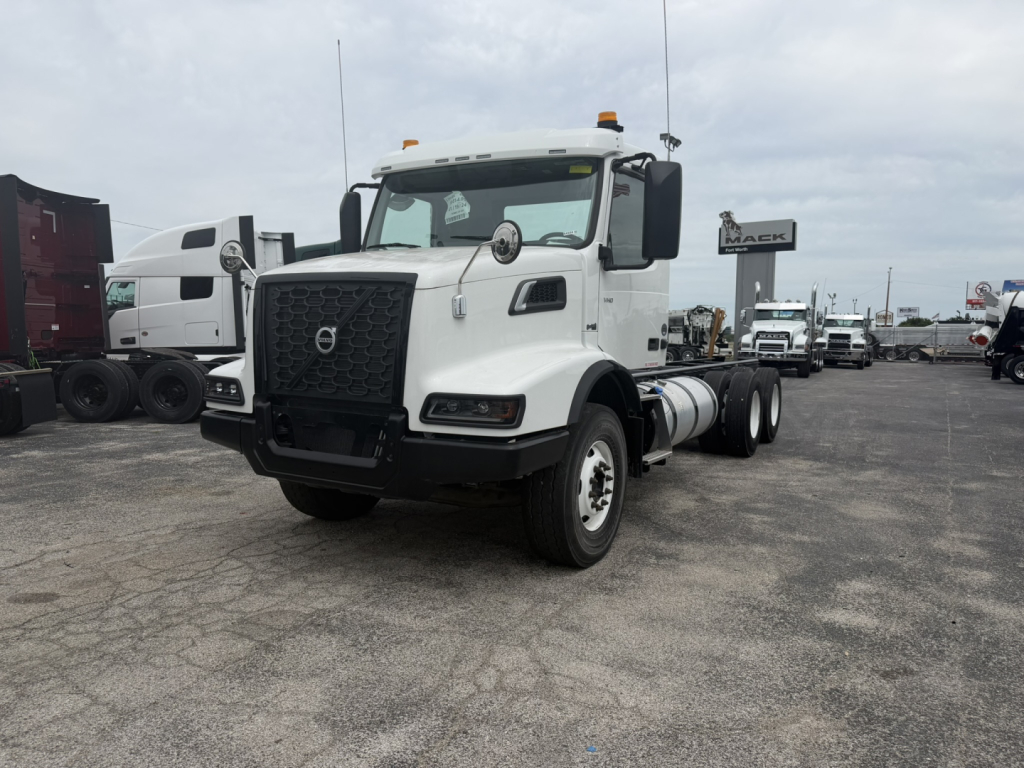
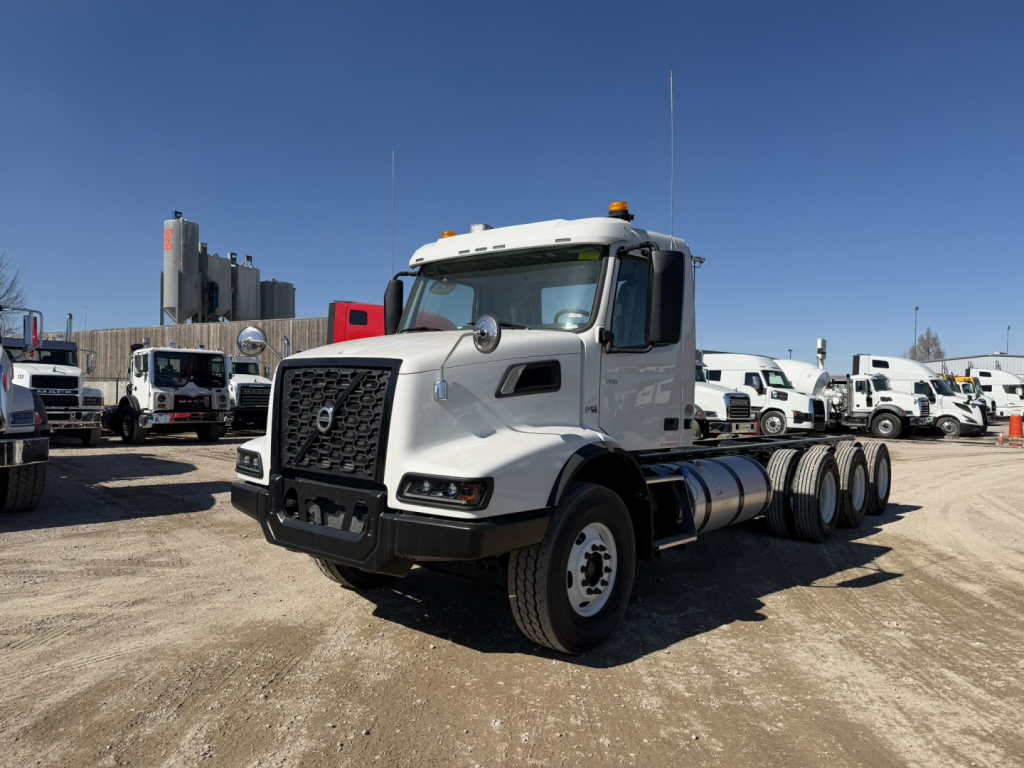
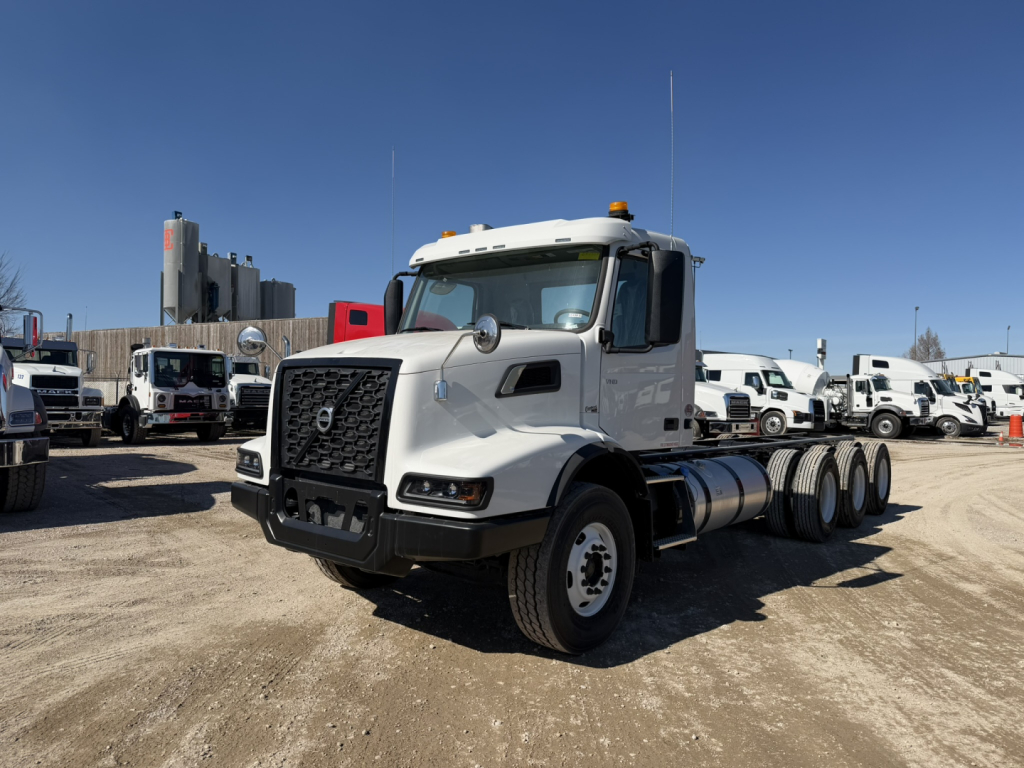
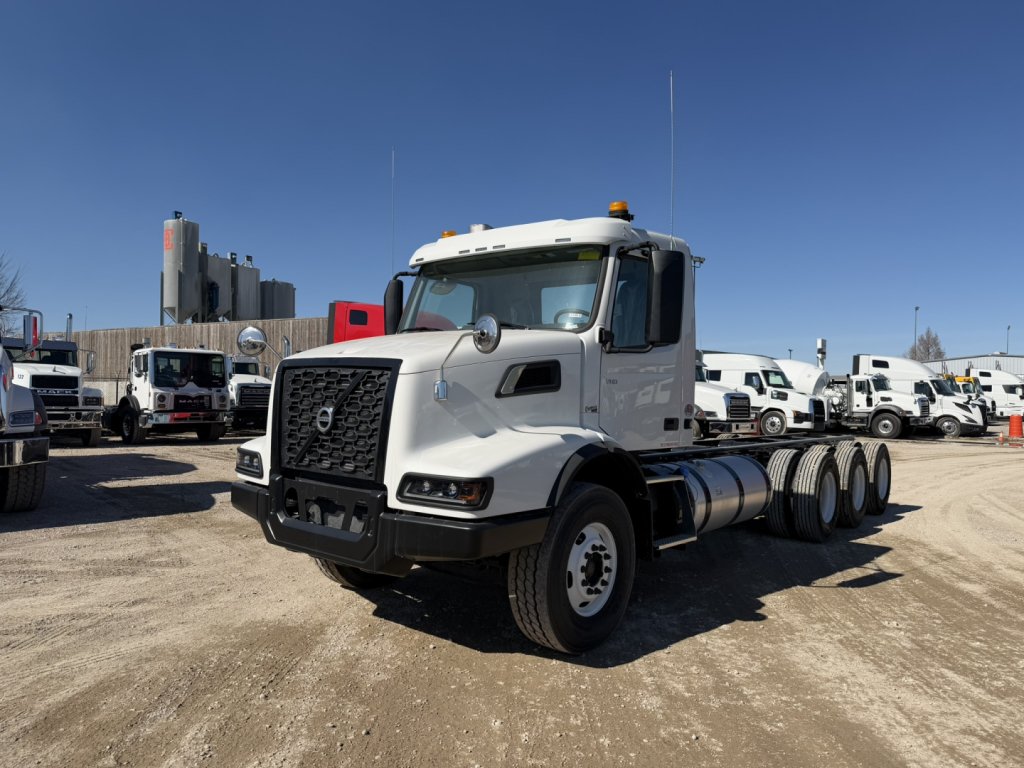
Selling a new volvo cab and chassis truck? List your new volvo cab and chassis truck for sale and reach thousands of commercial buyers.
New Volvo Cab and Chassis Trucks
For many buyers, the first real decision is axle layout and suspension. New Volvo cab and chassis trucks in vocational trim are often spec'd as tandem or tri-drive configurations, with heavy rear axle capacities and locking differentials for off-road traction. Sample specs in this class show 20,000 lb front axles, tridem rear setups around 69,000 lb, wheelbases near 249 inches, and GVWRs approaching 89,000 lb. Rear ratios like 4.89 are common when the truck is expected to pull hard at low speed or operate in mud, steep grades, soft ground, and undeveloped jobsites. Suspensions such as Hendrickson PRIMAAX EX are popular because they balance articulation, stability, and serviceability under heavy vocational loads.
Powertrain choice matters because many cab and chassis trucks spend their lives driving auxiliary equipment as much as moving down the road. Volvo D13 engines in the 425 horsepower range are a common fit for heavy VHD applications, especially when paired with Eaton Fuller manual transmissions such as the RTO-16908LL or similar deep-reduction setups. That kind of transmission is valued for precise control on job sites, launch performance under load, and PTO flexibility for hydraulic pumps, blowers, vac systems, hoists, and other body-mounted equipment. Buyers should also pay attention to cooling package size, frame rail strength, brake type, fuel tank placement, and back-of-cab space, since all of those details affect how easily the chassis will accept the final body.
A good Volvo cab and chassis spec is one that matches the body builder's requirements from the start. Front axle loading, cab-to-axle dimension, wheelbase, frame clearances, and PTO access all need to align with the finished application. Volvo's vocational chassis are known for solid driver ergonomics, durable construction, and drivetrain integration that works well in demanding municipal, construction, utility, oilfield, and aggregate service. If the truck will spend more time on rough ground than on interstate miles, prioritize traction, articulation, and low-speed gearing. If it will carry a permanent body with concentrated weight, pay close attention to axle spread, suspension rating, and frame spec so the truck remains legal, stable, and productive after the upfit is complete.
Frequently Asked Questions about New Volvo Cab and Chassis Trucks
What is a Volvo cab and chassis truck used for?
A Volvo cab and chassis truck is a factory-built truck frame with a cab, drivetrain, and axles, but without the final vocational body installed. It is used as the foundation for dump trucks, water trucks, cranes, mechanics trucks, utility bodies, vacuum units, mixers, and other specialized equipment. Buyers choose this format when they need the truck spec to match a particular body, PTO system, and operating environment rather than buying a completed truck with a fixed configuration.
Why do buyers choose the Volvo VHD for cab and chassis applications?
The Volvo VHD is a common choice because it is engineered for vocational and severe-duty work. It can be ordered with heavy front axle ratings, tandem or tridem rear axle configurations, vocational suspensions, locking differentials, and PTO-friendly transmissions. That makes it a strong platform for applications that involve off-road travel, frequent stops, low-speed pulling, and body-mounted hydraulic equipment. It also has a reputation for good driver comfort and a practical cab layout, which matters when the truck is used all day in demanding conditions.
What specs matter most when buying a new Volvo cab and chassis truck?
The most important specs are the ones that affect the body installation and the truck's working load. Buyers should focus on wheelbase, cab-to-axle dimension, front axle rating, rear axle rating, suspension type, rear ratio, GVWR, transmission model, and PTO provisions. Brake type, cooling capacity, fuel tank placement, and frame rail dimensions also matter because they can limit or simplify the upfit. If the body builder has already provided a layout, those requirements should drive the truck spec before the chassis is ordered.
Is a tri-drive Volvo cab and chassis better than a tandem for vocational work?
A tri-drive is not automatically better, but it is often the right answer for severe-duty work that demands higher GVWR, better traction, and more stability on rough ground. Tri-drive trucks are common in oilfield, pipeline, logging, and heavy construction applications where soft terrain and heavy body weights are routine. A tandem may be the better fit for lighter upfits, lower acquisition cost, tighter turning needs, and applications that spend more time on pavement. The right choice depends on body weight, jobsite conditions, legal bridge requirements, and expected payload.
Do new Volvo cab and chassis trucks support PTO and hydraulic equipment?
Yes. Many new Volvo cab and chassis trucks are ordered specifically for PTO-driven applications, and that makes transmission and driveline spec especially important. Vocational setups often use manual or automated transmissions with PTO openings sized for hydraulic pumps, blowers, hoists, compressors, or vacuum systems. Buyers should confirm PTO location, torque limits, engine programming, and chassis clearance with both the truck dealer and the body installer so the finished truck performs correctly under continuous auxiliary loads.