
New Box Trucks For Sale in New Mexico
Shop new box trucks for sale in New Mexico. Compare 24- to 26-foot dry vans, non-CDL options, liftgates, air ride, and delivery-ready specs.
Learn more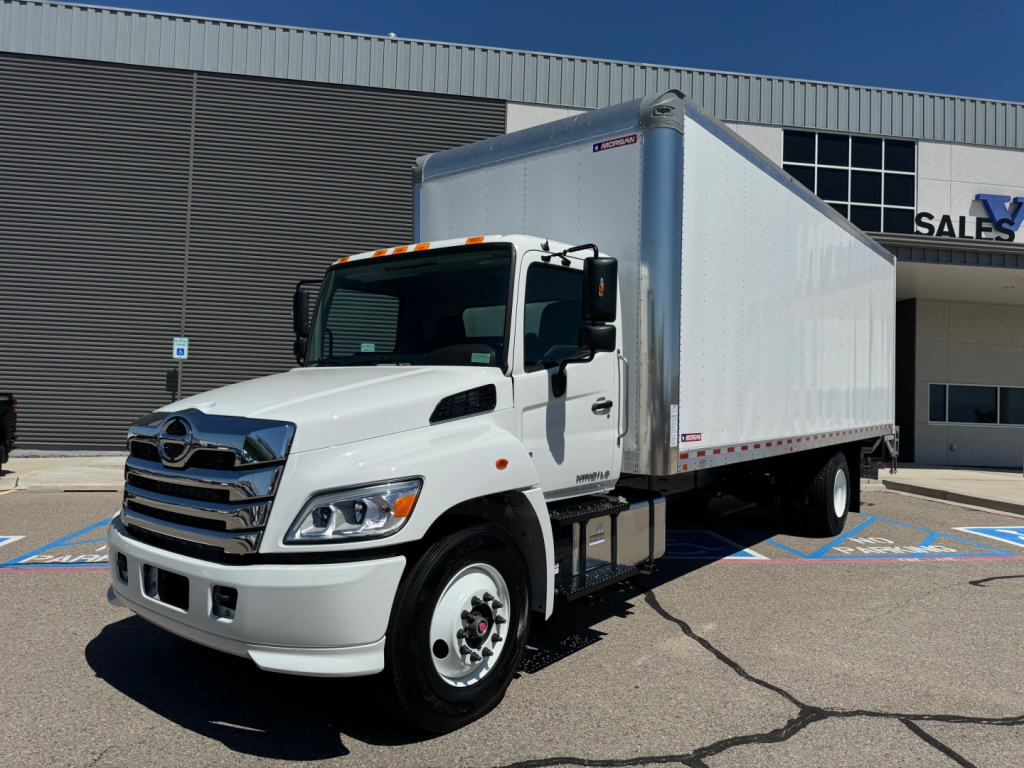
Have new box truck to sell? List it here to reach thousands of buyers.
About New Box Trucks in New Mexico
A key buying decision is whether you need a non-CDL box truck or a heavier Class 7 configuration. Many new box trucks in this category are built around GVWR ratings that can stay under the 26,001-pound CDL threshold, but the final legal status depends on the completed chassis and body spec, including liftgate, body length, and payload rating. Common powertrains include the Cummins B6.7 or ISB6.7 paired with Allison automatic transmissions such as the 2200RDS, 2500RDS, 2550RDS, or 3000RDS. Buyers comparing chassis should pay close attention to front axle and rear axle ratings, wheelbase, suspension type, brake spec, fuel capacity, and turning radius. Air ride suspension is often preferred for ride quality and cargo protection, while leaf spring setups can appeal to fleets that prioritize simplicity and lower maintenance.
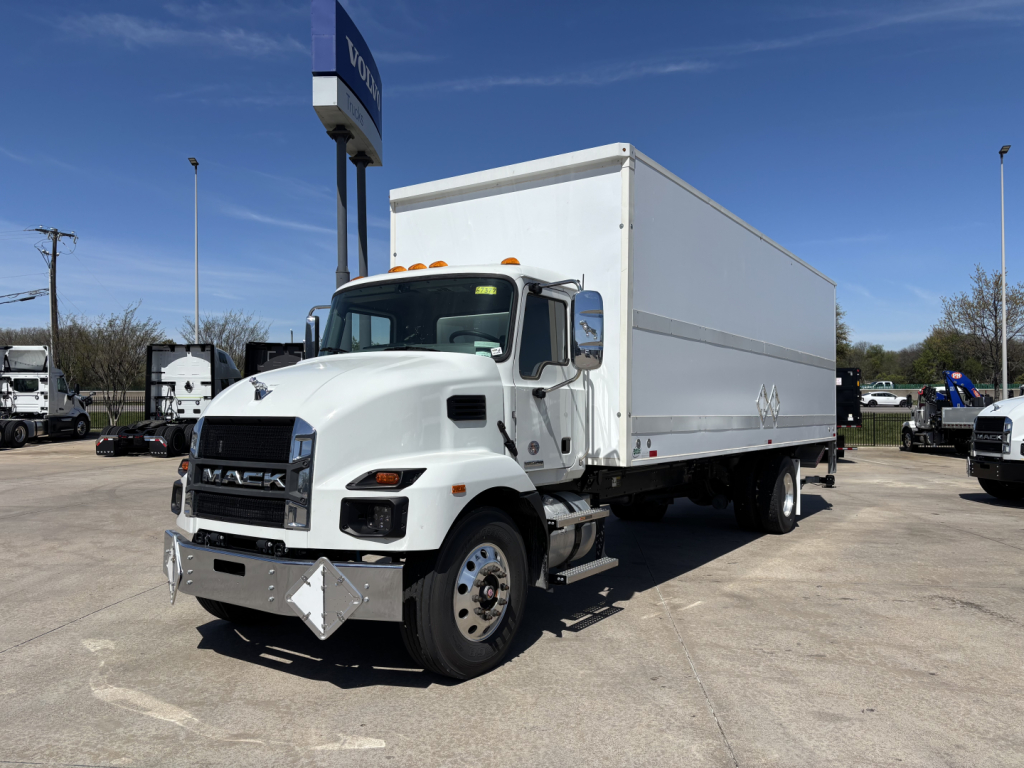
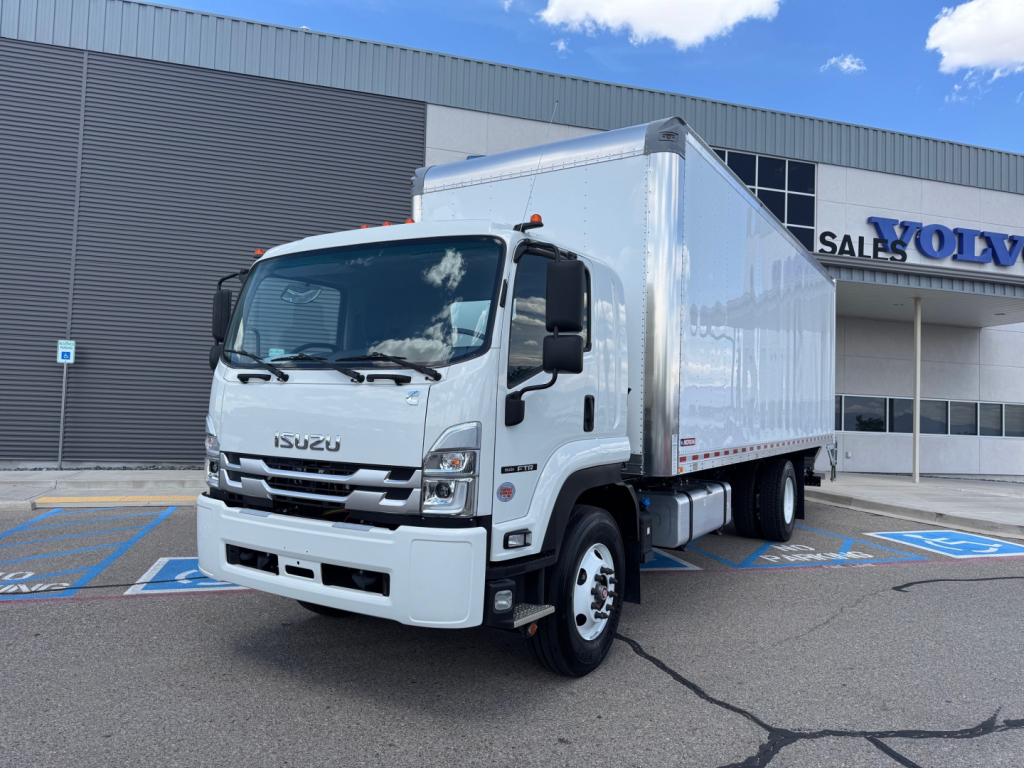
Body spec matters as much as chassis spec on a new box truck. A typical New Mexico dry van build may include a 103-inch wide by 102-inch high body, translucent roof, hardwood or Apitong scuff boards, full slat lining, and two rows of E-track for load securement. Forklift reinforcement is a valuable add when palletized freight is loaded from the side or rear with repeated dock and forklift traffic. Rear access usually comes down to a roll-up door or overhead door, and many route-delivery buyers want a tuck-under liftgate in the 3,000-pound class for curbside freight handling. If the truck will be used for household goods, final-mile white glove work, or mixed stop routes, look closely at floor construction, interior lining, tie-down layout, and liftgate platform size.
New Mexico buyers should also think about terrain, climate, and service network. High desert heat, elevation changes, and long distances between stops can favor a proven medium-duty chassis with readily available parts and a dealer base that supports Isuzu, Hino, Mack, and Cummins-Allison combinations. For urban delivery in Albuquerque, Santa Fe, Las Cruces, or Hobbs, visibility, cab ergonomics, mirror package, and door access can affect driver productivity as much as horsepower. For longer regional lanes, a higher horsepower rating, larger fuel tank, cruise control, and suspension choice may improve daily usability. The best new box truck is the one whose GVWR, payload, body length, and cargo-handling equipment match your freight profile without paying for capacity or features you will not use.
Frequently Asked Questions
What size box truck is most common for commercial delivery work?
The most common commercial box truck size is a 24-foot to 26-foot dry van body on a medium-duty chassis. That size range gives buyers strong cubic capacity for furniture, appliances, retail freight, and palletized shipments while remaining much easier to route and back than a tractor-trailer. The right length still depends on your typical freight density, dock access, and whether you need a liftgate or side-loading capability.
Can a new box truck be non-CDL?
Yes, many new box trucks are built as non-CDL units, but only if the final gross vehicle weight rating stays at 26,000 pounds or below. Buyers should verify the completed truck rating, not just the chassis rating, because the van body, liftgate, reinforcements, and other upfit equipment all affect final weight and payload. If your loads are heavy or you need more axle capacity, a CDL-required Class 7 setup may be the better fit.
What features should I look for in a dry van box body?
Important dry van features include interior height and width, floor construction, scuff boards, slat lining, E-track, roof material, and rear door type. Forklift reinforcement is useful for frequent pallet loading, and a translucent roof can improve visibility inside the body during daytime loading. If you make residential or no-dock deliveries, a tuck-under liftgate with the right platform dimensions and weight capacity is one of the most valuable specs on the truck.
Is air ride suspension worth it on a box truck?
Air ride suspension is often worth the added cost for fleets hauling fragile freight, furniture, electronics, or other cargo that benefits from a smoother ride. It can also improve driver comfort and reduce some cargo movement compared with a basic leaf spring setup. Leaf suspension still has a place for buyers who want a simpler, durable configuration and whose freight is less sensitive to vibration or rough pavement.
Which engine and transmission combination is common in new box trucks?
A very common medium-duty combination is a Cummins 6.7-liter diesel paired with an Allison automatic transmission. Ratings often fall in the 260 to 300 horsepower range, with transmission choices such as the Allison 2200RDS, 2500RDS, 2550RDS, or 3000RDS depending on truck class and intended payload. This pairing is popular because it is familiar to technicians, well supported in many markets, and well suited to stop-and-go delivery duty.