
2014 Box Trucks For Sale
Shop 2014 box trucks for sale. Compare GVWR, box length, liftgate options, diesel and gas engines, and CDL-friendly delivery specs.
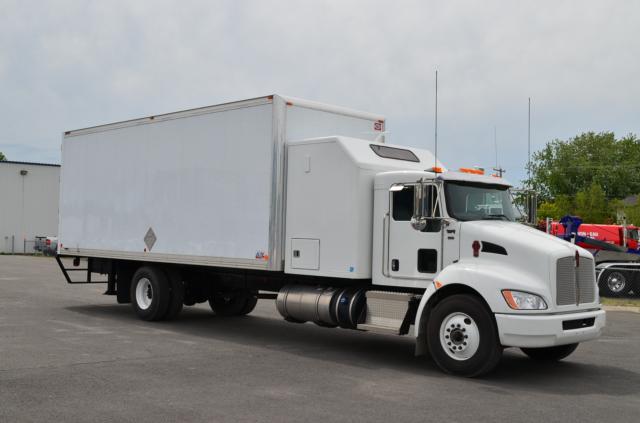
Selling a 2014 box truck? List your 2014 box truck for sale and reach thousands of commercial buyers.
2014 Box Trucks
The chassis and powertrain matter as much as the body. A 2014 box truck may be built on popular platforms from Isuzu, Hino, Ford, Chevrolet, GMC, International, Freightliner, or Mitsubishi Fuso. Diesel engines are common in medium-duty applications where torque, longevity, and fuel economy matter, while gas engines are often found in lighter delivery service where lower upfront cost and simpler emissions systems are priorities. Automatic transmissions dominate this category. Buyers should verify axle rating, brake type, wheelbase, rear axle ratio, and cab style because those details affect payload, turning radius, highway manners, and body fit. If the truck will run dense urban routes, cab-over models can offer tighter maneuverability, while conventional chassis often provide easier service access and a more familiar driving position.
Body specification is where a 2014 box truck either fits the job or creates daily inefficiency. Typical van body lengths include 16, 18, 20, 24, and 26 feet, with roll-up rear doors being the most common setup. Liftgates are a major value point, especially tuck-under designs rated around 2,500 to 3,500 pounds for palletized freight, retail deliveries, and moving applications. Inside the box, many buyers look for hardwood flooring, scuff liners, translucent roofs, interior dome lights, logistic posts, or E-track for cargo securement. Door opening height, body width, and overall interior height should be checked against the freight you actually move, especially for carts, pallets, and stacked residential goods. A cleaner body with solid crossmembers, good roof condition, and straight sidewalls can be just as important as engine hours or odometer miles.
Condition on a 2014 model should be judged as a combination of drivetrain history, body wear, and emissions-system health. Review maintenance records for transmission service, brake work, front-end wear, tires, batteries, cooling system repairs, and any DPF or DEF-related service if diesel equipped. Check for liftgate operation, rear frame corrosion, floor soft spots, roll-up door alignment, and water intrusion around roof seams. A well-matched 2014 box truck can still be a cost-effective work unit if the spec supports the route density, payload, dock access, and loading method your business handles every day.
Frequently Asked Questions about 2014 Box Trucks
What is the most important spec to compare on a 2014 box truck?
GVWR is usually the first number to verify because it determines payload potential, licensing requirements, and the type of work the truck can handle. After that, compare box length, wheelbase, and liftgate capacity. A truck can have a long body but still be a poor fit if the payload is limited or the wheelbase makes city delivery difficult. Matching the chassis rating to your freight profile is more important than choosing by brand alone.
Are many 2014 box trucks non-CDL?
Yes. Many 2014 box trucks were built with a GVWR under 26,000 pounds, commonly 25,950 pounds, specifically to remain in the non-CDL range in most applications. That said, buyers still need to confirm local and state requirements, air brake rules, and the actual door-jamb rating on the truck. A non-CDL box truck can be attractive for final-mile, retail, and moving operations because it expands hiring flexibility.
Is a diesel or gas engine better in a 2014 box truck?
Diesel is often preferred for heavier payloads, longer routes, and medium-duty service because it delivers better low-end torque and is commonly paired with higher-GVWR chassis. Gas engines can make sense for lighter urban delivery cycles where lower purchase cost and simpler maintenance are more important than maximum torque. On a 2014 truck, the right answer depends on route length, stop frequency, annual mileage, and how much weight you carry on a normal day.
What box features add the most value on a used 2014 box truck?
A working liftgate, sound hardwood floor, straight body panels, dry roof, and secure roll-up door are high-value items because they directly affect uptime and loading efficiency. Interior E-track, scuff liners, dome lights, and a clean cargo area also matter for delivery fleets and moving applications. Cosmetic wear is common on this type of truck, but structural body issues and water intrusion usually cost more to correct than surface dents or paint fade.
How do I know what box length is right for my operation?
The right length depends on freight size, stop density, and where the truck has to maneuver. An 16 to 18 foot body often works well in tighter urban routes, lighter delivery work, and trades that need cargo protection with easier parking. A 24 to 26 foot box is more common for household goods, palletized freight, and higher-cube delivery routes, but the larger body can limit access in alleys, neighborhoods, and crowded loading zones. Buyers should measure their real freight, not estimate it, before choosing body size.