
Tag Trailers For Sale in New York
Browse tag trailers for sale in New York. Compare GVWR, deck length, ramp style, axle setup, and braking options for equipment hauling.
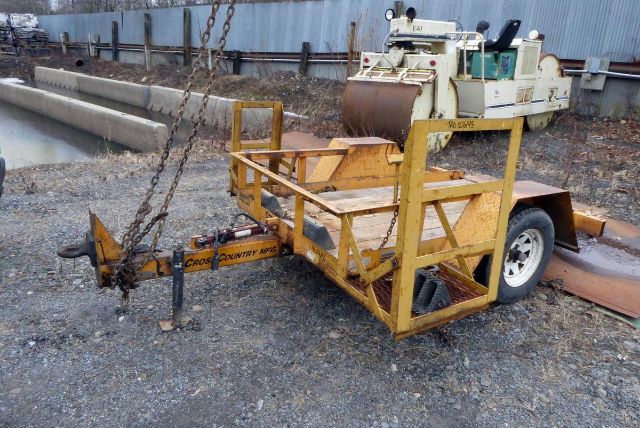
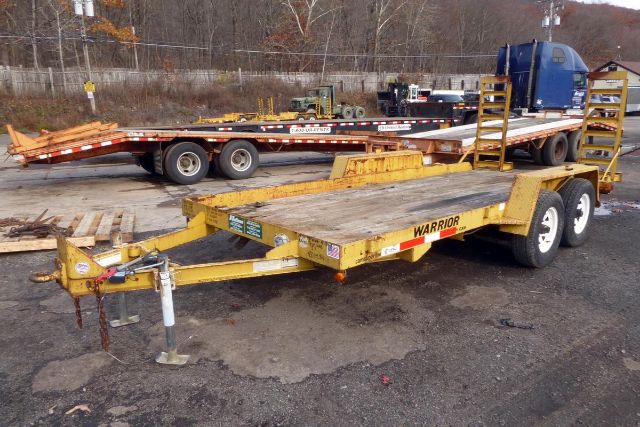
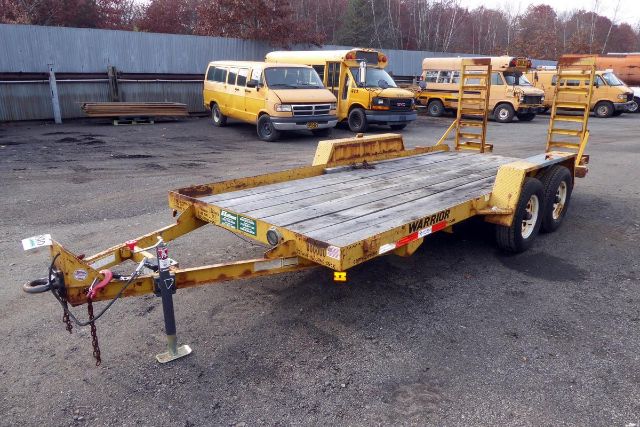
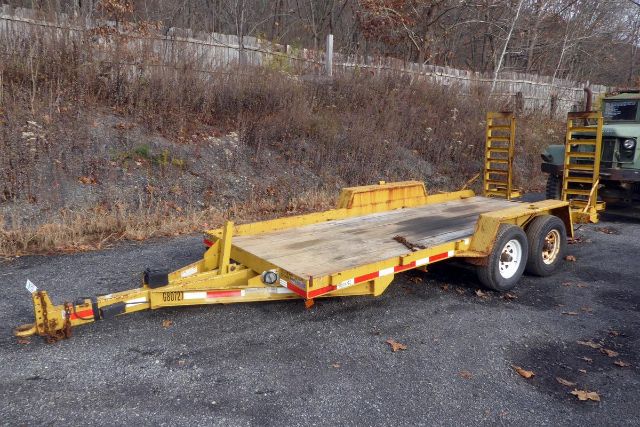
Selling a tag trailer? List your tag trailer for sale and reach thousands of commercial buyers.
Tag Trailers in New York
The first buying decision is usually capacity versus empty weight. Many tag trailers in this class fall into single-axle or tandem-axle configurations, with GVWRs ranging from light 3,500-lb units up to 7,000-lb, 9,990-lb, and similar non-CDL friendly ratings. Tandem spring-ride trailers are common for 3-ton class work and tend to offer a better balance of payload, stability, and serviceability. Typical construction includes a steel frame, wood deck, electric brakes, fixed axles, and fold-up rear ramps or a mechanical tilt deck. Deck lengths around 9 to 16 feet are common on the main carrying surface, while overall trailer length can run longer once the tongue and ramps are included. Buyers should verify actual deck dimensions, not just overall length, especially if the load has attachments, buckets, or uneven track width.
Condition and component quality matter as much as rated capacity on used tag trailers. Check brake operation on both axles, inspect spring hangers and equalizers, look for cracked welds around the tongue and ramp pivots, and confirm the floor is solid where equipment weight is concentrated. Tire size, wheel bolt pattern, coupler rating, lighting, breakaway system, and deck height all affect day-to-day usability. A trailer with a 19-inch deck height and stand-up ramps may load very differently than a lower mechanical tilt trailer, even if the posted capacity is similar. If your loads are frequent and near the top of the rating, axle condition, tire age, and brake wiring should be treated as core purchase points, not small repair items.
For buyers comparing tag trailers for sale in New York, it helps to match the trailer to the machine, the tow vehicle, and the route. A compact single-axle tag may be enough for lighter utility equipment, while tandem-axle models are generally better suited for commercial landscaping, rental fleets, municipal work, and contractor use. Look closely at GVWR, payload after empty weight, deck width between fenders or over the tires, ramp capacity, and how the trailer is titled and registered. The best tag trailer is not just the one with the highest rating. It is the one that loads safely, tows straight, brakes correctly, and fits the equipment you move most often.
Frequently Asked Questions about Tag Trailers in New York
What is a tag trailer used for?
A tag trailer is used to haul equipment behind a tow vehicle using a bumper-pull or pintle-style connection rather than a fifth wheel or gooseneck. Common loads include skid steers, mini excavators, compact tractors, trenchers, scissor lifts, and other small to mid-size machines. Tag trailers are popular because they are easier to hook up, easier to store, and often well suited to local and regional equipment transport.
How do I choose the right GVWR for a tag trailer?
Start with the operating weight of the machine, then add buckets, attachments, fuel, chains, binders, and any other cargo carried on the deck. The trailer's empty weight must be subtracted from its GVWR to determine real payload capacity. Buyers should leave a safety margin instead of buying exactly to the machine's listed weight, especially if the trailer will see rough pavement, repeated loading cycles, or changing equipment assignments.
Is a tandem-axle tag trailer better than a single-axle model?
A tandem-axle tag trailer is usually the better choice for heavier commercial equipment because it offers more capacity, better stability, and improved braking when properly equipped. Single-axle trailers work well for lighter machines and lower-duty use, but payload and balance become more limiting as equipment size increases. The right choice depends on machine weight, frequency of use, road conditions, and the tow vehicle's rated towing and tongue-weight limits.
What should I inspect on a used tag trailer?
Focus on brake performance, axle condition, tire age and wear, spring suspension components, coupler wear, safety chains, lighting, wiring, and the breakaway battery system. Inspect the frame for rust scaling, bent crossmembers, cracked welds, and ramp damage. On wood-deck trailers, pay close attention to soft spots, board separation, and fastener pull-through in high-load areas where tracks or tires sit repeatedly.
What deck features matter most on a tag trailer?
Deck length, deck width, deck height, and loading style have the biggest effect on usability. A low deck height reduces ramp angle and helps with ground clearance when loading low machines. Fold-up ramps are common and simple, while tilt decks can make loading easier for certain wheelbases and attachments. Buyers should also confirm whether the stated length refers to the full trailer or the actual flat deck, because usable deck space is what determines fit.