
Cam Tag Trailers For Sale in New York
Browse Cam tag trailers for hauling equipment, skid steers, and compact machines with tandem axles, low deck heights, and ramp loading.
Selling a cam tag trailer? List your cam tag trailer for sale and reach thousands of commercial buyers.
Cam Tag Trailers in New York
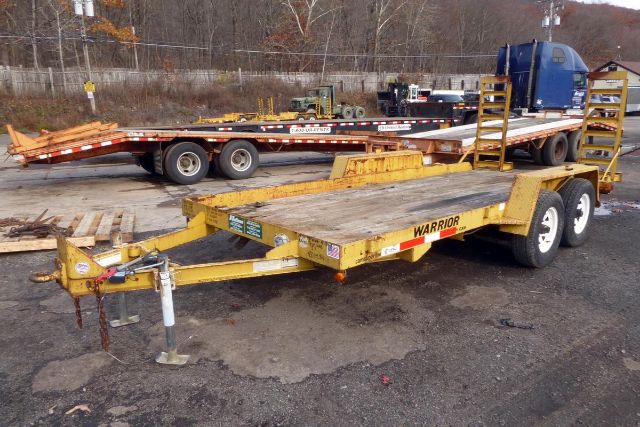
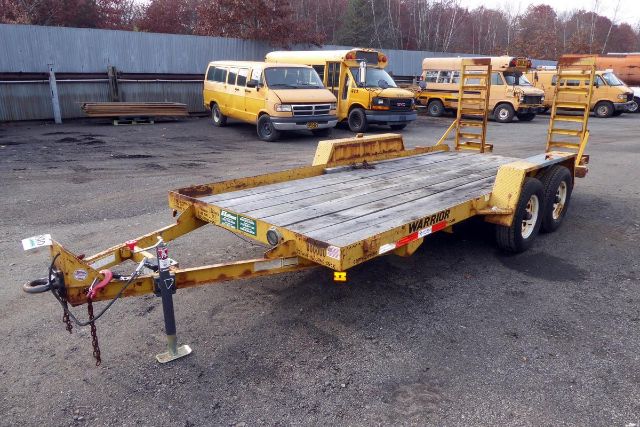
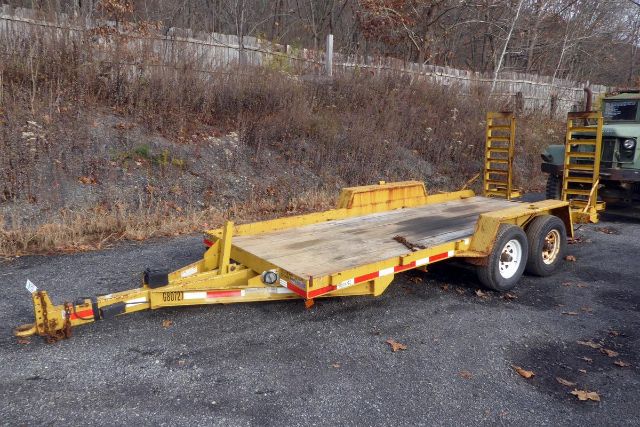
A low deck height is one of the main buying points in this category. Many Cam tag trailers ride around 19 inches off the ground, which helps reduce loading angle and makes ramp loading easier on low-clearance equipment. Common dimensions in this size range include overall lengths around 21 to 24 feet, widths near 8 feet, and deck space around 16 feet by 6 feet 5 inches. Buyers should pay close attention to usable deck length, ramp width, and fender clearance, especially if the trailer will carry wide-stance skid steers, trenchers, or pallets loaded by forklift.
On used Cam tag trailers, the key inspection points are brake function, spring suspension condition, deck integrity, and axle rating. Tandem spring axles with 225/75R15 tires and 6-lug wheels are common on lighter equipment trailers in this class, and they are generally easy to service. Electric brakes need to be checked at all wheels, along with wiring, breakaway system, and controller response. Wood floors should be inspected for soft spots, crossmember fatigue, and fastener pull-through. Since many of these trailers spend their lives in construction and landscape service, ramp hinges, dovetail areas, coupler wear, and lighting circuits deserve a close look.
For buyers in New York, trailer condition matters as much as capacity because road salt, freeze-thaw cycles, and seasonal storage can accelerate corrosion on frames, brake components, and electrical connections. Match the trailer's empty weight to your tow vehicle's real-world towing and payload limits, not just the advertised rating. A lighter 3-ton class Cam tag trailer can be a practical fit for local equipment moves, while a 9,990 GVWR-style trailer gives more working room for heavier compact iron. The right choice comes down to machine weight, attachment length, loading angle, and how often the trailer will be used on pavement versus rough jobsite approaches.
Frequently Asked Questions about Cam Tag Trailers in New York
What are Cam tag trailers typically used for?
Cam tag trailers are commonly used to haul compact construction and landscape equipment such as skid steers, mini excavators, small tractors, mowers, and attachments. Their low deck height, rear loading ramps, and tandem-axle design make them a practical choice for short- to medium-distance moves where easy loading and moderate capacity matter more than maximum payload.
What should I check first on a used Cam tag trailer?
Start with brakes, frame condition, deck condition, and axle hardware. Electric brakes should engage properly at each wheel, and the breakaway system should be functional. Inspect the steel frame for rust scale, cracked welds, and repairs around spring hangers, coupler mounts, and ramp supports. Check the wood floor for rot or broken boards, and look at tire age, tread wear, and signs of axle misalignment.
How much weight can a Cam tag trailer carry?
Payload depends on the trailer's GVWR minus its empty weight. In this category, many Cam tag trailers fall around 7,998 to 9,996 lb GVWR, with empty weights often in the 2,300 to 3,200 lb range. That usually leaves usable payload in the approximate 4,700 to 7,600 lb range, but the exact figure should always be confirmed from the trailer's data plate and axle ratings.
Why does deck height matter on a tag trailer?
Deck height directly affects loading angle, center of gravity, and ease of use. A lower deck reduces the ramp angle, which helps when loading machines with low ground clearance or short wheelbases. It also makes loading feel more stable and can reduce the chance of dragging attachments or undercarriage components at the ramp transition.
Are electric brakes standard on this type of trailer?
Electric brakes are very common on tandem-axle tag trailers in this size class, but condition varies widely on used equipment. Buyers should confirm not only that brakes are installed, but that magnets, wiring, drums, and the breakaway battery are all working correctly. Poor brake performance on a tag trailer can quickly become a safety and compliance issue, especially when hauling near rated capacity.