
Used Cross Country Tag Trailers For Sale
Browse used Cross Country tag trailers built for compact equipment, utility hauling, and light-duty transport with practical loading features.
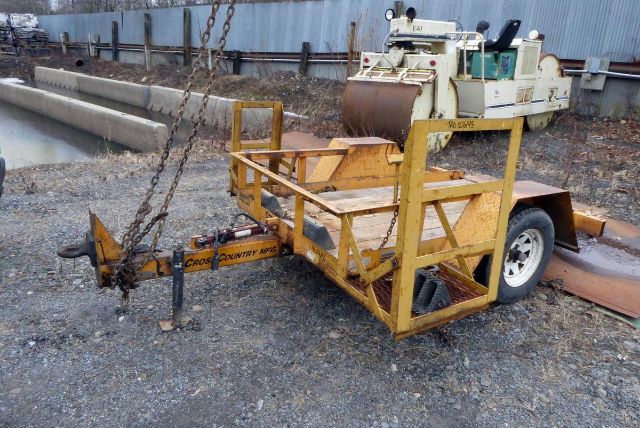
Selling a used cross country tag trailer? List your used cross country tag trailer for sale and reach thousands of commercial buyers.
Used Cross Country Tag Trailers
Capacity, deck size, and loading style should drive the buying decision first. Many used tag trailers in this class are lighter-duty units, often with single-axle or tandem-axle layouts, spring suspension, electric brakes, and mechanical tilt or ramp-assisted loading. Buyers should confirm actual payload by comparing empty weight, GVWR, axle rating, and coupler rating rather than relying on a general description. Deck height also matters more than many first-time buyers expect. A lower deck angle can make a major difference when loading low-clearance equipment, while a tilt deck can speed up loading and reduce the need for separate ramps.
Condition on a used tag trailer comes down to a few high-value checkpoints. Inspect the frame for cracks, previous repairs, and corrosion around crossmembers, tongue areas, spring hangers, and the rear loading section. Check wood flooring for rot, soft spots, and loose fasteners. Verify brake function, wiring condition, light operation, coupler wear, tire age, and wheel bearing service history. On lighter trailers, neglected tires, non-working electric brakes, or worn suspension parts can quickly turn a low purchase price into added repair cost. If the trailer has a tilt mechanism, inspect pivot points, latch engagement, and deck alignment under load.
Cross Country tag trailers appeal to buyers who want a simple trailer that is easy to maintain and easy to pair with a non-CDL tow vehicle. The best match depends on the equipment being hauled, the tow vehicle's hitch and brake controller setup, and the type of terrain the trailer will see. For occasional farm, landscape, rental, or contractor use, a used tag trailer can be a cost-effective option if the ratings, brake system, and deck dimensions line up with the job. Buyers comparing multiple listings should focus on usable payload, loading angle, brake condition, and overall structural integrity before cosmetic appearance.
Frequently Asked Questions about Used Cross Country Tag Trailers
What is a tag trailer used for?
A tag trailer, also called a tag-along trailer, is commonly used to haul small equipment, utility machines, vehicles, and materials behind a pickup or similar tow vehicle. In the used Cross Country tag trailer market, these trailers are often chosen for compact tractors, lawn and landscape equipment, side-by-sides, small construction machines, and general property maintenance work. Their value is in simple hookup, easy maneuverability, and lower acquisition cost compared with larger equipment trailers.
How do I determine the real payload of a used tag trailer?
The real payload is found by subtracting the trailer's empty weight from its GVWR, then confirming that the axle ratings, coupler rating, tire load rating, and brake system support that number. A trailer advertised with a certain capacity may not deliver that payload if components have been changed or if the listed weight is inaccurate. Buyers should compare the VIN plate, axle tags, tire specifications, and any available manufacturer data before assuming the trailer can safely handle a specific machine.
What should I inspect on a used Cross Country tag trailer before buying?
The most important inspection points are the frame, tongue, coupler, suspension, axles, brakes, wiring, tires, deck, and any tilt or ramp hardware. Look closely for cracked welds, rust at structural joints, uneven tire wear, damaged brake wiring, worn spring components, and soft or broken wood decking. If the trailer has electric brakes, confirm they activate correctly with a brake controller. If it has a tilt deck, make sure the locking mechanism holds securely and the deck returns to proper position without binding.
Are single-axle tag trailers a good choice for equipment hauling?
A single-axle tag trailer can be a good fit for light-duty equipment hauling if the machine weight, tongue weight, and braking requirements stay within the trailer's ratings. They are typically easier to maintain, lighter to tow, and well suited for smaller compact equipment or utility use. They are not the right choice for heavier machines, repeated highway hauling at maximum load, or applications where additional stability and braking performance from a tandem-axle setup would be beneficial.
Is a tilt deck better than ramps on a tag trailer?
A tilt deck can be a better loading solution when hauling equipment with low ground clearance or when faster loading is important. It reduces the transition angle and eliminates the need to handle separate ramps. Ramps can still be a good choice for buyers who want a simpler setup with fewer moving parts. The better option depends on the equipment's wheelbase, attachment overhang, weight distribution, and how often the trailer is loaded and unloaded.