
New Lowboy Trailers For Sale in Oklahoma
Shop new lowboy trailers for sale in Oklahoma. Compare RGN and traveling axle designs, capacities, deck specs, axle setups, and tie-down features.
Selling a new lowboy trailer? List your new lowboy trailer for sale and reach thousands of commercial buyers.
New Lowboy Trailers in Oklahoma
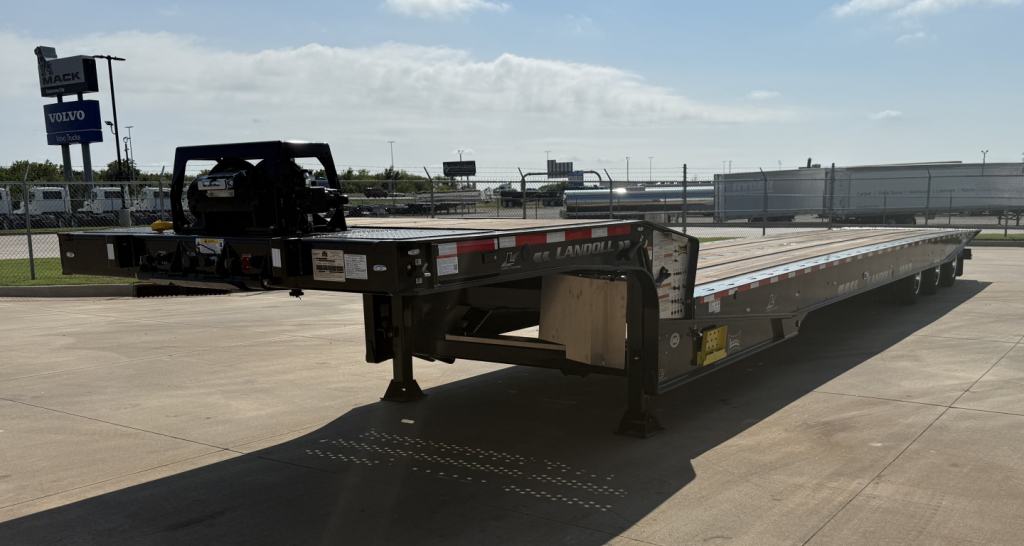
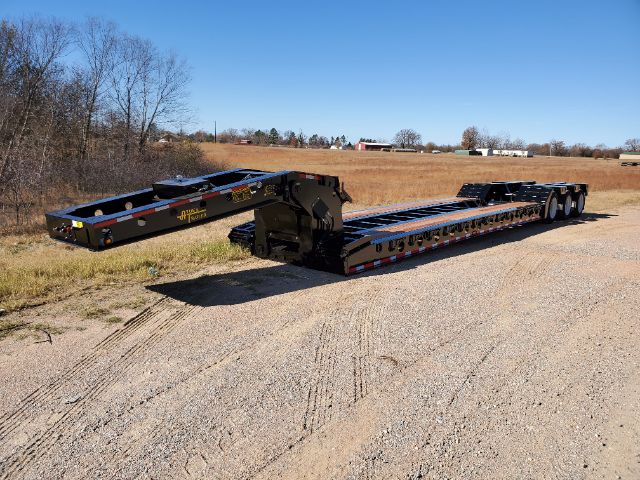
In Oklahoma, lowboy spec decisions are often shaped by a mix of oilfield work, road construction, agriculture, and heavy equipment transport across rural highways and jobsite entrances that are not always level. Removable gooseneck lowboys are popular because they allow drive-on loading without a separate ramp setup. Traveling axle designs are also common for operators who want flexible loading angles and easier handling of certain equipment profiles. Key dimensions to compare include well length, overall length, width, kingpin setting, deck height under load, and load angle. A 26-foot well, 53-foot overall length, 102-inch width, and 21-inch kingpin setting are all examples of specs that directly affect load balance, maneuverability, and tractor compatibility.
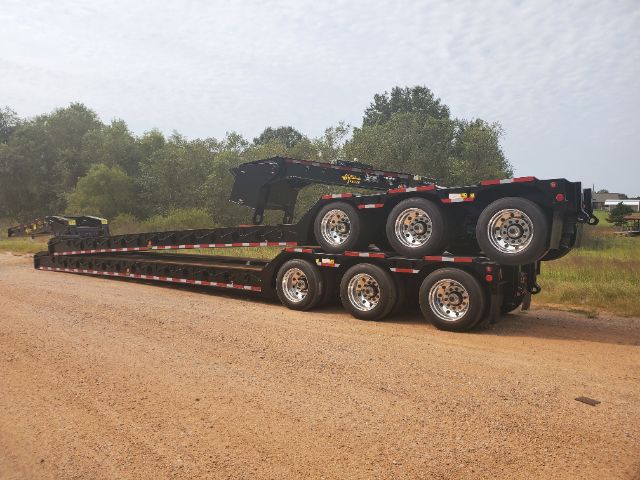
Construction details tell you how a new lowboy will hold up under real use. Look closely at frame material, crossmember design, and deck composition. T1 high-tensile steel frames, Apitong hardwood decking, and reinforced outer beams are common on serious heavy-haul trailers because they resist fatigue and wear better than lighter-duty builds. Tie-down layout matters too. Chain slots, keyhole tie-downs, stake pockets, and scuff protection should match the kind of iron you move most often. Axle equipment is another major decision point. Many buyers want air ride suspension, air dump, lift axle provisions, tire inflation systems, centralized grease systems, and air-weigh scales to reduce downtime and improve day-to-day loading accuracy. On a new trailer, those factory-installed options can be more valuable than adding them later.
A well-specced lowboy also improves safety and loading efficiency. Hydraulic removable neck systems with pony motors, winches, wireless remotes, LED work lights, toolboxes, folding steps, and quality landing gear all make a difference at the jobsite and on the shoulder. For Oklahoma buyers, it also pays to think about permit loads, bridge law, axle spacing, and the type of tractor that will pull the trailer. The best lowboy is not just the one with the highest capacity rating. It is the one with the right axle configuration, deck profile, loading method, and securement package for the machines you haul every week.
Frequently Asked Questions about New Lowboy Trailers in Oklahoma
What is the difference between a lowboy trailer and an RGN trailer?
A lowboy is the general trailer category for hauling tall, heavy equipment on a low deck, while an RGN, or removable gooseneck, is a specific type of lowboy. An RGN detaches at the front so equipment can be driven directly onto the deck from the ground. That design is especially useful for tracked machines, rollers, and other equipment that loads more safely with a shallow approach angle than with ramps.
What specs matter most when buying a new lowboy trailer?
Capacity is only the starting point. Buyers should compare well length, loaded deck height, ground clearance, swing clearance, kingpin setting, axle spacing, and concentrated load rating. Those specs determine what equipment the trailer can actually carry, how the weight will distribute across the axles, and whether the combination will work with the tractor and the routes being run.
Why is Apitong decking common on lowboy trailers?
Apitong is widely used because it handles abrasion, compression, and repeated equipment loading better than many softer wood options. Heavy tracked and wheeled machines can quickly damage a lesser deck surface. On a lowboy, durable decking helps maintain traction during loading and reduces the frequency of deck repairs in high-cycle hauling operations.
Are traveling axle lowboy trailers better for some applications?
Traveling axle lowboys can be a strong choice when loading angle, deck access, and equipment profile are major concerns. By shifting the axle group, the trailer can create a more favorable loading position for certain machines and jobsite conditions. They are often considered by operators hauling mixed equipment where versatility matters as much as pure capacity.
What axle and suspension features are worth considering on a new lowboy?
Air ride suspension, air dump valves, lift axle or fourth axle provisions, tire inflation systems, and centralized grease systems are all worth close attention. These features can improve ride quality, simplify loading, reduce tire and suspension wear, and cut routine maintenance time. On heavy-haul trailers, small spec differences in the axle group often have a big impact on uptime and long-term operating cost.