
New Dump Trailers For Sale in New Mexico
New dump trailers for sale in New Mexico, including end dump, side dump, and bottom dump models for aggregate, paving, dirt, and demolition work.
Have new dump trailer to sell? List it here to reach thousands of buyers.
New Dump Trailers in New Mexico
Spec decisions start with body construction and suspension. Hardox, AR400, and similar abrasion-resistant steel tubs are common on new dump trailers built for rock, demolition, and abrasive aggregate. Aluminum components may be used in fenders and accessory panels to trim weight without sacrificing durability where it counts. Air ride suspension is popular for smoother handling, reduced cargo shock, and better control on paved hauls, while some applications still favor mechanical or single-point suspension for simplicity and ruggedness. On many new units, buyers also look closely at tub length, side height, cubic yard capacity, gate design, and whether the trailer uses inverted cylinders, self-shedding top rails, or reinforced tub corners to reduce long-term stress cracking.
For New Mexico operations, wind, dust, and mixed road conditions make tarp systems, gate control, and tire setup more important than they look on paper. Electric flip tarps and electric roll tarp systems are common because they speed up loading cycles and help keep operators compliant on public roads. Push blocks, windrow deflectors, quick-release valves, high-lift gates, and pin-set gate limiters can all be relevant depending on whether the trailer is hauling asphalt millings, sand, gravel, riprap, caliche, or hot mix. Tire size, wheel type, closed tandem configuration, and air tank capacity also affect serviceability and day-to-day uptime.
A good new dump trailer should be matched to payload profile, dump frequency, and terrain before brand preference takes over. If the work involves rough access roads, off-camber dumping, or repeated short cycles, stability and structural reinforcement tend to matter most. If the trailer will spend most of its life on highway aggregate runs, empty weight, suspension quality, and tarp efficiency usually move higher on the list. Buyers comparing new dump trailers typically focus on body material, suspension, gate and tarp configuration, cubic yard rating, and how the trailer is built to handle the exact material stream it will see every day.
Frequently Asked Questions about New Dump Trailers in New Mexico
What is the difference between a side dump, end dump, and bottom dump trailer?
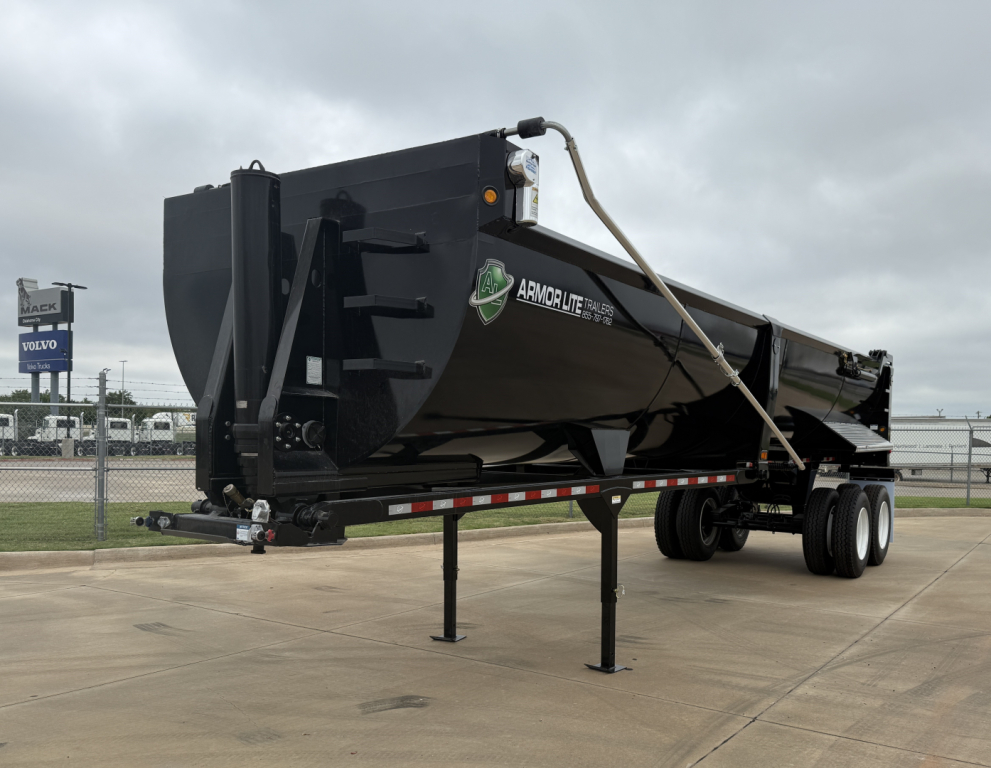
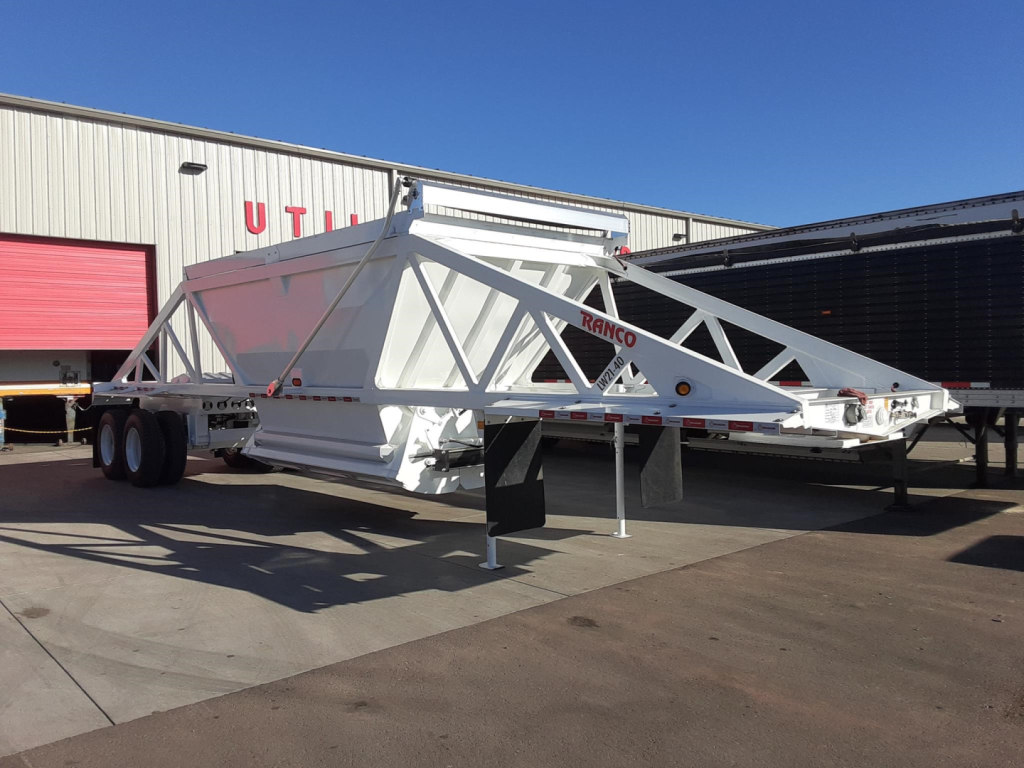
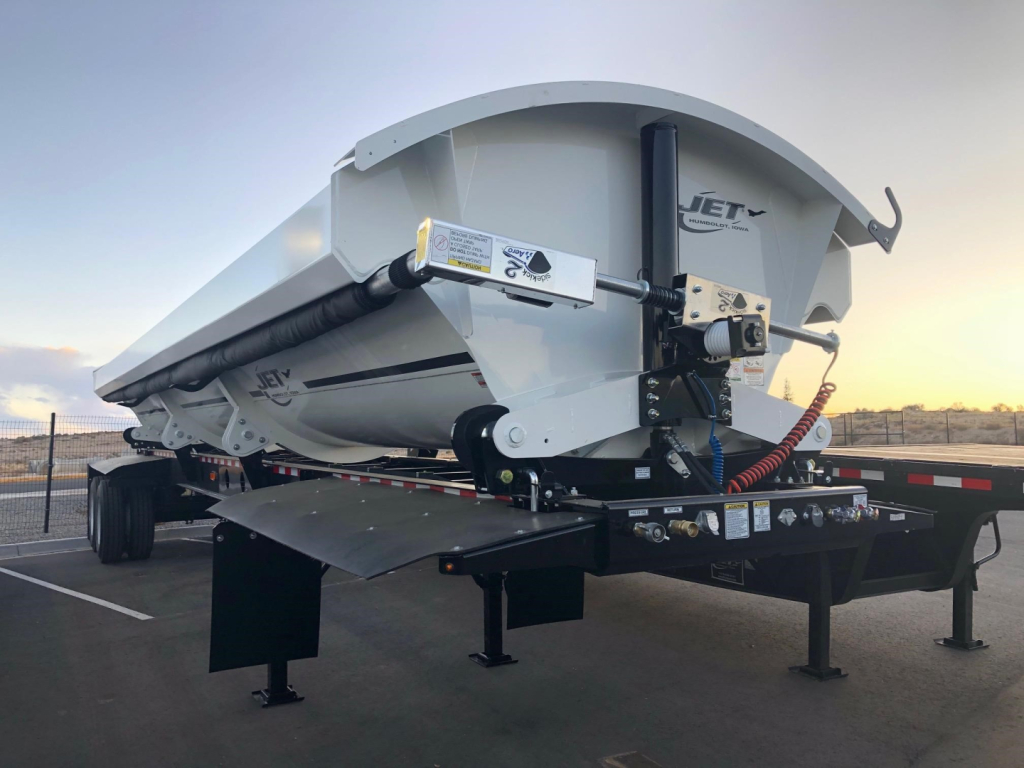
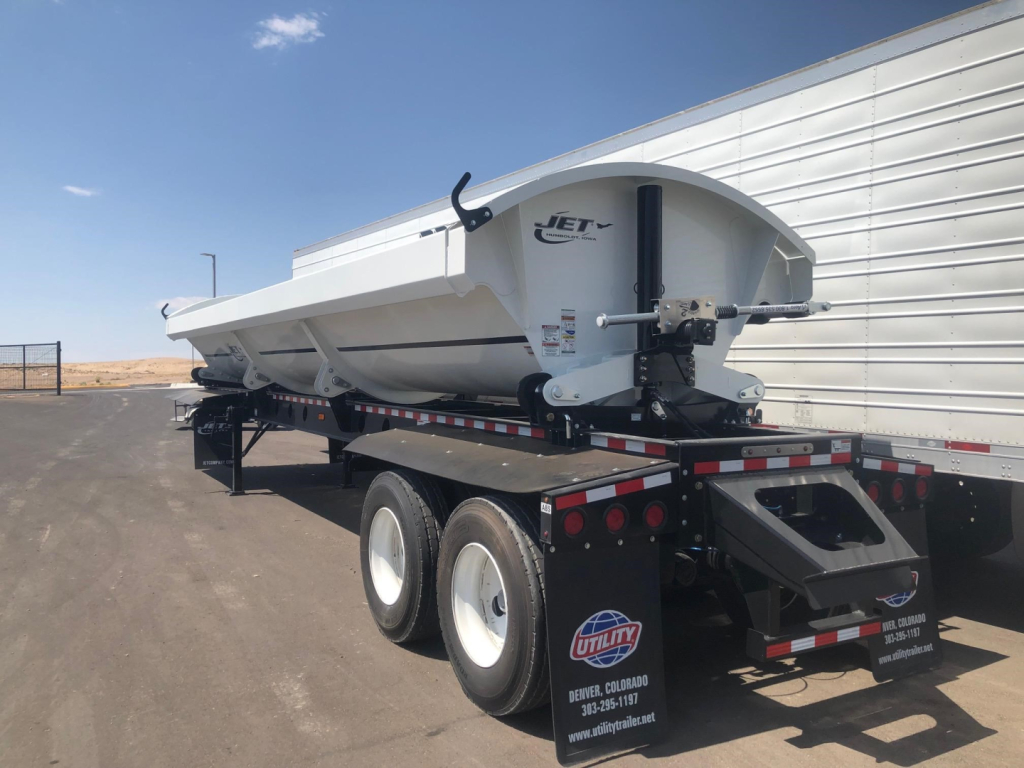
A side dump trailer unloads by rolling the tub to one side, which gives it a fast dump cycle and strong stability on uneven jobsites. An end dump trailer raises the front of the body and discharges out the rear, making it a common choice for high-volume bulk hauling. A bottom dump, also called a belly dump, releases material through gates underneath the hopper, which is ideal for controlled spreading of aggregate on roadwork and site prep jobs.
Which dump trailer type is best for aggregate and road construction in New Mexico?
For road building and aggregate placement, bottom dumps are often preferred because they can lay material in a controlled windrow. Side dumps are also popular where jobsite stability, fast unloading, and rougher ground conditions matter. End dumps still fit many aggregate operations, but buyers should pay close attention to terrain, dumping angle, and rollover risk when working on uneven or soft surfaces.
Why do buyers look for AR400 or Hardox steel in a new dump trailer?
AR400, Hardox, and similar abrasion-resistant steels are used because they hold up better against rock, sand, demolition debris, and other high-wear materials. A tougher tub can reduce body wear, slow down deformation, and improve long-term value in severe service. Buyers hauling abrasive material every day usually see body construction as one of the most important durability specs on the trailer.
Is air ride suspension a good choice on a dump trailer?
Air ride suspension is a strong choice for many dump trailer applications because it can improve ride quality, reduce shock transfer to the trailer structure, and help protect the load during transport. It is especially common on highway-heavy routes and mixed-use operations. Some buyers still choose mechanical or single-point suspension for simpler maintenance or specific off-road conditions, so the right choice depends on route profile and duty cycle.
What options matter most on a new dump trailer?
The most important options usually include the tarp system, gate configuration, body material, suspension type, cubic yard capacity, and tire and wheel package. Buyers should also review push blocks, fenders, lift gate style, valve setup, air tank capacity, liner choices, and reinforcement details such as tub corners or self-shedding top rails. The right option package depends less on appearance and more on the material being hauled, the number of dump cycles per day, and the conditions at the dump site.