
Used Dry Van Trailers For Sale in California
Used dry van trailers for sale in California: compare floor ratings, slider travel, door setups, and CARB requirements before choosing a used box trailer.
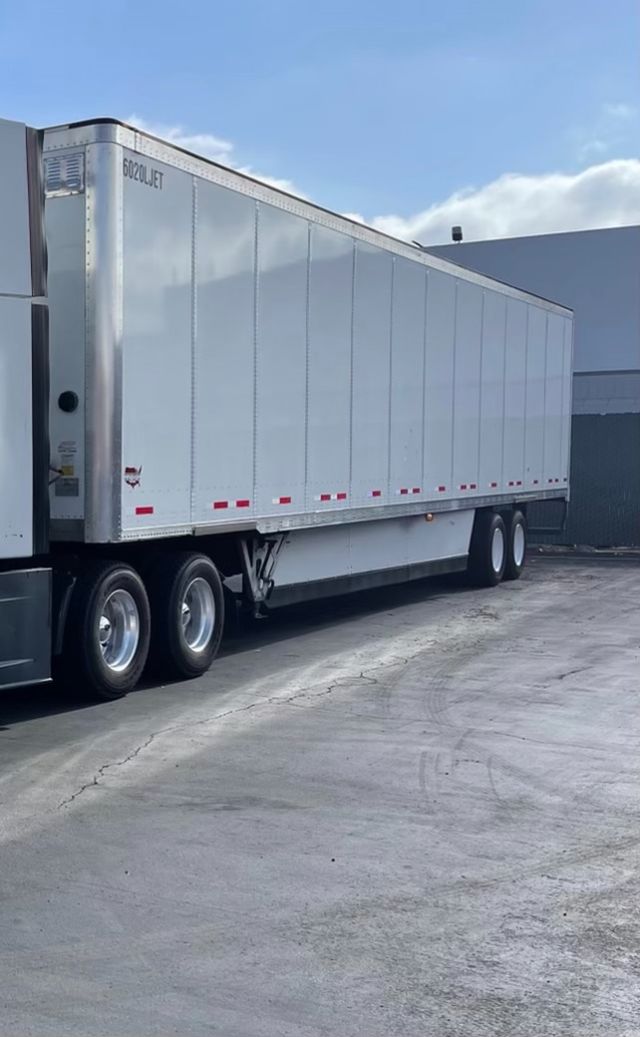

Selling a used dry van trailer? List your used dry van trailer for sale and reach thousands of commercial buyers.
Used Dry Van Trailers in California
Floor strength and wall construction should match the loading method. Sheet-and-post vans and composite-wall designs, including Wabash DuraPlate, differ in interior clearance, repair methods, and weight. Verify the manufacturer's floor rating for concentrated forklift loads rather than relying on the trailer's overall payload rating. Swing doors suit dock freight; roll-up doors and liftgates can simplify delivery work but reduce clearance or carrying capacity. Air ride, spring suspension, logistics tracks, and scuff liners should be evaluated against the actual load and handling cycle. For previously repaired walls, confirm that replacement panels and fasteners follow the manufacturer's structural repair procedure.
On a used van, inspect roof seams, door seals, floor undersides, crossmembers, the upper coupler, and slider rails, then check tandem locking pins, brakes, wheel ends, suspension, and tire wear. Maintenance records should document structural repairs and running-gear service; older trailers deserve particular scrutiny of floor patches, while newer build dates do not rule out impact damage. California heat accelerates rubber and seal deterioration, coastal exposure encourages corrosion, and trailers imported from snow-belt fleets may carry salt damage hidden beneath fresh paint.
Frequently Asked Questions about Used Dry Van Trailers in California
Does a used dry van trailer need CARB aerodynamic equipment in California?
A dry van trailer 53 feet or longer operating in California is generally subject to CARB's Tractor-Trailer Greenhouse Gas Regulation, including applicable aerodynamic equipment and low-rolling-resistance tires. Requirements and exemptions vary by trailer model year and operating category, so verify the specific trailer and intended service before purchase. A federal annual inspection sticker does not establish CARB compliance, and buying the trailer outside California does not remove California operating requirements.
What year did dry van trailers start requiring ABS?
Dry van trailers with a GVWR above 10,000 pounds manufactured on or after March 1, 1998, must have ABS under federal manufacturing requirements. Use the build date, not just the advertised model year, to determine applicability. During inspection, check the trailer ABS warning lamp, wiring, wheel-speed sensors, and diagnostic faults. An older trailer without factory ABS is a different case from a newer trailer with disabled or missing ABS.
How do I know if a used dry van floor can handle my forklift?
The dry van manufacturer's concentrated-load floor rating is the deciding specification, not GVWR or advertised payload. Match the forklift's loaded axle weight and tire contact pattern to that rating. Inspect the loading threshold and wheel paths for crushed wood, separation, and unsupported patches. Replacement floor boards alone do not establish original capacity if crossmembers are bent, corroded, or improperly repaired, so obtain the floor specification and repair documentation.
Is a 48-foot or 53-foot dry van better for local deliveries in California?
A 48-foot dry van is often the better fit for tight delivery yards when the load does not need a 53-foot trailer's extra floor space. Compare tractor wheelbase, kingpin setback, tandem position, and rear overhang rather than trailer length alone. For liftgate delivery, verify gate capacity, platform size, battery charging arrangements, and the remaining payload after the gate's weight is included.