
Dry Van Trailers For Sale in Georgia
Compare dry van trailers for sale in Georgia by floor strength, door style, axle setup, and condition for port freight and regional distribution.

Selling a dry van trailer? List your dry van trailer for sale and reach thousands of commercial buyers.
Dry Van Trailers in Georgia
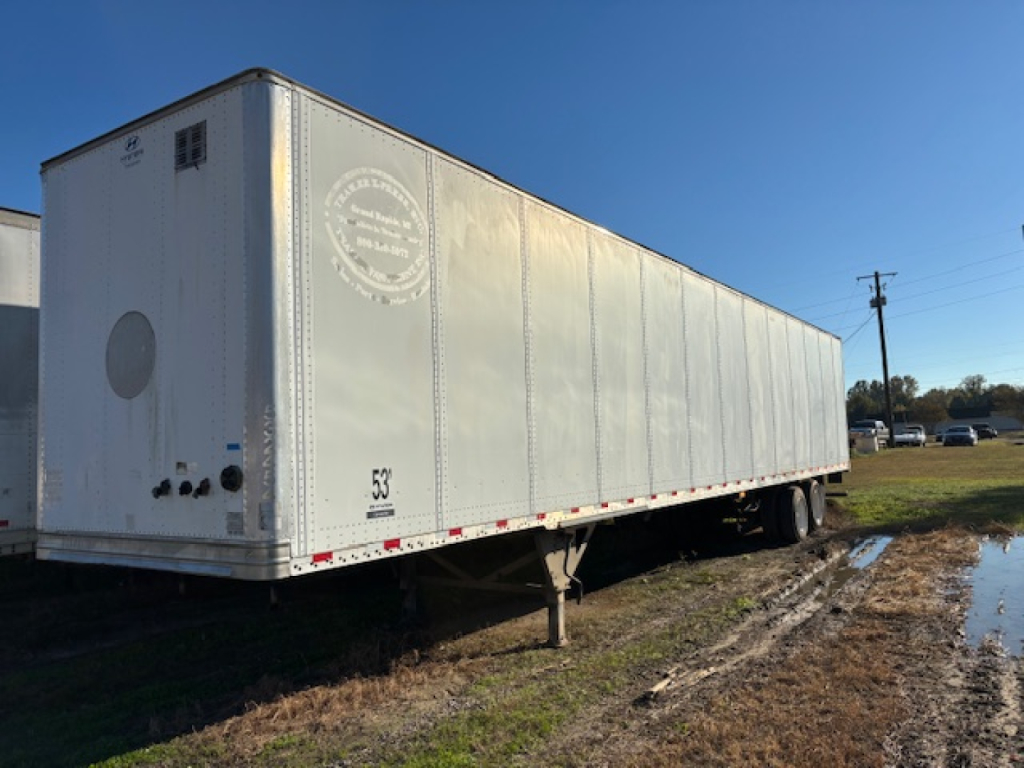
Sheet-and-post and composite-wall vans differ in interior width, repair methods, and resistance to cargo damage. Compare clear width between liners and the rear opening rather than relying on exterior dimensions. Floor capacity must cover the forklift's loaded front-axle weight, not just the freight's total weight. Swing doors usually provide a larger rear opening than roll-up doors, while roll-ups suit repeated dock stops. Air ride helps isolate road shock; spring suspension provides a simpler alternative for freight that does not require air ride.
Georgia humidity and heavy rain make water intrusion a priority on used van trailers. Inspect roof seams, front corners, door seals, and the underside of the wood floor for staining, softness, or repeated patching. Coastal service can accelerate corrosion, but a Georgia location does not rule out earlier road-salt exposure elsewhere. Check crossmembers, upper coupler structure, landing gear braces, rear impact guard, and suspension hangers. Operate tandem slides and verify every locking pin engages. Maintenance records should document brake, wheel-end, tire, and ABS repairs; investigate uneven tire wear before assuming an alignment adjustment will cure it.
For new dry freight trailers, specify floor capacity, cargo tracks, scuff liners, suspension, and tire inflation equipment in writing. Compare structural, roof, floor, and running-gear warranty coverage, including exclusions, labor reimbursement, and the procedure for obtaining repairs away from home. Qualifying new heavy trailers generally carry a 12% federal excise tax at first retail sale, subject to exemptions.
Frequently Asked Questions about Dry Van Trailers in Georgia
How much weight can a dry van trailer haul legally in Georgia?
A standard tractor and dry van combination on Georgia Interstates is generally limited to 80,000 pounds gross, 20,000 pounds on a single axle, and 34,000 pounds on a tandem. Federal bridge-formula limits also apply. Legal payload is the permitted combination weight minus the actual tractor, trailer, fuel, driver, and equipment weight. Sliding the trailer tandems redistributes weight but does not increase the combination's legal gross limit.
Can I haul food in a dry van trailer during Georgia summers?
A dry van trailer can carry shelf-stable food that does not require temperature control, provided the trailer meets the shipper's sanitation and cargo-protection requirements. Georgia summer heat makes product-specific temperature limits important even for packaged freight. Check prior cargo, odors, pest evidence, roof leaks, and floor contamination. Products requiring controlled temperatures need appropriately equipped transportation rather than an ordinary uninsulated box trailer.
What records should come with a used dry van trailer in Georgia?
Matching ownership documents and VIN identification are the starting point for a used dry van trailer purchase in Georgia. Request the title or applicable registration documents, lien-release documentation where relevant, maintenance history, and periodic inspection records. Verify that the paperwork identifies the same trailer as the frame-mounted identification. A current inspection report does not replace a structural inspection or establish that the trailer suits the intended cargo.
What model-year differences matter when buying an older dry van trailer?
Air-braked dry van trailers manufactured on or after March 1, 1998, generally must have ABS, making that build date a useful checkpoint on older equipment. Verify the actual manufacturing date rather than relying only on the advertised model year. Newer trailers may have different wall systems, lighting, and rear impact guard designs, but age alone does not establish condition. Confirm replacement-part compatibility before buying an older suspension or door system.