
2000 Dry Van Trailers For Sale
Compare 2000 dry van trailers for sale by floor integrity, roof leaks, usable cargo dimensions, ABS condition, and suitability for highway or storage use.
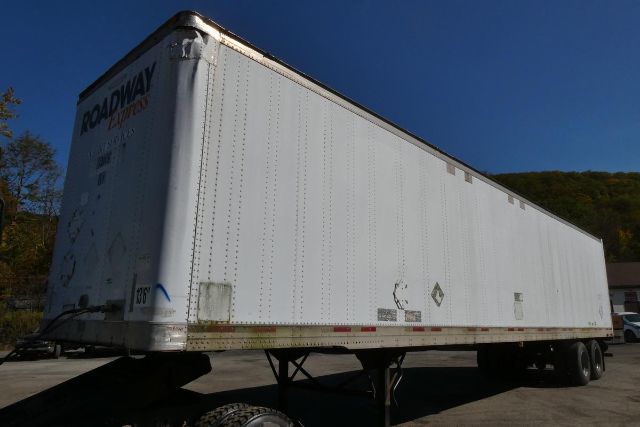
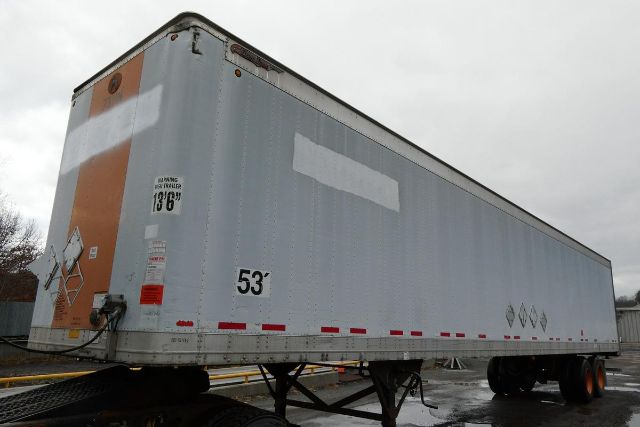
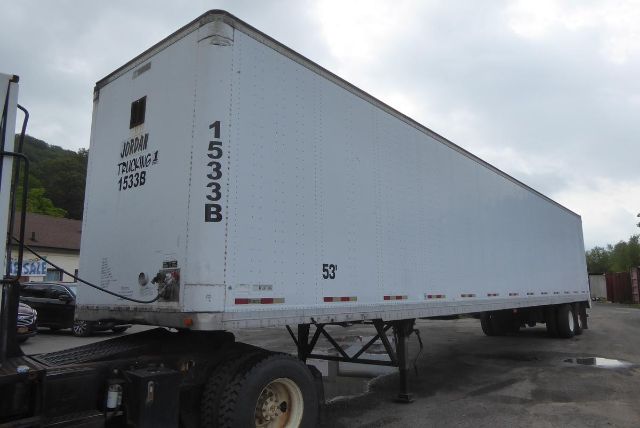
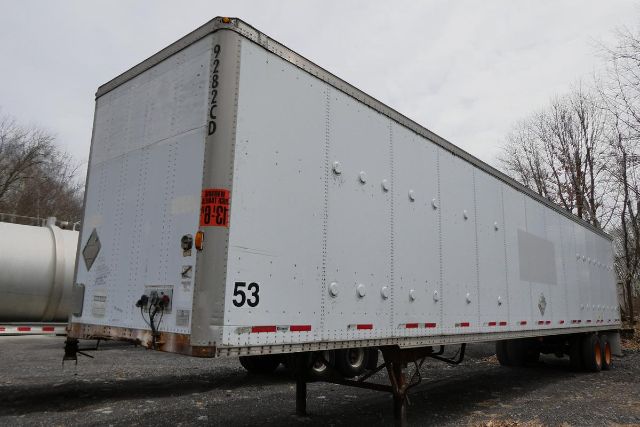
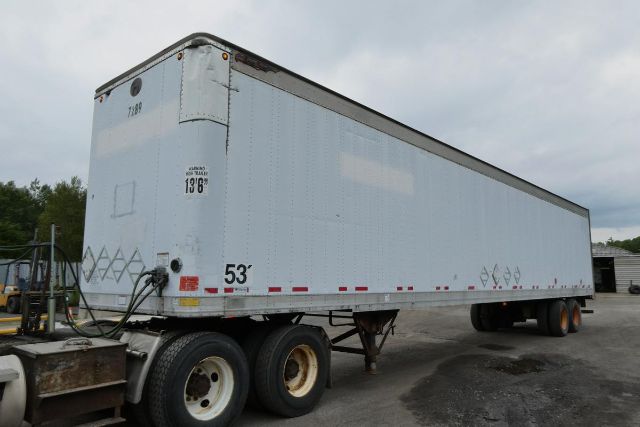
Selling a 2000 dry van trailer? List your 2000 dry van trailer for sale and reach thousands of commercial buyers.
2000 Dry Van Trailers
Measure usable cargo space rather than relying on exterior dimensions. A 96-inch-wide body provides less loading width than a 102-inch body, and door openings can further restrict oversized freight. Compare 48-foot and 53-foot lengths against shipment size, yard maneuverability, and route restrictions. Roll-up doors suit repeated delivery stops but consume overhead clearance and require sound tracks, rollers, and counterbalance components. Swing doors generally provide a larger opening but need clearance behind the trailer. Confirm floor-system capacity for the loaded forklift, not just the freight resting inside.
Water intrusion is a major inspection priority on a trailer of this age. Examine roof seams, translucent roof panels, upper rails, front corners, and door seals for leaks, patches, and UV deterioration. Probe suspect wood flooring and inspect underneath for corroded crossmembers, damaged fasteners, and separation between the floor and supporting structure. Check the kingpin, upper coupler plate, landing-gear mounts, lower rails, and rear frame for cracking or poorly executed repairs. Across makes, original construction and repair quality matter more than an aluminum exterior that looks clean from a distance.
Spring suspensions require close inspection of leaves, hangers, bushings, and equalizers; air-ride systems add airbags, height-control valves, shocks, and air plumbing. Operate the sliding tandem and confirm every locking pin engages securely. Inspect brakes, ABS wiring, wheel seals, bearings, and tire date codes rather than accepting tread depth as proof of roadworthiness. Snow Belt and Canadian service can leave severe salt corrosion around steel supports and suspension attachments. U.S. and Canadian buyers must also check axle weights, permitted tandem positions, and route-specific length rules; the trailer's GVWR alone does not establish legal payload.
Maintenance records should identify floor repairs, roof replacement, suspension work, brake service, and periods of outdoor storage. For any 2000 trailer represented as new or unused, verify title history and inspect age-sensitive components just as carefully as on a used trailer. Unused equipment can still have hardened seals, aged tires, and deteriorated roof materials. Obtain written warranty terms rather than assuming original factory coverage survives. Confirm whether a claimed first retail sale carries the 12% U.S. federal excise tax applicable to qualifying new heavy trailers.
Frequently Asked Questions about 2000 Dry Van Trailers
Should a 2000 dry van trailer have ABS?
A U.S.-market air-braked semitrailer manufactured on or after March 1, 1998, was required to have ABS, so a 2000 dry van should retain a functioning system. Confirm the exterior warning lamp completes its self-check and read controller fault codes. Missing sensors, cut wiring, or a disabled warning lamp require diagnosis, even when the foundation brakes still operate.
Can a 96-inch-wide dry van carry two 48-inch-wide pallets side by side?
No. A dry van with a 96-inch exterior width has less than 96 inches of clear interior width, so two 48-inch-wide loads cannot sit side by side. Standard 40-by-48-inch pallets may fit with their 40-inch sides across the trailer if the freight permits that orientation. Measure pallet overhang, wall intrusions, and door clearance before planning the load.
How do I know whether a 2000 dry van floor can handle my forklift?
The documented floor-system rating for loaded forklift axle weight is the controlling specification, not trailer GVWR. Obtain the forklift's loaded front-axle weight and compare it with the trailer manufacturer's rating and loading conditions. Small, hard forklift tires concentrate force on floorboards and crossmembers. Replacement boards or added steel wear plates do not automatically restore or increase the original structural rating.
Does a 68,000-pound trailer GVWR mean I can haul 68,000 pounds of cargo?
No. A 68,000-pound dry van GVWR includes the trailer's own weight, and legal cargo weight is also limited by the tractor, axle ratings, tires, and route rules. Standard U.S. Interstate limits generally include 80,000 pounds gross combination weight and 34,000 pounds on a tandem, subject to bridge requirements and exceptions. Canadian limits vary by province and axle configuration, so calculate payload for the complete combination.
Does federal excise tax apply when buying a 2000 dry van trailer?
Used 2000 dry vans normally do not incur the 12% U.S. federal excise tax simply because they are resold. A genuinely unused trailer entering its first taxable retail sale or use can require different treatment, and substantial rebuilding can also raise tax questions. Obtain documentation of prior sale or use and written clarification of applicable tax treatment. Canadian transactions follow applicable Canadian tax rules.