
New BWS Trailers For Sale in Ohio
Have new bws trailer to sell? List it here to reach thousands of buyers.
New BWS Trailers in Ohio
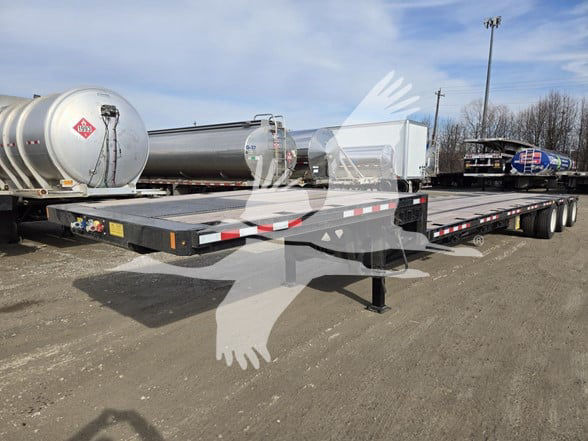
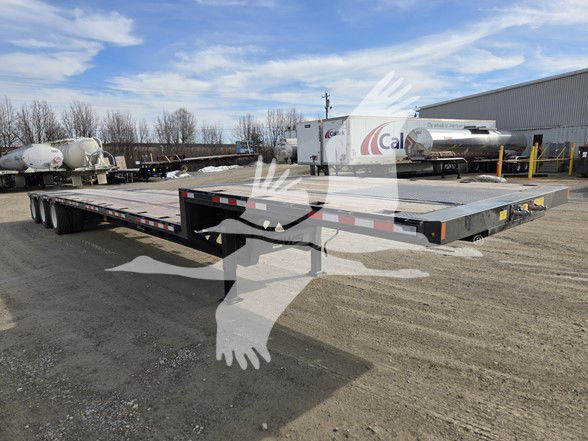
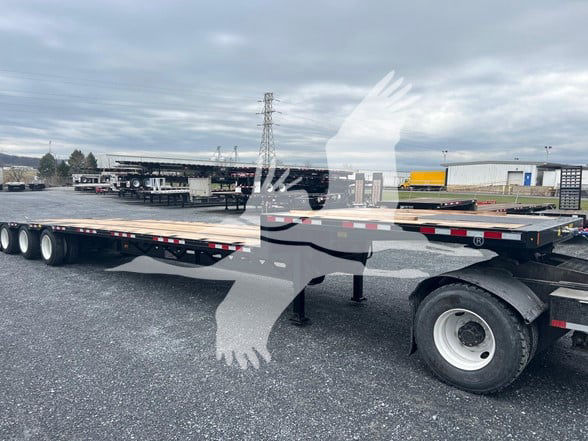
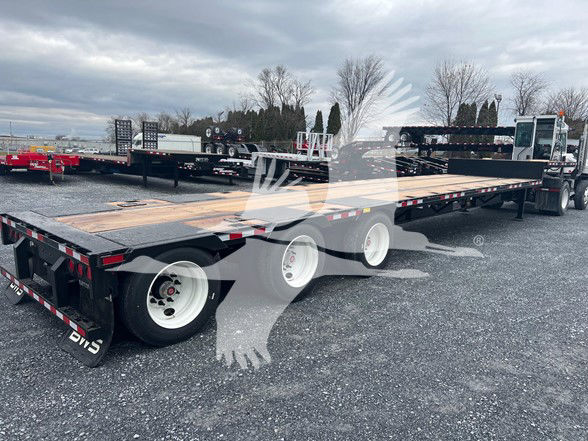
A lot of the buying decision comes down to deck geometry and weight capacity. Common specs in this group include 48-foot overall length, 102-inch width, roughly 11-foot top decks, and main decks just under 37 feet, with loaded deck heights around 40 to 41 inches. Steel BWS drop decks are often equipped with 1 1/8-inch Apitong flooring, 4-inch I-beam crossmembers on 16-inch centers, and coil package reinforcement for shippers that move concentrated freight. Buyers comparing listings should pay close attention to beam rating, unloaded trailer weight, and side rail construction, since those numbers directly affect payload strategy and how the trailer performs under point-loaded cargo.
Axle configuration matters just as much as deck spec. Many new BWS trailers in this class use three axles with a center lift axle, 61-inch axle spacing, and Ridewell air ride suspension. That setup gives operators flexibility when balancing bridge law, tire wear, and maneuverability. Features like manual or electric dump valves, two-speed landing gear, aluminum air tanks, and 18-inch kingpin settings are not small details. They affect coupling position, axle loading, and day-to-day ease of use. Tire size, swing clearance, and GVWR should also be reviewed closely, especially for buyers running oversize freight, dense machinery, or regional lanes with strict scaling requirements.
Securement and lighting are another strong point in this category. Many BWS drop deck trailers are spec'd with multiple pairs of 4-way chain slots, roadside winch tracks, sliding winches, pipe spools, and rear auxiliary receptacles. That matters for carriers hauling mixed freight that changes from coils to palletized equipment to construction materials. In Ohio and the broader Midwest, where freight can range from steel and fabricated products to agricultural and industrial equipment, a new BWS trailer with the right deck height, axle setup, and tiedown package can be a very efficient fit for specialized open-deck work.
Frequently Asked Questions about New BWS Trailers in Ohio
What are new BWS trailers commonly used for?
New BWS trailers are commonly used for open-deck freight that needs strength, securement flexibility, and lower deck height than a standard flatbed. In this category, that usually means steel products, machinery, construction materials, palletized freight, and concentrated loads such as coils when the trailer is equipped with a coil package. BWS drop deck trailers are especially useful when cargo height is a concern and a step deck layout helps keep the overall load legal.
What should I compare first when shopping for a BWS drop deck trailer?
Start with deck dimensions, empty weight, axle configuration, and beam rating. A trailer with a 48-foot overall length, an 11-foot top deck, and a main deck around 37 feet may look similar across listings, but small differences in deck height, side rail strength, crossmember spacing, and suspension spec can change how much freight the trailer can legally and safely haul. Securement equipment such as chain slots, sliding winches, and winch tracks should also match the type of cargo you haul most often.
Why do many new BWS trailers use a tri-axle setup with a lift axle?
A tri-axle setup with a center lift axle gives operators more flexibility with heavier or concentrated loads. It can help distribute weight more effectively across the trailer, support higher GVWR and beam ratings, and improve compliance with bridge and axle laws depending on the route and jurisdiction. When the lift axle is raised in lighter-load situations, it can also reduce tire scrub and improve maneuverability compared with keeping all three axles down all the time.
Is a steel BWS drop deck better than an aluminum trailer for some operations?
For many heavy-duty applications, a steel BWS drop deck is preferred because it emphasizes structural durability and resistance to hard use. Fleets hauling machinery, steel, and rugged industrial freight often value the strength of steel side rails, steel crossmember structure, and the overall feel of a heavy-service build. The tradeoff is usually more trailer weight than an aluminum design, so buyers should balance durability needs against payload requirements and lane type.
What trailer features matter most for Midwest and Ohio freight?
In Ohio and surrounding Midwest lanes, practical freight specs usually matter more than cosmetic options. Air ride suspension, multiple chain tiedowns, Apitong flooring, a coil package, good lighting, and a dependable lift axle setup are all valuable for mixed industrial freight. Buyers should also consider swing clearance, kingpin setting, tire size, and rear receptacles because those details affect docking, scaling, tractor compatibility, and how easily the trailer adapts to different customers and commodity types.