
1976 Trailers For Sale
Browse 1976 trailers for sale, including classic dry vans and commercial trailers with durable frames, simple specs, and serviceable components.
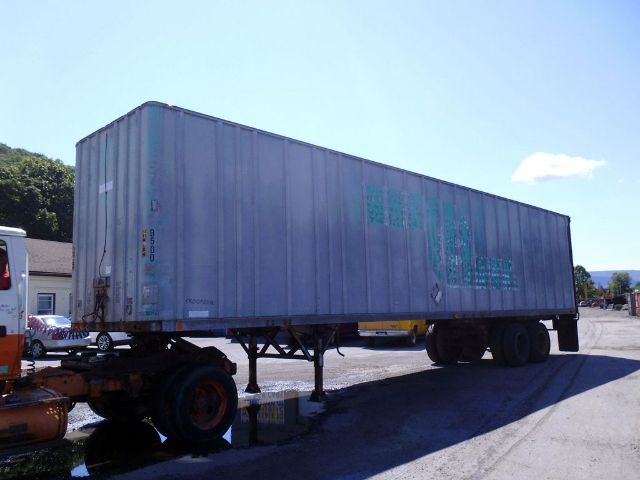
Selling a 1976 trailer? List your 1976 trailer for sale and reach thousands of commercial buyers.
1976 Trailers
The first thing to evaluate on a 1976 trailer is structural condition. On an older van trailer, buyers should inspect crossmembers, side rails, rear frame, upper coupler plate, landing gear mounts, and suspension hangers for corrosion, cracking, or old repairs. Floor condition matters just as much, especially on wood-floor dry vans that may have seen forklift traffic for decades. Door operation, roof bow condition, and wall integrity also affect usability. A trailer of this age can still be a practical asset, but only if the frame, floor, and brake system are sound.
Running gear and compatibility are the next decision points. Many 1976 trailers use spring ride suspension, slideable tandems, older wheel and tire sizes, and basic air brake systems that are simpler than newer trailer setups. That simplicity can be an advantage for buyers who maintain equipment in-house, but parts availability should be confirmed before purchase, especially for axle components, brake hardware, hubs, drums, and suspension pieces. Kingpin condition, axle alignment, brake chamber age, and tire match all deserve close attention on any older trailer that will return to regular road service.
A 1976 trailer can also make sense outside over-the-road freight. Older dry box trailers are often repurposed for jobsite storage, agricultural storage, seasonal warehousing, or stationary use at a business location. Buyers comparing listings should think beyond price and focus on legal dimensions, empty weight, GVWR, door style, axle spread, and how much work will be needed to meet their intended use. For some operations, an older trailer is a budget tool. For others, it is a rebuild candidate with value tied directly to frame integrity and remaining service life.
Frequently Asked Questions about 1976 Trailers
What should I inspect first on a 1976 trailer?
Start with the structure. Check the main frame rails, crossmembers, kingpin area, suspension mounts, rear frame, and landing gear supports for rust, cracks, or signs of heavy repair. On van trailers, inspect the wood floor for soft spots, forklift damage, and delamination. A trailer from 1976 can still be useful, but structural condition determines whether it is roadworthy, suitable for storage use, or only valuable as a rebuild project.
Are 1976 trailers still practical for commercial use?
They can be, but practicality depends on the trailer’s condition, intended application, and compliance requirements. Some older trailers are still used for local hauling, agricultural work, yard spotting, or storage. For regular highway service, buyers need to verify brake function, tire condition, lighting, axle alignment, registration requirements, and overall structural integrity. Older specifications such as 45-foot length and 96-inch width may fit some operations better than others.
What types of trailers are common in the 1976 model year?
Dry van trailers are a common example in this year range, especially older aluminum or steel-framed units from established manufacturers such as Fruehauf. Many have tandem axles, spring ride suspension, air brakes, wood floors, and roll-up or swing rear doors. Depending on prior use and surviving inventory, buyers may also encounter flatbeds, storage trailers, and regionally used specialty units from the same era.
Are parts harder to find for a 1976 trailer?
Some parts are easy to source, while others may require more research. Standard service items such as brake chambers, hoses, slack adjusters, lights, and some wheel-end components may still be available through heavy-duty parts channels. Brand-specific or obsolete suspension, axle, and structural pieces can be more difficult to match. Buyers should confirm the axle and suspension identification tags and inspect wheel-end and brake configurations before committing to an older trailer.
Is a 1976 trailer a good candidate for storage or stationary use?
Yes, many older trailers are purchased specifically for storage because they offer weather protection, mobility when needed, and a lower acquisition cost than newer road-ready equipment. A dry van from 1976 can work well for tools, seasonal inventory, farm supplies, or jobsite materials if the roof, floor, and doors are still in good condition. For stationary use, buyers still need to inspect structural soundness, landing gear stability, and water intrusion points.