
New Mack Service/Utility Trucks For Sale in Colorado
Compare new Mack service and utility trucks, including MD6 and MD7 chassis, mechanic bodies, cranes, compressors, and lube truck setups.
Learn more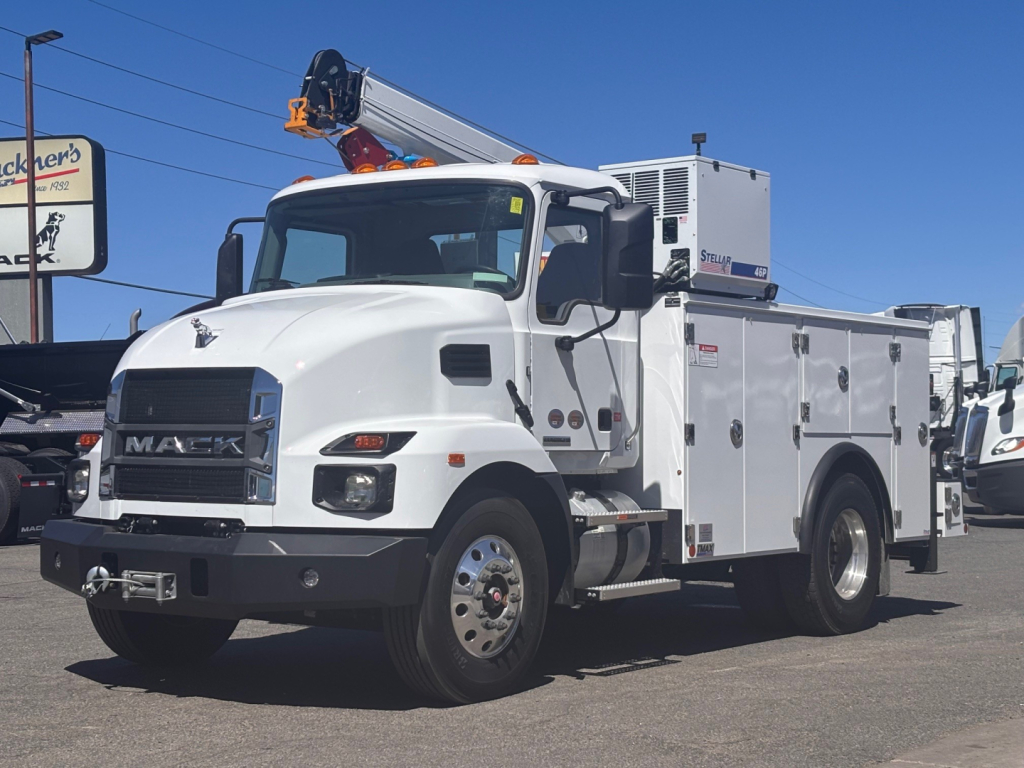
Have new mack service/utility truck to sell? List it here to reach thousands of buyers.
About New Mack Service/Utility Trucks in Colorado
For many buyers, the key decision starts with chassis class and CDL requirements. Mack MD6 and de-rated MD7 configurations are often selected for non-CDL operation while still providing enough GVWR, axle capacity, and frame strength for a fully equipped service body. Common powertrain specs in this class include the Cummins ISB 6.7L diesel around 300 horsepower paired with an Allison automatic transmission, a combination valued for straightforward operation, broad service support, and predictable performance in stop-and-go vocational use. On Colorado routes and mountain grades, buyers should pay close attention to payload after body installation, rear axle rating, gearing, PTO compatibility, and how the final build balances crane capacity, compressor output, and onboard storage.
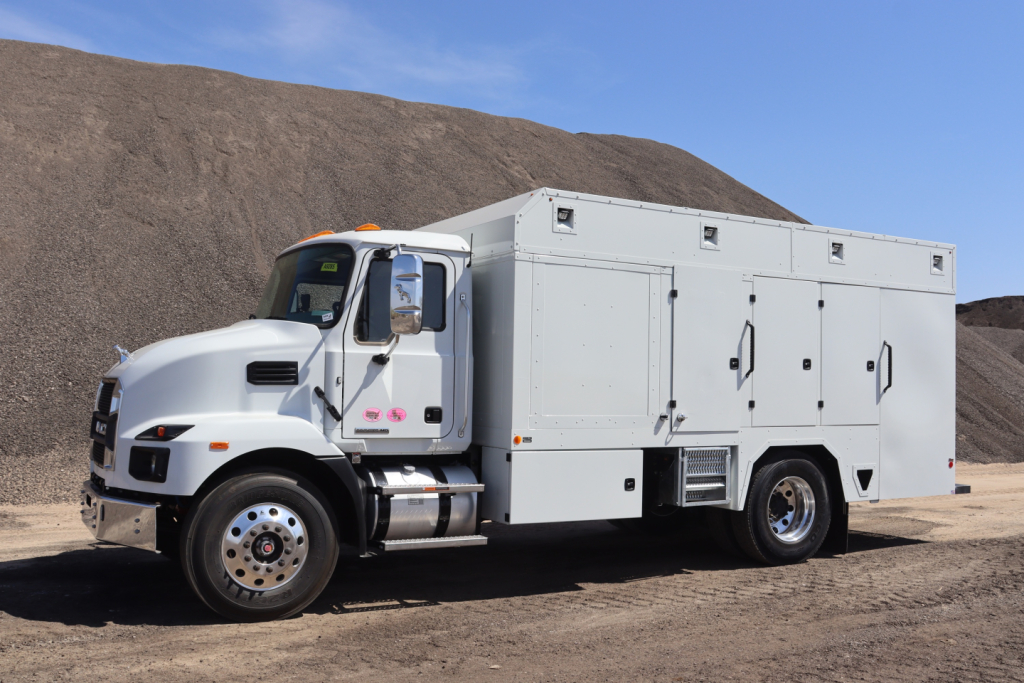
Body specification matters as much as the truck itself. A mechanic or crane body may include an 11-foot service body, enclosed compartments, workbench space, air compressor systems, hydraulic cranes, winch bumpers, LED work lighting, and integrated power for tools and accessories. Crane ratings in this segment are commonly listed in ft-lb and lifting capacity, and buyers should match that rating to the actual work being done, not just maximum lift claims. A truck used for service calls on loaders, mixers, or drill rigs may need a heavier crane, stabilizers, and reinforced body structure, while a lighter-duty municipal or contractor application may put more value on storage layout, reach, and under-CDL compliance. Mobile lube truck setups add another layer, with fresh oil tanks, used oil recovery, grease systems, hose reels, metering equipment, and filter handling features that support preventive maintenance in the field.
A well-matched Mack service/utility truck should be evaluated as a complete system: chassis, body, crane, compressor, PTO-driven accessories, and technician workflow. Buyers should look closely at compartment configuration, body manufacturer support, air system capacity in CFM, reel placement, lighting, remote crane controls, and wheelbase suitability for the installed equipment. New Mack service trucks appeal to fleets that want current emissions systems, warranty coverage, and a ready-to-upfit platform for long-term vocational use. For mechanic service, field maintenance, and lube applications, the best unit is usually the one that keeps payload, stability, service access, and operator efficiency in balance.
Frequently Asked Questions
What are Mack service/utility trucks typically used for?
Mack service/utility trucks are commonly used for mobile mechanic work, field repairs, preventive maintenance, and fluid service. Typical applications include supporting construction equipment, vocational truck fleets, municipal assets, agricultural machinery, and other equipment that cannot easily be brought back to a central shop. Depending on the body, the truck may function as a mechanic truck, crane truck, or lube service truck.
What is the difference between a mechanic truck and a lube truck?
A mechanic truck is built around tools, parts storage, a compressor, and often a crane for lifting components in the field. A lube truck is configured for preventive maintenance and fluid handling, with tanks for fresh oils and coolant, used oil recovery, hose reels, meters, and grease systems. Some service/utility trucks can be spec'd to do both, but most are optimized around one primary job to preserve payload, space, and technician efficiency.
Are Mack MD6 and MD7 service trucks available in non-CDL configurations?
Yes. Many Mack MD6 service trucks are naturally suited for non-CDL applications, and some MD7 units are de-rated to meet Class 6 non-CDL requirements. That said, the final legal operating status depends on the completed truck's GVWR, body installation, and local regulations. Buyers should verify the finished truck rating, payload with equipment installed, and any state-specific licensing requirements before purchase.
What specs matter most when comparing new Mack service trucks?
The most important specs usually include GVWR, front and rear axle ratings, wheelbase, engine and transmission pairing, PTO provision, body length, crane capacity, compressor output, and usable payload after the upfit is complete. Buyers should also evaluate compartment layout, stabilizer setup, lighting, remote controls, and service-body construction. On lube units, tank capacity, hose reel arrangement, meter options, and waste oil recovery design are equally important.
Why is a Mack chassis a strong choice for service and utility applications?
Mack chassis in this segment are popular because they offer a durable medium-duty platform with vocational-friendly specifications, familiar diesel power, automatic transmission options, and broad support for service body upfits. The MD series is well suited to applications that require repeated stops, PTO-driven accessories, and dependable operation on mixed city, highway, and jobsite routes. For fleets, that combination can simplify driver training, maintenance planning, and long-term operating consistency.