
Versalift Equipment For Sale
Shop Versalift equipment listings, including bucket and aerial lift units, with guidance on working height, chassis, PTO setup, and boom type.
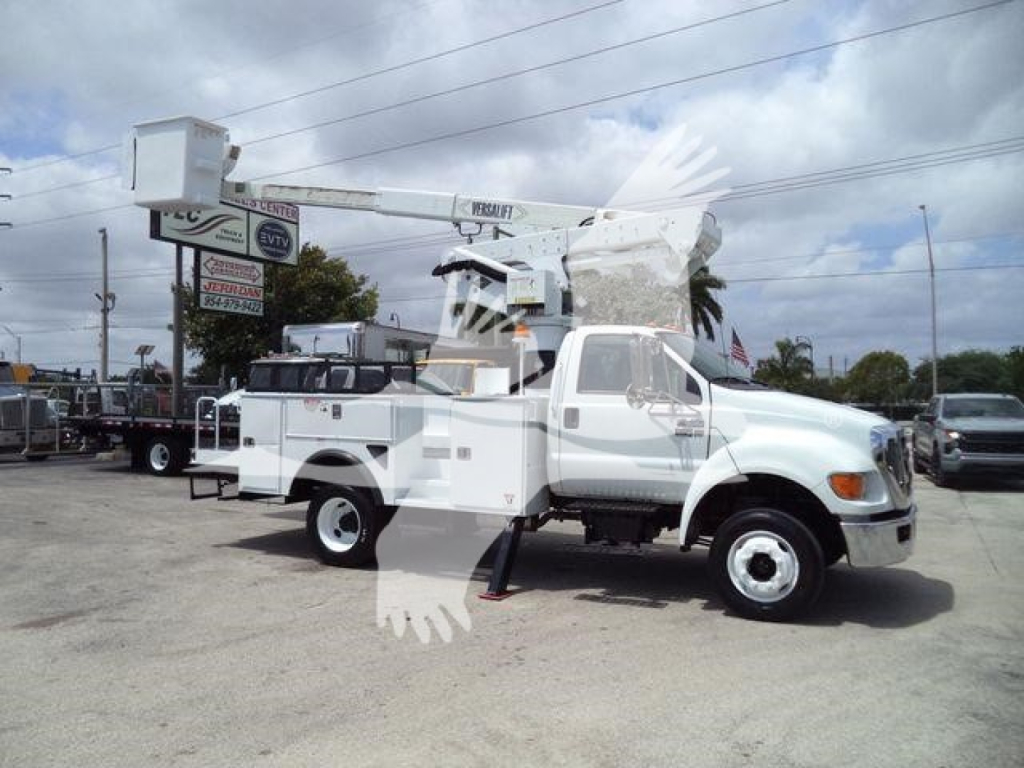
Selling a versalift equipment? List your versalift equipment for sale and reach thousands of commercial buyers.
Versalift Equipment
Common Versalift setups are mounted on Ford, International, Freightliner, Chevrolet, and RAM chassis in GVWR classes ranging from lighter non-CDL units up to medium-duty trucks that carry heavier utility bodies and outriggers. Buyers should compare platform capacity, boom style, stowed travel height, outrigger design, and PTO-driven hydraulic performance. On used units, insulation rating and dielectric test history matter if the truck will be used around energized lines. Body configuration also matters more than many first-time buyers expect. Compartment layout, ladder rack design, reel mounts, pintle hitches, and trailer towing capability can make a major difference in daily field productivity.
A model with a 40-foot class working height can be a practical fit for sign service, communications work, and general facility maintenance, while taller units are more common in utility and contractor fleets that need greater reach over setbacks and obstacles. Articulated booms usually provide better positioning around trees, poles, and structures, while straight telescopic sections can simplify certain vertical access jobs. On any used Versalift, pay close attention to boom wear, turntable condition, hydraulic leaks, fiberglass condition on insulated sections, and the operation of interlocks and lower controls. Engine hours, idle hours, chassis rust, and maintenance documentation often tell more about remaining service life than model year alone.
Versalift has a strong presence in vocational fleets because the equipment is straightforward to service and widely recognized in utility and municipal applications. For buyers comparing listings, the important questions are less about brand name alone and more about how the unit is equipped for the intended work. A well-matched Versalift should be evaluated as a complete package that includes aerial device ratings, body and storage layout, chassis capacity, axle ratings, and the roadability needed to move efficiently between job sites.
Frequently Asked Questions about Versalift Equipment
What types of equipment are most commonly sold under the Versalift name?
Versalift equipment in the used truck market most commonly includes bucket trucks, aerial lifts, telescopic and articulated boom units, and utility body service trucks. Many are chassis-mounted aerial devices used by electric utilities, telecom contractors, sign companies, municipalities, and facility maintenance departments. Some units are insulated for work near energized lines, while others are non-insulated units intended for general overhead access.
What should I check first when comparing used Versalift bucket trucks?
Start with working height, horizontal reach, platform capacity, and whether the boom is insulated or non-insulated. After that, confirm the chassis GVWR, axle ratings, PTO and hydraulic operation, outrigger type, and body layout. On the equipment itself, inspect the boom structure, turntable, pins, hoses, bucket condition, lower and upper controls, and any available maintenance and dielectric test records. These factors usually matter more than cosmetic appearance.
Is a Versalift articulated boom better than a telescopic boom?
It depends on the application. An articulated boom is often better when the operator needs to reach up and over obstacles such as tree limbs, fences, signs, or utility structures. A telescopic boom can be simpler and effective for more direct vertical or linear access. Buyers should match boom design to the actual work environment rather than assuming one style is universally better.
Do I need an insulated Versalift unit?
An insulated aerial device is typically required when the work involves proximity to energized electrical lines and the job scope, employer policy, or regulatory standard calls for dielectric protection. If the truck is being used for sign service, lighting, building maintenance, or telecom work not involving energized line contact, a non-insulated unit may be sufficient. Used buyers should verify insulation classification and test history before placing a truck into utility-type service.
Are chassis specs important on a Versalift truck, or is the boom the main concern?
Chassis specs are just as important as the aerial device. The truck must carry the body, boom, tools, crew, and any towing load without exceeding GVWR or axle ratings. Wheelbase affects turning radius and body length, while engine type, transmission, suspension, and brake setup affect road performance and operating cost. A strong Versalift boom on the wrong chassis can still be a poor fleet fit.