
2008 Toyota Equipment For Sale in New York
Shop 2008 Toyota equipment for sale, including durable Toyota forklifts known for LP power, warehouse maneuverability, and reliable lift capacity.
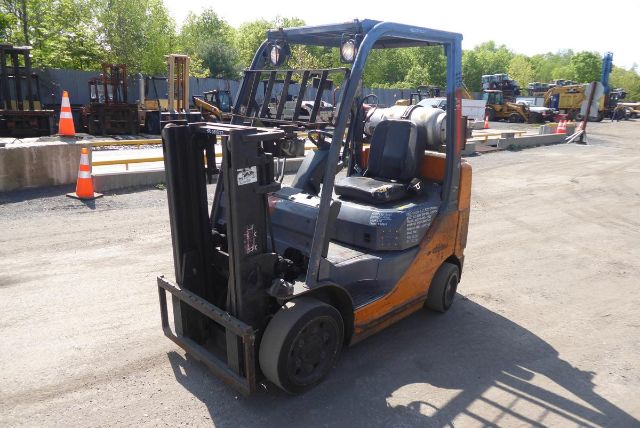
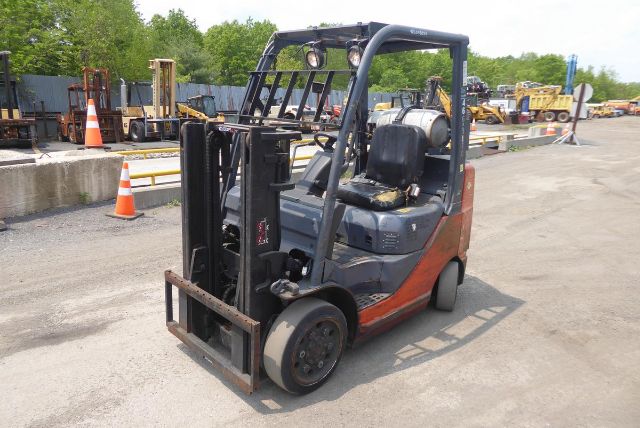
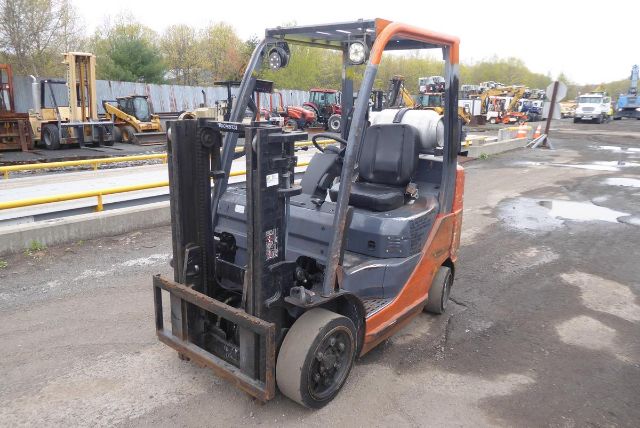
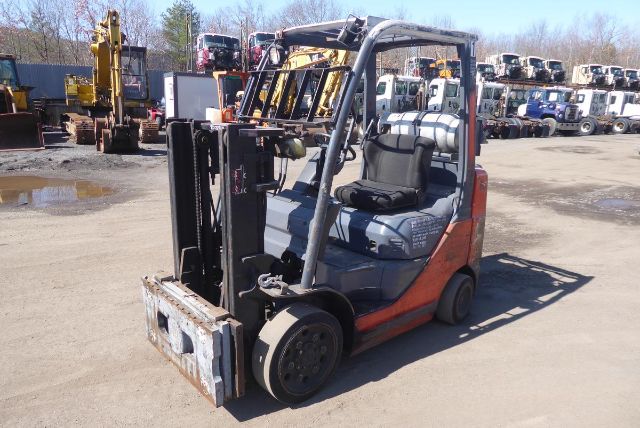
Selling a 2008 toyota equipment? List your 2008 toyota equipment for sale and reach thousands of commercial buyers.
2008 Toyota Equipment in New York
For most buyers, capacity, mast configuration, fuel type, and overall dimensions are the real decision points. Many 2008 Toyota forklifts in this class are rated around 4,300 to 5,000 pounds, with propane power, automatic directional control, and compact chassis dimensions that fit standard warehouse aisles and trailers. Cushion-tire models are common for smooth concrete floors and dock work, while mast style affects both collapsed height and maximum lift capability. A lower overall height helps with container entry and low-clearance doors, but buyers should still confirm the actual lift height, free lift, side shift, fork length, and carriage setup because those details determine how useful the truck will be in daily handling.
Used Toyota equipment should be evaluated beyond the hour meter. Hydraulic cylinder condition, mast wear, chain stretch, steer axle play, brake response, and transmission engagement all matter on an older forklift. On LP units, buyers should also pay attention to regulator performance, cold starting, idle quality, and whether the tank bracket and fuel components are complete. Solid pneumatic or cushion tires should be checked for chunking, flat spotting, and remaining service life. It is also common to see forklifts offered without forks or with attachment changes, so carriage class, fork dimensions, and any included side shifter or attachment should be verified before purchase.
In New York, many buyers need a forklift that can handle indoor warehouse work year-round with predictable serviceability and compact maneuvering in older buildings. A 2008 Toyota unit can still be a cost-effective choice when the machine has been maintained properly and matched to the actual load profile. Focus on lift capacity at load center, mast lowered height, overhead guard clearance, turning radius, tire type, and fuel system condition. Those factors will tell you more about day-to-day usefulness than model year alone.
Frequently Asked Questions about 2008 Toyota Equipment in New York
What is a common lift capacity for a 2008 Toyota forklift?
Many 2008 Toyota forklifts in the common warehouse class are rated between 4,300 and 5,000 pounds, often at a standard 24-inch load center. Actual safe capacity depends on the mast, attachment, and fork configuration. If a truck has a side shifter, clamp, longer forks, or a higher mast, the effective lifting capacity can change, so the data plate should always be checked.
Are 2008 Toyota forklifts typically propane-powered?
Yes. Many Toyota forklifts from this period use LP gas engines, especially cushion-tire indoor models. Propane remains popular because it offers quick refueling, consistent run time, and cleaner indoor operation than older diesel units in many warehouse settings. Buyers should still inspect the regulator, mixer, hoses, tank mount, and starting behavior because fuel system condition has a direct effect on reliability.
What should I inspect first on a used 2008 Toyota forklift?
Start with the mast and hydraulic system, then move to drivetrain and steering. Check for leaking tilt or lift cylinders, mast chain wear, jerky lifting, poor transmission engagement, weak brakes, and looseness in the steer axle. After that, confirm tire condition, hour meter consistency, overhead guard clearance, and whether forks and attachments are included. A forklift that runs well but has mast or hydraulic wear can become expensive quickly.
What is the difference between a cushion-tire Toyota forklift and other forklift types?
A cushion-tire forklift is built primarily for indoor use on smooth, hard surfaces such as warehouse concrete. It usually has a lower profile, tighter turning radius, and better maneuverability in confined aisles and dock areas than a rough-terrain or pneumatic-tire unit. If the job requires yard travel, broken pavement, gravel, or uneven outdoor surfaces, a pneumatic-tire forklift is often the better fit.
Do older Toyota forklifts still have good parts and service support?
In many cases, yes. Toyota forklifts have broad market presence and strong parts availability compared with many lesser-known brands. That is one reason they remain popular in the used equipment market. Support can still vary by model, engine configuration, and attachment type, so buyers should confirm availability of filters, ignition parts, hydraulic components, mast rollers, and any model-specific electronic items before committing.