
2008 Toyota Lifts - Fork For Sale in New York
Browse 2008 Toyota fork lifts for sale, including warehouse-ready cushion tire models with common specs, mast options, lift capacities, and features.
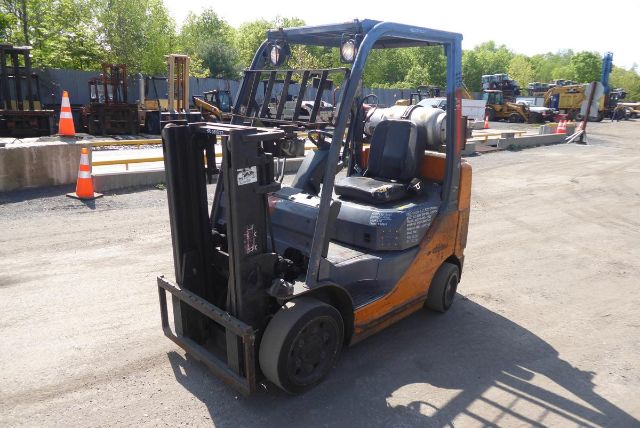
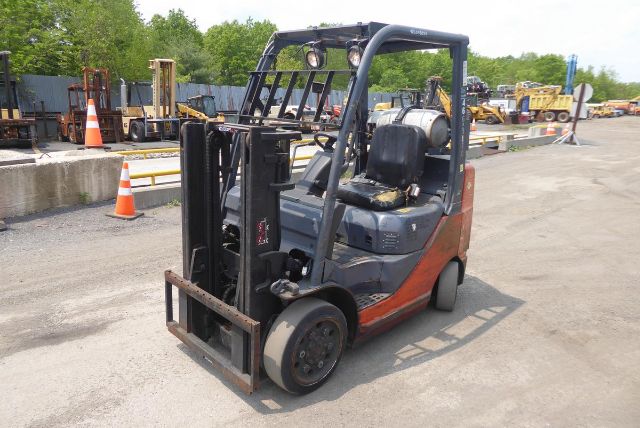
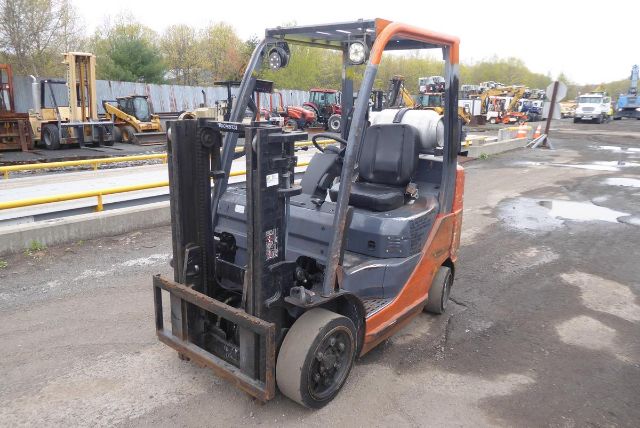
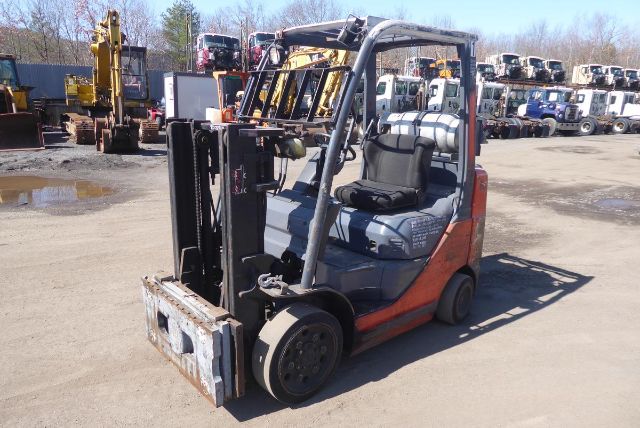
Have 2008 toyota lifts - fork equipment to sell? List it here to reach thousands of buyers.
2008 Toyota Lifts - Fork in New York
On Toyota forklifts from this period, common power comes from Toyota 4-cylinder propane engines paired with simple forward-reverse automatic or Monotrol-style directional control. That setup is popular in indoor and mixed-use operations because propane refueling is fast and performance stays consistent through a shift. Cushion-tire models are common for smooth concrete floors and tight turning in distribution centers, while larger pneumatic or heavy-capacity Toyota fork lifts are built for yard work, lumber, steel, machinery moving, and other higher-load applications. A buyer in New York should pay close attention to cold-start behavior, hydraulic response in winter conditions, and tire type, since indoor warehouse trucks and outdoor yard trucks are not interchangeable in real-world use.
Mast configuration is one of the most important buying decisions on a used 2008 Toyota fork lift. A dual-stage mast can be adequate for basic loading and unloading at lower rack heights, while a triple-stage mast gives more stacking height without sacrificing as much collapsed clearance. Check the actual lift height, lowered mast height, and back tilt angle, then match those numbers to your racks, trailers, and dock doors. Side shift is one of the most valuable productivity options on this class of equipment because it reduces repositioning time and fork wear. Fork length and thickness also matter, especially if the truck has been used in palletized freight, manufacturing, or dense material handling where fork taper, heel wear, and carriage condition can affect safe capacity.
For a used 2008 Toyota fork lift, condition matters more than paint. Hour meter readings help, but service history, mast and tilt cylinder dryness, chain wear, steer axle play, brake feel, and transmission response usually tell more about the truck’s real remaining life. Confirm the data plate is legible and matches the mast and attachment setup, because capacity changes when side shift, clamps, or longer forks are installed. Toyota remains a sought-after name in used material handling equipment because many models are straightforward to service and widely recognized by operators, but the best choice is still the one that fits your floor surface, aisle width, load center, and maximum lift requirement.
Frequently Asked Questions about 2008 Toyota Lifts - Fork in New York
What capacity is common for a 2008 Toyota fork lift?
Many 2008 Toyota warehouse forklifts fall in the 4,000 to 5,000 lb range, especially LPG cushion-tire models used in docks and distribution centers. Heavy-capacity Toyota fork lifts also exist, but the most common units in this vintage are mid-capacity trucks designed for pallets, general freight, and indoor material handling. Always verify the exact rated capacity on the data plate, because mast height, attachments, and fork length can reduce effective capacity.
Is a propane Toyota forklift a good choice for indoor use?
A propane Toyota forklift is a common choice for indoor and mixed-use operation because refueling is quick and output stays steady over long shifts. It works well in warehouses and loading docks when ventilation is appropriate and the truck is maintained correctly. For strictly indoor use on smooth concrete, many buyers prefer propane cushion-tire units because they combine compact dimensions, tight turning, and simple serviceability.
What should I check on a used 2008 Toyota fork lift before buying?
Focus on mast wear, chain condition, carriage play, hydraulic cylinder leaks, transmission engagement, brake performance, steering looseness, and tire condition. Check the hour meter, but also inspect the forks for heel wear and blade thickness loss, and make sure the mast rails are not excessively loose or damaged. Confirm the serial tag and capacity plate are present and readable, and make sure any side shift or extra hydraulic functions operate smoothly without drift.
What is the difference between a dual-stage and triple-stage mast on a Toyota forklift?
A dual-stage mast is simpler and often adequate for basic loading, unloading, and lower stacking heights. A triple-stage mast provides more lift height while maintaining a lower collapsed height, which is useful for trailer entry, warehouse doors, and racking systems with higher storage positions. The right choice depends on your building clearance and your maximum stacking height, not just the truck’s base capacity.
Are 2008 Toyota forklifts easy to get parts and service for?
Toyota is generally considered one of the better-supported forklift brands in the used market. Parts availability is typically strong for common models, especially popular LPG warehouse trucks, and many technicians are familiar with Toyota systems from this era. Buyers should still confirm engine type, mast components, attachment brand, and any modified hydraulic circuits, because those details affect service cost and parts lead time.