
Navigator Equipment For Sale
Compare Navigator equipment for sale by carrier fit, rated lift capacity, Kubota engine condition, and mounting-system wear before choosing a forklift.
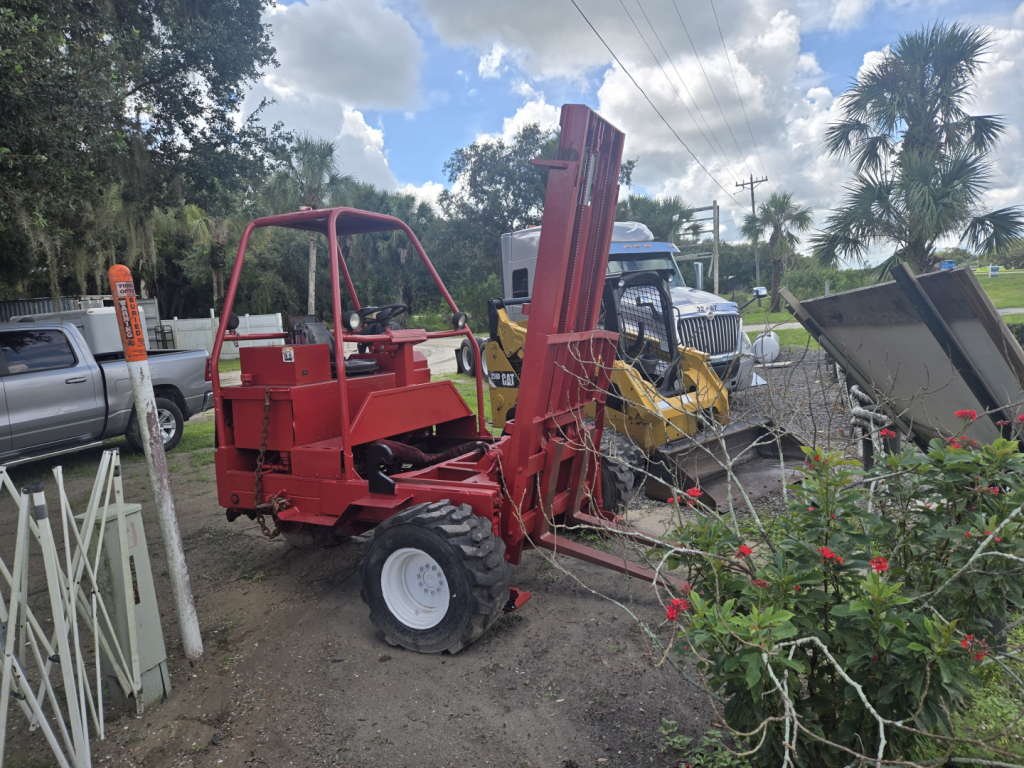
Selling a navigator equipment? List your navigator equipment for sale and reach thousands of commercial buyers.
Navigator Equipment
Rated capacity must be checked against the load center and working configuration shown on the Navigator data plate or load chart. Long lumber bundles, palletized masonry, and bagged materials place different demands on fork length, reach, and stability. Verify lift height, fork spacing, attachment compatibility, and any reach function needed to unload from one side of a trailer. Rough-terrain tires help on gravel and unimproved sites, but tire type does not make soft ground or side slopes safe. Match the drive and steering configuration to the actual delivery surface rather than assuming every Navigator has identical traction.
On used Kubota-powered RT6500 forklifts, start with a cold engine and inspect starting behavior, smoke, coolant condition, radiator cleanliness, and hydraulic leaks. Compare indicated hours with service records and electronic engine hours when available. Inspect fork heels, carriage components, lift-cylinder rods, steering joints, and wheel ends for wear or damage. Cracks, elongated mounting holes, bent supports, or undocumented weld repairs deserve particular attention because the transport hardware receives repeated road shock. A qualified technician should test lifting, steering, braking, and travel under controlled working conditions; a machine that moves correctly without a load may still have hydraulic or drive-system problems.
For a new Navigator, specify the carrier mounting package, fork dimensions, tires, working clearances, and required attachments before ordering. Get written warranty terms covering the engine, hydraulic components, structural components, and mounting equipment, including who handles service and whether labor or travel charges are excluded. Across model years, identify the engine's emissions family from its label rather than applying highway-truck DPF and DEF introduction dates to a nonroad forklift; inspect any fitted emissions equipment and confirm that replacement parts remain supportable.
Across the United States and Canada, road salt exposure makes mounting brackets, hydraulic fittings, electrical connectors, and structural cavities important corrosion checkpoints. Cold-weather delivery work calls for suitable fluids, reliable starting equipment, and clear hydraulic-service records, while dusty operations place extra demands on air filtration and cooling-system cleanliness. Check loaded axle weights and applicable rear-overhang, lighting, securement, and dimensional requirements for the carrier in each operating jurisdiction, and confirm engine compliance and documentation before moving a used machine across the border.
Frequently Asked Questions about Navigator Equipment
Can I mount a Navigator forklift on my existing flatbed truck or trailer?
A Navigator forklift needs a mounting system engineered for both the machine and the specific carrier. Existing brackets are not proof of compatibility. Have the carrier frame, crossmembers, rear structure, mounting geometry, and axle loading reviewed before installation. Confirm that the forklift does not obstruct required lights or the license plate, and establish a documented transport-locking and inspection procedure.
Should I buy a Navigator piggyback forklift or a conventional telehandler?
A Navigator piggyback forklift suits delivery routes that need unloading capability at multiple stops; a conventional telehandler suits sustained onsite lifting and greater reach requirements. Compare the actual load chart, terrain, lifting height, and attachment needs rather than choosing by advertised capacity alone. A truck-mounted forklift also occupies carrier payload and rear-overhang allowance, while a telehandler usually needs separate transport arrangements.
Do I need forklift operator training to use a Navigator for deliveries?
US employees operating a Navigator forklift need powered industrial truck training and evaluation under OSHA rules where those rules apply. Training must address the equipment and workplace hazards, including unloading at customer locations. Employer performance evaluations are required at least every three years, with refresher training triggered by specified events such as unsafe operation. Canadian buyers should confirm the applicable provincial or territorial occupational safety requirements.
What maintenance costs should I plan for with a Navigator truck-mounted forklift?
Tires, hydraulic hoses, filters, lift-component wear, and transport-mount repairs belong in a Navigator forklift maintenance budget alongside engine service. Road travel exposes the carried machine to vibration, salt, and debris even when the engine-hour meter is not advancing. Track carrier mileage as well as operating hours, and inspect transport hardware on a schedule that reflects delivery frequency and road conditions.
What paperwork do I need to import a used Navigator forklift into the US?
The Navigator forklift's engine emissions label and EPA import declaration are key documents for US entry. Nonroad equipment commonly requires EPA Form 3520-21, with the correct compliance or exemption declaration supported by the engine's identity and documentation. Do not assume Canadian registration or prior Canadian operation establishes US admissibility. Confirm the requirements with a customs broker before arranging transport, particularly if the engine has been replaced.