
Lifts - Telescopics For Sale
Compare lifts - telescopic for sale by load chart, forward reach, attachments, and used-machine wear to choose a telehandler suited to your jobsite.
Selling a lifts - telescopic? List your lifts - telescopic for sale and reach thousands of commercial buyers.
Lifts - Telescopics
Four-wheel drive, steering modes, ground clearance, and tire type matter on uneven jobsites. For used machines of any model year, inspect boom wear pads, extension chains where fitted, hydraulic cylinders, axle seals, steering joints, and attachment locking mechanisms. Review service records and engine hours, then test lifting, steering, and braking with a qualified operator. Diesel emissions equipment varies with engine rating and production year; identify any DPF or SCR system and check fault history. For new equipment, confirm attachment approvals, warranty exclusions, and local parts support. Northern buyers should check cold-start provisions and salt corrosion, while soft-ground applications demand careful evaluation of tires and stability.
Also known as: Telehandler, Telescopic Forklift, Telescopic Handler, Boom Forklift
Frequently Asked Questions about Lifts - Telescopics
Can a telehandler lift its rated capacity at full reach?
A telehandler usually cannot lift its headline rated capacity at full forward reach. The applicable load chart establishes the limit for each boom position and approved attachment. Long loads can move the load center farther forward than standard pallets, reducing allowable capacity. Check the actual placement distance and load dimensions rather than selecting a machine solely by its advertised maximum capacity.
How can I check whether a used telehandler's hour meter is accurate?
Compare the telehandler's dashboard hours with engine ECM hours, dated service records, and documented meter replacements. Electronic engine data can provide an independent reference, although older mechanically controlled engines may not record hours electronically. Pedal wear, seat condition, boom looseness, and hydraulic performance should support the recorded usage. Low displayed hours alone do not establish low wear.
Do I need operator certification to run a telehandler?
OSHA requires U.S. telehandler operators to be trained and evaluated before operating independently. Employers must document the required operator certification; a driver's license does not substitute for that training. Canadian requirements follow provincial or territorial occupational safety rules. Training must address the telehandler's controls, load charts, stability, attachments, and workplace hazards rather than relying solely on warehouse forklift experience.
Is a truck-mounted piggyback forklift the same as a telehandler?
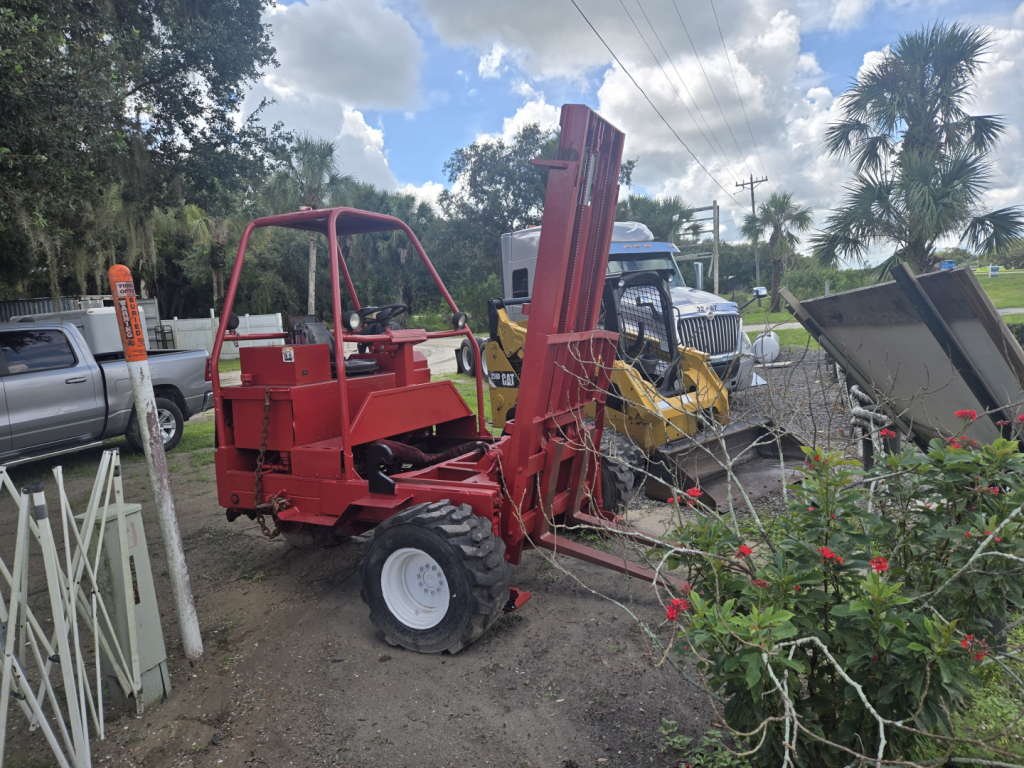
No. Truck-mounted or piggyback describes how a forklift travels between jobs, while telehandler describes a machine with a telescoping lifting boom. Many piggyback forklifts use a mast rather than an extending boom. Compare the lifting mechanism, rated reach, terrain capability, and attachment options before treating a delivery forklift as a substitute for a construction telehandler.
When should I choose a rotating telehandler instead of a fixed-boom model?
Choose a rotating telehandler when repeated placement around a stationary machine reduces repositioning on the jobsite. A fixed-boom telehandler is usually the simpler choice for unloading trucks, moving pallets, and feeding one work face. Rotating models require careful planning for stabilizer deployment, ground support, and the permitted lifting envelope. Confirm transport dimensions and attachment-specific charts before selecting the configuration.