
Hitachi Equipment For Sale
Browse Hitachi trucking equipment for sale, including durable excavators and heavy machines known for hydraulic performance and jobsite reliability.
Selling a hitachi equipment? List your hitachi equipment for sale and reach thousands of commercial buyers.
Hitachi Equipment
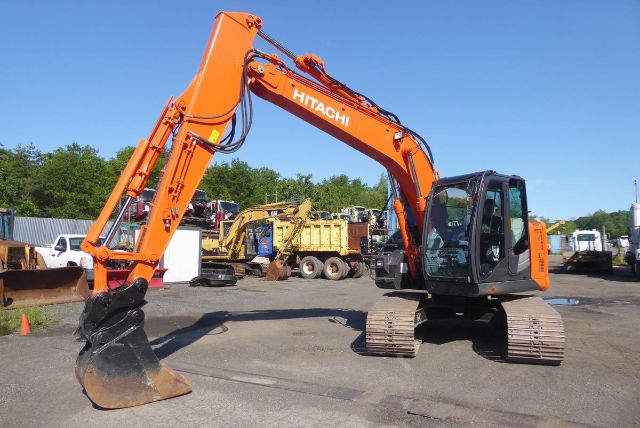
A common example in this category is a Hitachi excavator, where the spec decisions directly affect hauling, access, and production. Reduced-tail-swing and short-radius models are useful on roadwork, urban utility jobs, and tighter commercial sites where swing clearance matters. Standard-tail-swing machines can offer a simpler fit for open excavation and mass earthmoving. Buyers should compare boom and stick length, bucket size, auxiliary hydraulics, quick coupler setup, track shoe width, and cab features such as enclosed cabs, air conditioning, and electronic monitor systems. Engine make and emissions tier also matter, especially for contractors working in regulated regions or fleets managing parts and technician familiarity.
Transport considerations are a big part of shopping Hitachi equipment in a trucking marketplace. Operating weight, shipping length, width, and overall height determine trailer selection, permit needs, and routing flexibility. A mid-size excavator may be manageable on a tag trailer or detachable gooseneck depending on local laws and final configuration, while larger units quickly move into more restrictive heavy-haul territory. Undercarriage wear, track pad style, top and bottom roller condition, and any added guarding or attachments can change both hauling weight and ownership cost. Buyers should also inspect hydraulic line routing, swing bearing play, house structure condition, and any signs of leakage around the boom, stick, and bucket cylinders.
For long-term value, Hitachi equipment is typically judged on service history, cold-start behavior, hydraulic smoothness under load, and how tight the front-end components remain after hours accumulate. Machines equipped with auxiliary lines and quick-disconnect buckets can be more versatile for contractors switching between digging, trenching, grading, and attachment work. If the machine will spend time on truck-supported crews, it is worth matching the machine size to your trailer capacity, tie-down plan, and expected mobilization frequency. The right Hitachi unit is less about brand alone and more about getting the correct balance of weight class, reach, hydraulic capability, transportability, and remaining undercarriage life for the work ahead.
Frequently Asked Questions about Hitachi Equipment
What should I check first when buying used Hitachi trucking equipment?
Start with the machine’s operating weight, overall dimensions, and transport requirements, then move into condition items that drive repair cost. On Hitachi excavators and similar heavy equipment, buyers usually inspect hour meter reading, service records, undercarriage wear, hydraulic cylinder condition, boom and stick play, swing bearing movement, final drives, and engine performance under load. A machine that starts clean, tracks straight, runs smooth hydraulics, and shows limited pin and bushing wear is generally a stronger candidate than one with cosmetic appeal but hidden structural or hydraulic issues.
Are Hitachi excavators a good fit for fleets that also manage trucking and hauling?
Yes, especially when transport planning is part of the buying decision. Hitachi excavators are commonly used by contractors who need to load up and move between jobs, so shipping width, height, and total weight matter as much as digging performance. Reduced-tail-swing models can be attractive for utility and municipal work, while mid-size machines often strike a good balance between production and easier hauling on common trailer setups. The best fit depends on your trailer capacity, permit tolerance, and how often the machine will be relocated.
What specs matter most on a used Hitachi excavator?
The most important specs usually include operating weight, engine horsepower, boom and stick length, bucket size, auxiliary hydraulic setup, track width, and tail swing design. Those specs affect digging depth, lifting ability, attachment compatibility, access on tight sites, and how easily the machine can be transported. Buyers should also pay attention to emissions tier, cab configuration, and whether the machine has a quick coupler or additional hydraulic circuits for hammers, thumbs, or other attachments.
How do I evaluate undercarriage condition on Hitachi track equipment?
Undercarriage condition has a major impact on total ownership cost, so it deserves close inspection. Look at track pad wear, chain stretch, sprocket teeth, idlers, rollers, and adjuster function, and compare wear side to side. Uneven wear can point to alignment issues or operating habits, while severely worn rollers and sprockets can signal an expensive catch-up repair soon after purchase. On any Hitachi track machine, undercarriage life should be weighed alongside engine and hydraulic condition because replacement costs can be significant.
Do auxiliary hydraulics and quick couplers add value on Hitachi machines?
In many cases, yes. Auxiliary hydraulics and quick couplers improve attachment flexibility and reduce changeover time, which matters for contractors using buckets, thumbs, breakers, or specialty tools on the same machine. A properly plumbed Hitachi excavator with clean hydraulic response and a compatible coupler setup can be more productive and easier to integrate into a multi-job operation. Buyers should still confirm flow settings, coupler compatibility, hose condition, and any signs of leakage or improvised plumbing before placing too much value on those options.