
Hyster Forklifts For Sale in New York
Compare Hyster forklifts for sale in New York by rated capacity, mast height, indoor power needs, and cold-weather readiness before choosing a lift truck.
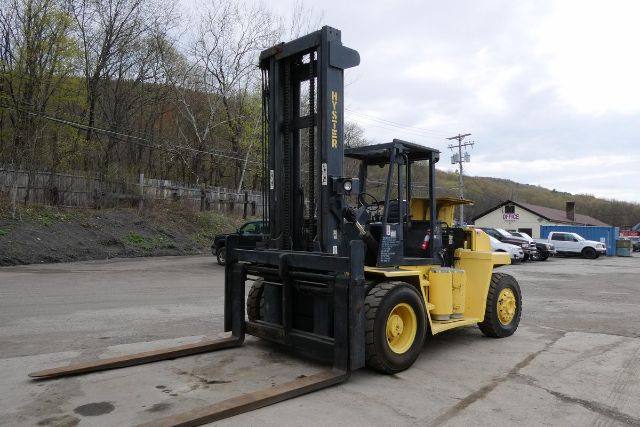
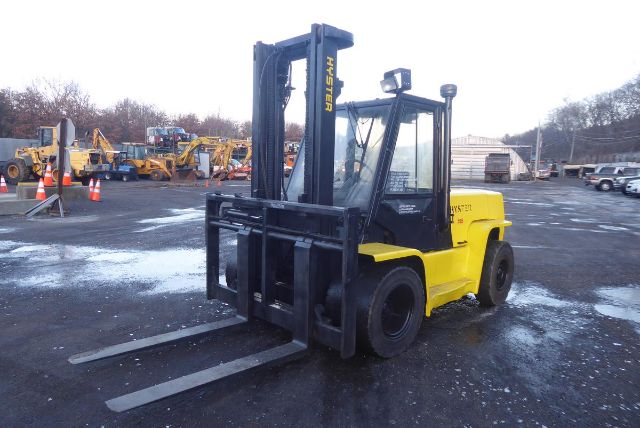
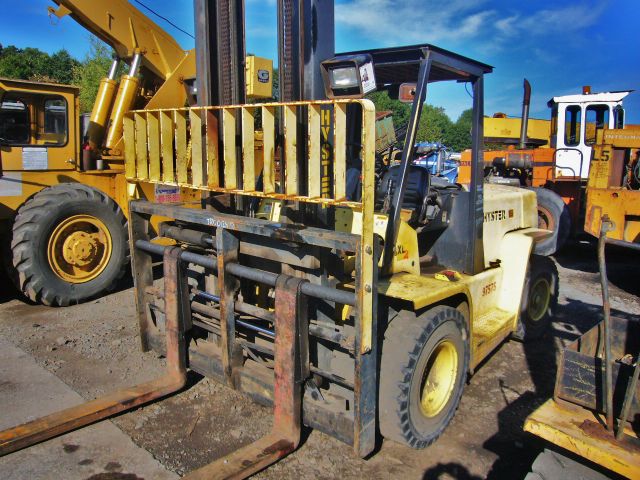
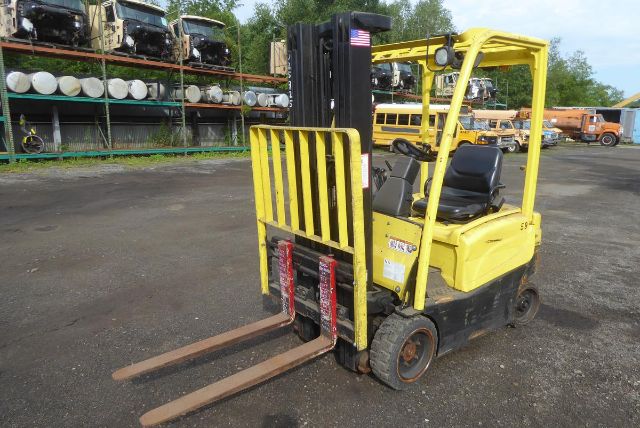
Selling a hyster forklift? List your hyster forklift for sale and reach thousands of commercial buyers.
Hyster Forklifts in New York
Rated capacity must come from the forklift's data plate for its installed mast and attachments. Side shifts, fork positioners, elevated lift heights, and loads extending beyond the rated load center can reduce usable capacity. Check lowered mast height against doorways and trailers, free lift for handling inside trailers, and maximum fork height against the highest storage position. For a new Hyster, specify these dimensions before ordering and confirm whether the warranty covers the battery, charger, attachments, travel labor, and scheduled maintenance separately from the truck itself.
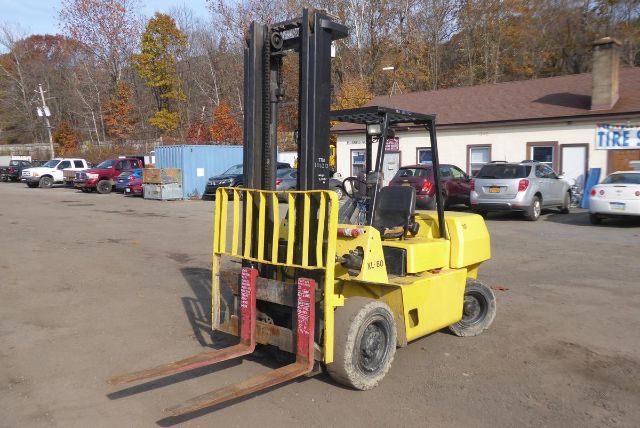
Older H-series XL and XL2 forklifts can have mechanically injected diesel engines and powershift transmissions, while J-series electrics require a different inspection centered on battery condition and drive electronics. Identify the engine, transmission, and electrical system from serial-number documentation rather than assuming every truck within a model family uses the same components. Later diesel forklifts may have exhaust aftertreatment that adds maintenance requirements. On used machines, reconcile hour readings with service records and electronic operating history where available. Test travel, braking, steering, mast lift, and attachment functions after warm-up; inspect chains, mast rollers, cylinder rods, steer-axle pivots, and fork heels for wear or damage.
New York winter exposure makes corrosion and cold-weather performance buying priorities. Road salt tracked into yards attacks electrical connections, brake hardware, and steel components; inspect underneath the chassis and around the battery compartment. Cold storage and outdoor shifts reduce battery performance, so size charging arrangements around actual shift demand. Diesel and LPG trucks used inside buildings still require ventilation and exposure controls; fuel type alone does not establish safe indoor operation.
Frequently Asked Questions about Hyster Forklifts in New York
How much capacity does a Hyster forklift need for long loads?
A Hyster forklift must have rated capacity for the load's actual center of gravity, not just its total weight. A uniformly distributed 96-inch-deep load has a load center approximately 48 inches from the fork face, substantially farther than a common 24-inch rating. Longer forks do not increase capacity. Obtain manufacturer-approved capacity information for the mast, attachment, lift height, and load center before handling oversized materials.
What should I check before buying a used Hyster electric forklift battery?
A documented battery capacity test is more useful than a voltage reading alone when buying a used Hyster electric forklift. Confirm battery voltage, compartment dimensions, connector compatibility, and the minimum battery weight specified for the truck. For lead-acid batteries, inspect cell condition, cables, electrolyte maintenance records, and tray corrosion. Verify that the charger matches the battery chemistry and capacity and that your building supplies the required voltage and phase.
How much fork wear is acceptable on a used Hyster forklift?
Ten percent loss of original fork-blade or shank thickness is a standard removal-from-service threshold for forklift forks. On a used Hyster forklift, a qualified inspector should measure wear with a fork gauge, especially near the heel, and also check cracks, straightness, locking devices, and differences in fork-tip height. Do not judge fork condition by appearance alone or repair damaged forks without manufacturer-authorized procedures.
Do I need a CDL to operate a Hyster forklift in New York?
A CDL is not required solely to operate a Hyster forklift within a workplace, but operator training and evaluation are required. OSHA's powered industrial truck standard requires formal instruction, practical training, and an evaluation covering the truck type and workplace conditions. Operator performance must be evaluated at least once every three years. Unsafe operation, an accident or near miss, or relevant equipment and workplace changes can trigger refresher training.
Are solid tires suitable for a Hyster forklift working outside in New York winters?
Solid pneumatic tires can suit a Hyster forklift working on firm outdoor surfaces, but they do not make snow or ice safe. Solid pneumatic tires resist punctures and differ from the smaller cushion tires intended primarily for smooth surfaces. Select manufacturer-approved tread and tire construction for the operating surface, maintain cleared travel routes, and assess traction on ramps. Do not assume chains are compatible without checking clearance and manufacturer guidance.