
Daewoo Equipment For Sale
Shop Daewoo trucking equipment including forklifts and material handling units known for solid lift capacity, simple service access, and value.
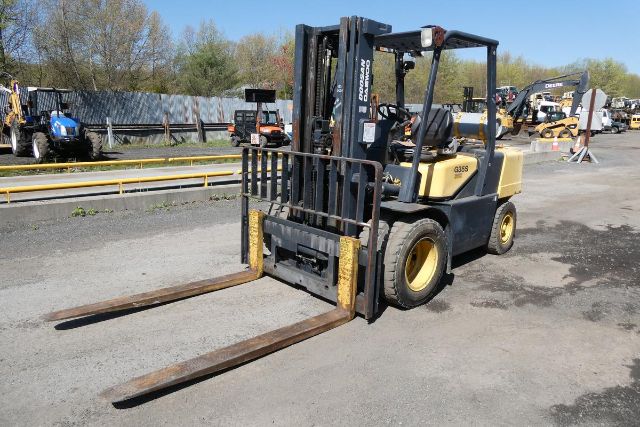
Selling a daewoo equipment? List your daewoo equipment for sale and reach thousands of commercial buyers.
Daewoo Equipment
A good starting point is matching the machine to the work cycle. Capacity ratings around the 5,000-pound class are common for general freight and warehouse use, but actual usable capacity changes with load center, mast height, attachment choice, and tire setup. Tri-mast configurations are popular where stacking height matters, and side shift is a major productivity feature for trailer loading and tight dock work. Buyers should also pay attention to collapsed mast height, overall width, turning radius, and fork length, especially if the unit will be working inside trailers, between racks, or around busy yard lanes. Propane-powered forklifts are common because they balance indoor usability with fast refueling, while pneumatic or foam-filled tires are often preferred for rougher outdoor surfaces.
Condition assessment should go beyond the hour meter. On used Daewoo equipment, hydraulic performance, mast wear, chain condition, steer axle play, brake function, transmission engagement, and cold-start behavior tell a more accurate story than appearance alone. Look closely for cylinder leaks, uneven tire wear, carriage damage, weld repairs, and slack in the mast rollers or tilt system. If the unit has attachments such as side shift or fork positioners, verify that hydraulic functions operate smoothly under load. Service access, engine parts availability, and compatibility with common GM or industrial components can be a real advantage on certain Daewoo models, but buyers should still confirm local support for filters, ignition parts, seals, and mast components before committing.
For fleet buyers, the right Daewoo trucking equipment is usually the unit that fits the lane width, dock height, trailer mix, and load profile without adding unnecessary complexity. A machine working an LTL terminal has different priorities than one handling pipe in an outdoor yard or unloading machinery at a shop. Pay attention to operating weight, transport dimensions, and the condition of safety items such as lights, seat belt, backup alarm, parking brake, and overhead guard. A well-matched Daewoo forklift or material handling unit can be a cost-effective choice for freight handling, warehouse support, and day-to-day logistics work where dependable lifting and simple serviceability are the main priorities.
Frequently Asked Questions about Daewoo Equipment
What types of Daewoo trucking equipment are most commonly found on the used market?
Daewoo is commonly associated with industrial forklifts and material handling equipment used in freight, warehouse, and yard applications. On the used market, buyers often encounter cushion-tire or pneumatic-tire forklifts in general-purpose capacity ranges, along with units configured for propane or other industrial fuel systems. These machines are typically used for loading trailers, moving palletized freight, handling shop materials, and supporting warehouse operations.
What should I check first on a used Daewoo forklift?
Start with lift capacity, mast type, fuel system, and operating environment, then move quickly into mechanical inspection. The most important checks are hydraulic leaks, mast chain wear, carriage and fork condition, brake performance, steering response, transmission engagement, and engine starting behavior. Tire condition also matters because foam-filled or pneumatic replacements can materially affect operating cost. A clean hour meter reading is less important than smooth lift operation and evidence of consistent maintenance.
Are Daewoo forklifts good for outdoor freight and yard work?
They can be, especially when equipped with pneumatic or foam-filled tires and a mast setup suited to uneven surfaces and trailer loading. Outdoor use puts more emphasis on cooling system condition, tire construction, steering components, and visibility from the operator station. If the machine will regularly cross broken pavement, gravel, or yard debris, buyers should prioritize tire type, ground clearance, and mast stability over compact indoor dimensions.
How important is mast configuration on Daewoo material handling equipment?
Mast configuration has a direct effect on stacking height, lowered clearance, visibility, and residual capacity. A tri-mast is useful when loads need to be placed at greater heights while still allowing the machine to enter trailers or pass under door openings when lowered. Buyers should compare maximum lift height with collapsed height and confirm that the rated capacity still matches the actual load center and attachment setup used in their operation.
Are parts and service a concern with older Daewoo equipment?
They can be, so parts planning should be part of the buying process. Many older Daewoo units use widely recognized industrial components, which can help with routine service items such as filters, ignition parts, brakes, and some engine-related components. The bigger concern is usually model-specific mast parts, hydraulic seals, body components, and certain transmission or steering parts. Before purchase, confirm that local dealers, forklift service companies, or aftermarket suppliers can support the exact model.