
Used Ford Digger - Derrick Trucks For Sale
Shop used Ford digger derrick trucks. Compare boom height, auger torque, GVWR, outrigger setups, body materials, and hydraulic systems for utility work.
Learn more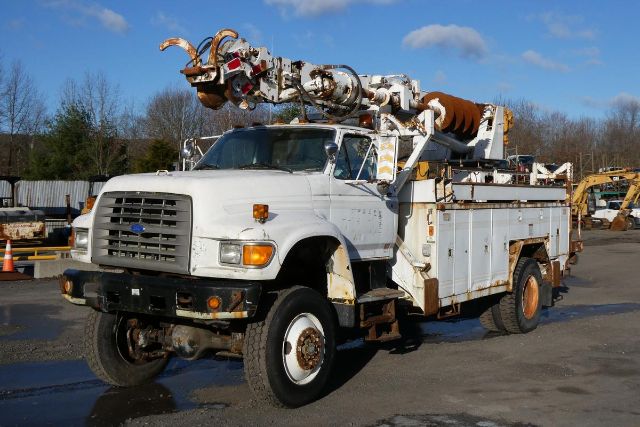
Have used ford digger - derrick truck to sell? List it here to reach thousands of buyers.
About Used Ford Digger - Derrick Trucks
Productivity comes from the derrick’s torque, line pull and sheave height working together. Auger drives are often rated from roughly 8,000 to over 30,000 ft lb, with 2 speed heads for tough soils. Typical distribution work calls for sheave heights in the mid 30s to 50 plus feet and main winch line pulls from 5,000 to 15,000 lb, verify with the load chart and derate tables at various radii. Continuous rotation with worm gear swing is common for precise pole placement. Hydraulics should be sized to the head and winch, many packages run 20 to 50 gpm at around 3,000 psi off a PTO, with return filtration, case drains and oil coolers that protect thermal integrity under summer heat or long duty cycles. Cold weather kits with hydraulic tank heaters, arctic seals and engine block heaters keep response times consistent in winter. Outrigger style and spread, A frame or radial, must fit your right of way widths and soil bearing values.
Body construction dictates durability and floor strength. Look for service bodies with reinforced subframes tied into the Ford chassis, heavy gauge floors with close crossmember spacing that handle cribbing stacks, tooling racks and auger flights without oil canning, and a robust rear frame extension under the turret. Scuff plates, pole guide reinforcements and abrasion resistant outrigger pads extend service life. Corrosion resistance depends on coatings and materials, e coat primers with powder topcoats, stainless hinges and latches, sealed harnesses and underbody protection survive road salts better than basic paint. Aluminum or composite bodies cut tare weight and resist rust, steel bodies with zinc rich primers or galvanizing on outriggers and pedestals offer long term rigidity with proper maintenance.
Operator efficiency and safety come from the control layout and options. Dual controls at the turret and tail shelf, radio remote, pole claws and guides, heel winches, tool circuits and on board air or inverters shorten set times. Verify the chassis electrical upfit interface, PTO provision and idle management so the hydraulic system engages cleanly. For used units, inspect boom wear pads, rotation gearboxes, winch drums, sheaves and wire rope, check outrigger cylinder drift and subframe welds, review dielectric and ANSI inspections if applicable, and compare hours on the derrick to miles on the chassis. Confirm the load chart is present and legible, and that axle and tire ratings support your planned payload and attachment set.
Frequently Asked Questions
How do I choose the right Ford chassis size for a digger derrick upfit?
Match GVWR and wheelbase to the derrick’s sheave height, torque rating and subframe length. F 550 and F 600 handle compact distribution booms and lighter tooling, while F 650 and F 750 support higher torque heads, taller sheave heights and larger outrigger spreads. Consider axle ratings and frame RBM, not just GVWR, and remember that some builds will exceed 26,000 lb GVWR which affects CDL and licensing.
What auger torque and sheave height do I need for utility pole work?
Soil conditions and pole class drive the spec. Hardpan, rock and large diameter holes push you toward higher torque heads and a two speed digger, often 20,000 ft lb and above with rock tooling. Typical distribution poles are handled with mid 30s to 50 plus foot sheave heights, but confirm with your fleet’s pole lengths and set radii. Always reference the manufacturer’s load chart and derate for radius, boom angle and outrigger setup.
Are insulated digger derrick booms available on Ford chassis and what should I know?
Many digger derricks offer insulated upper booms and components, along with dielectric tested fiberglass sections. Insulation ratings and work practices vary by model, so verify the category and required testing intervals in the unit’s manual and your utility’s safety program. Insulation reduces risk when working near energized lines, it does not replace required clearances, grounding and procedural controls.
What should I inspect on a used Ford digger derrick before buying?
Check the chassis first, PTO engagement, transmission operation under load and brake condition. On the derrick, look for pedestal and subframe cracks, boom wear pad adjustment, rotation gearbox lash or leaks, winch drum and rope condition, sheave grooves, pole guide integrity and any outrigger drift or frame deformation. Review recent annual inspections and dielectric tests if applicable, verify that the load chart matches the installed serial plate, and inspect the service body floor for rust, soft spots or broken crossmembers.
How do body materials and coatings affect tare weight and corrosion resistance?
Aluminum or composite service bodies and toolboxes lower tare weight and resist corrosion, freeing payload for poles, augers and cribbing. Steel bodies provide high stiffness and are cost effective, and perform well when protected by e coat primers, zinc rich coatings and quality powder topcoats. Look for stainless hardware, sealed wiring and underbody treatments, and consider galvanized outriggers or pedestals for fleets operating in coastal or road salt regions.