
GMC Vacuum Trucks For Sale
Browse GMC vacuum trucks built for sewer cleaning, hydro excavation, and utility work with practical specs on tanks, blowers, pumps, and chassis.
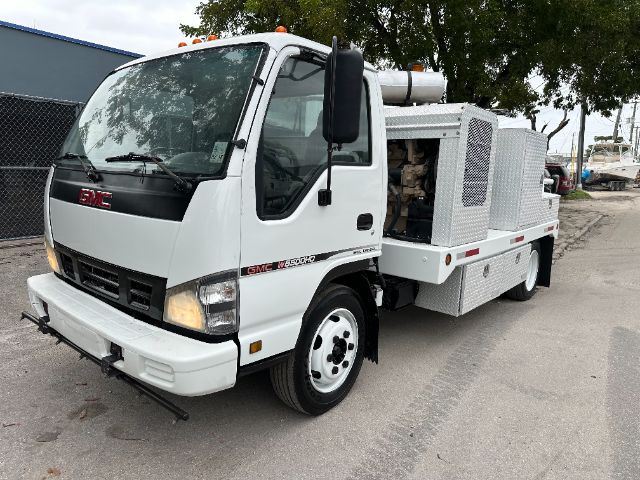
Selling a gmc vacuum truck? List your gmc vacuum truck for sale and reach thousands of commercial buyers.
GMC Vacuum Trucks
A key buying decision is matching the truck’s vacuum and water performance to the work. Many GMC vacuum trucks are configured with positive displacement blowers for strong suction, along with fresh water tanks, high-pressure pumps, hose reels, and debris tanks sized for municipal or contractor use. Smaller units can be well suited for tight urban routes, lateral line cleaning, and maintenance work where access is limited. Larger builds may be set up for more demanding sewer and storm system cleaning. Pay attention to blower CFM, water pump PSI and GPM, tank capacity, filtration, and how the unit is powered. Some trucks use chassis-driven PTO systems, while others use pony motors to run the vacuum or jetting package independently.
Chassis choice affects serviceability, driver comfort, and payload. GMC medium-duty models are often selected because parts and service support are familiar to many fleets, and cabover variants can be especially useful in alleys, treatment plants, and dense municipal environments. Buyers should verify GVWR, axle ratings, wheelbase, suspension type, brake configuration, and emissions equipment, especially on diesel-powered units from different model years. It also pays to inspect corrosion around the tank, subframe, hose trays, and body mounts, plus wear on the blower, pump, valves, and plumbing. Hour meter readings on auxiliary engines can be as important as truck mileage because vacuum trucks often spend long periods operating while stationary.
The best GMC vacuum truck for sale depends on the job mix. A contractor focused on pipe cleaning may prioritize jetting pressure, hose capacity, and water storage, while utility or environmental work may put more weight on suction performance, spoil handling, and site access. Also known in some applications as sewer vacuum trucks, jet vac trucks, or combination vacuum trucks, these units should be evaluated as complete systems. A clean service history, recent blower or pump work, tight seals, functional controls, and a well-maintained tank body can make a major difference in uptime after purchase.
Frequently Asked Questions about GMC Vacuum Trucks
What should I check first on a used GMC vacuum truck?
Start with the vacuum system and water system, not just the chassis. Verify blower performance, pump pressure, tank condition, hose reel operation, valve function, filtration, and any PTO or pony motor setup. Then review chassis mileage, engine hours if equipped with an auxiliary motor, GVWR, axle ratings, and maintenance records. On a vacuum truck, neglected upfit components can be more expensive and disruptive than ordinary chassis repairs.
Are GMC vacuum trucks good for municipal sewer and storm drain work?
GMC vacuum trucks are commonly used in municipal and contractor fleets for sewer cleaning, catch basin service, and storm drain maintenance. Medium-duty GMC platforms can offer a good balance of maneuverability, payload, and service access, especially in urban areas where tighter turning and shorter overall length are valuable. The truck’s suitability depends more on the installed vacuum and jetting package than on the chassis brand alone.
What is the difference between a vacuum truck and a combination sewer truck?
A basic vacuum truck is designed primarily to suction liquid, sludge, debris, or spoil into a tank. A combination sewer truck, often called a jet vac, adds a high-pressure water system for cleaning lines while the vacuum system removes loosened material. Many GMC units in this category are combination trucks, so buyers should confirm water tank capacity, pump PSI, GPM, hose footage, and reel condition if line jetting is part of the intended use.
Is mileage or auxiliary engine hours more important on a GMC vacuum truck?
Both matter, but auxiliary engine or system hours can be especially important because vacuum trucks often operate equipment while parked for long periods. A truck with moderate road miles may still have heavy wear on the blower, pump, or pony motor if it has seen extensive jobsite use. The best evaluation looks at chassis mileage together with hour meter readings, maintenance logs, and the operating condition of the complete vacuum package.