
New 2026 Kenworth Tow Trucks For Sale
Have new 2026 kenworth tow truck to sell? List it here to reach thousands of buyers.
New 2026 Kenworth Tow Trucks
The T280 is a common choice for operators who want a maneuverable Class 6 or 7 tow truck with air brakes, automatic transmission, and a carrier body that stays productive in urban and suburban service. Typical specs in this class include Cummins diesel power around 300 hp, Allison automatics, 26,000-lb GVWR setups, air ride suspension, and 22-foot by 102-inch low-center-gravity decks. Many are equipped with 6-ton steel beds, 8,000-lb winches, and 3,500-lb wheel lifts, which is a practical combination for repossession work, dealer transport, accident recovery, and general car hauling. Buyers should pay close attention to deck height, approach angle, wheel-lift rating, toolbox layout, and strobe package, because those details directly affect loading ease, securement speed, and legal roadside visibility.
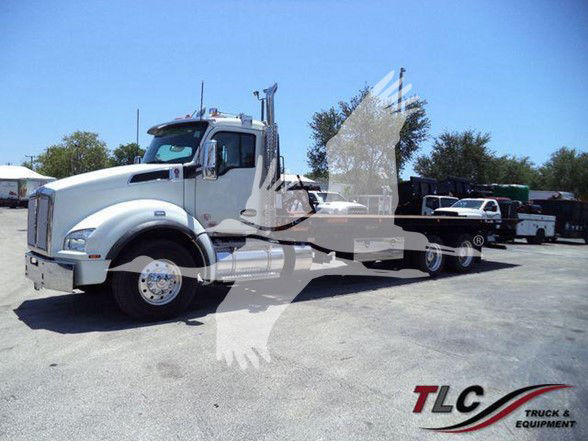
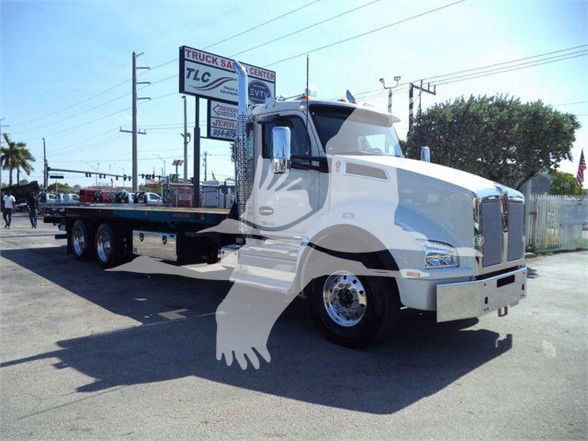
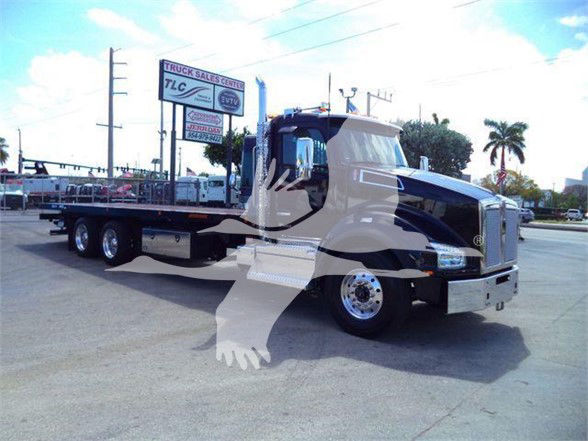
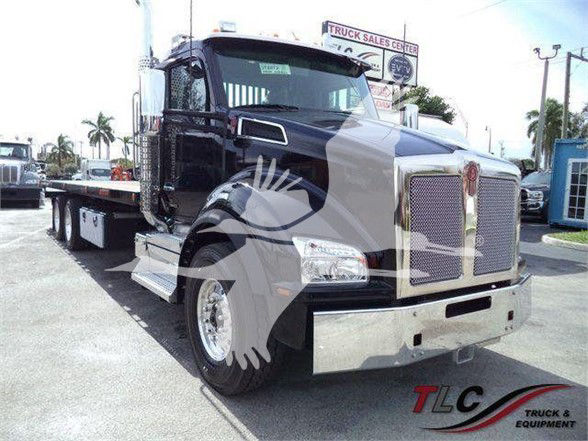
On the heavier end, Kenworth T880 and W990 tow trucks are often spec'd as industrial transporter rollbacks rather than standard car carriers. These trucks commonly run tandem axles, 6x4 drivetrains, Allison automatic transmissions, 450 to 455 hp Cummins power, and GVWR ratings around 60,000 lbs with 20,000-lb front and 40,000-lb rear axles. A 28-foot by 101-inch deck with stake pockets, rub rails, rear dock stabilizers, air glad hands, and a pintle setup points to equipment hauling, not just vehicle recovery. A 20,000-lb winch, wood or transporter-style deck, and wireless bed controls are valuable when the truck is loading dead equipment, moving commercial units, or supporting industrial customers that need more than a standard rollback can handle.
When comparing new Kenworth tow trucks for sale, the chassis brand is only half the decision. The body manufacturer, bed geometry, winch spec, wheel-lift arrangement, lighting package, storage, and included recovery gear all affect revenue per call. Kenworth remains attractive in this segment because the cab ergonomics, service network, and vocational chassis options fit towing well, especially for fleets that want air ride, higher trim levels, and a more premium operator environment. The best buy is the one that matches your route density, average vehicle size, bridge-law and CDL considerations, and the percentage of recovery work versus transport work in your operation.
Frequently Asked Questions about New 2026 Kenworth Tow Trucks
What is the difference between a Kenworth rollback tow truck and an industrial transporter rollback?
A standard rollback or car carrier is generally set up for passenger vehicles, light trucks, and routine recovery work, often with a 22-foot low-profile bed, moderate winch capacity, and a wheel-lift for secondary towing. An industrial transporter rollback uses a heavier tandem-axle chassis, higher GVWR, larger winch, and a longer deck built to move equipment, commercial vehicles, and heavier loads. The transporter setup usually has stronger axle ratings, more deck length, and features such as rub rails, stake pockets, pintle hitches, and dock stabilizers.
Is a Kenworth T280 a good tow truck for local recovery and car hauling?
Yes. The Kenworth T280 is well suited for local and regional towing where maneuverability, driver comfort, and a non-CDL-friendly or near-threshold GVWR spec are important. It is commonly paired with a 22-foot carrier body, automatic transmission, and wheel-lift, making it practical for accident response, dealership moves, impounds, and private-party transport. Buyers should still confirm the actual GVWR, body rating, and wheel-lift spec to make sure the truck matches the heaviest vehicles they expect to handle.
What specs matter most on a new Kenworth tow truck?
The key specs are GVWR, front and rear axle ratings, engine horsepower and torque, transmission model, deck length and width, winch capacity, wheel-lift rating, and suspension type. For carrier work, deck height and loading angle are especially important because they affect how easily low-clearance vehicles load. For heavier transporter applications, tandem axle configuration, 6x4 drivetrain, frame strength, hitch setup, and bed construction become much more important than appearance upgrades.
Do heavier Kenworth tow trucks require a CDL?
Many do, but it depends on the truck's GVWR, the combined rating when towing, and the regulations in the state where the truck is operated. A medium-duty carrier around 26,000 lbs GVWR may be spec'd to stay at or near a threshold that can simplify driver qualification, while a tandem-axle T880 or W990 with a 60,000-lb GVWR clearly falls into heavier regulatory territory. Buyers should verify CDL requirements, towing endorsements, registration class, and any state-specific rules before choosing a chassis.
Why do many buyers prefer an Allison automatic in a tow truck?
An Allison automatic is popular in towing because it improves drivability in stop-and-go recovery work, reduces driver fatigue, and helps with smooth low-speed control during loading and unloading. In urban service, frequent starts, tight positioning, and backing maneuvers are easier with an automatic than with a manual transmission. It can also help fleets onboard drivers faster and maintain more consistent operation across different skill levels.