
New Hino Tow Trucks For Sale
Have new hino tow truck to sell? List it here to reach thousands of buyers.
New Hino Tow Trucks
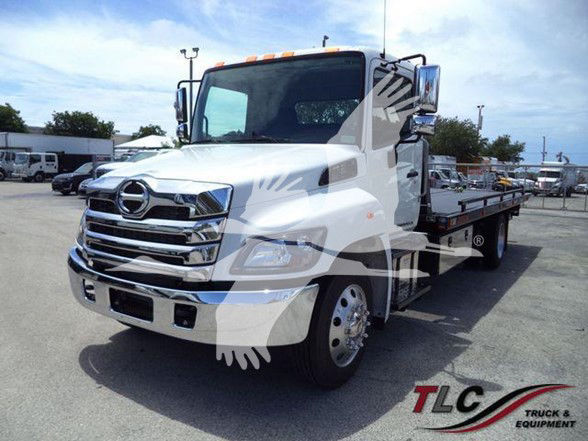
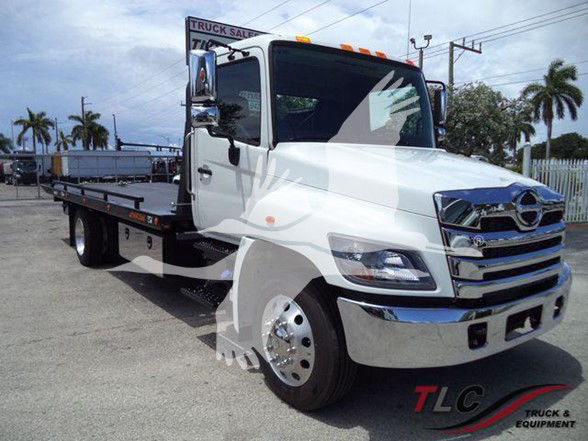
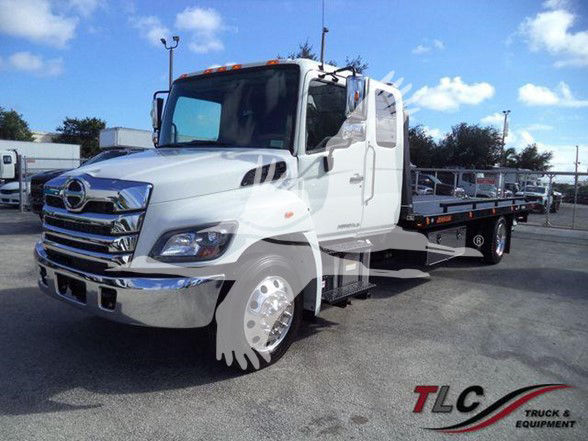
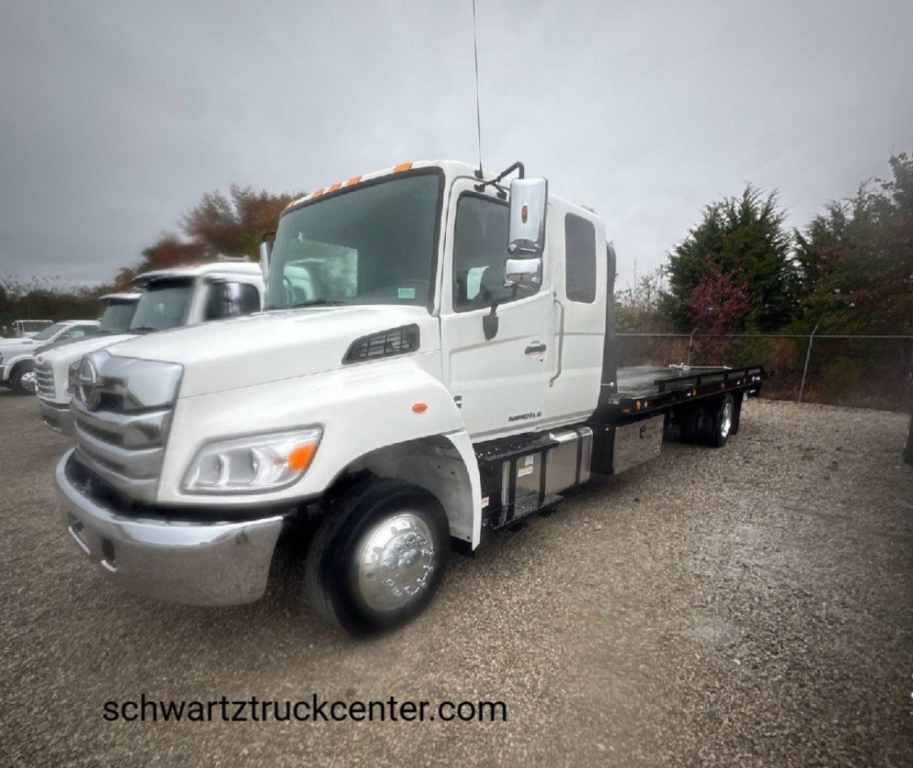
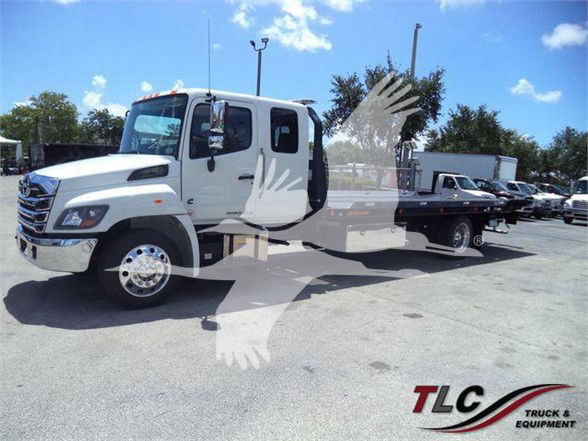
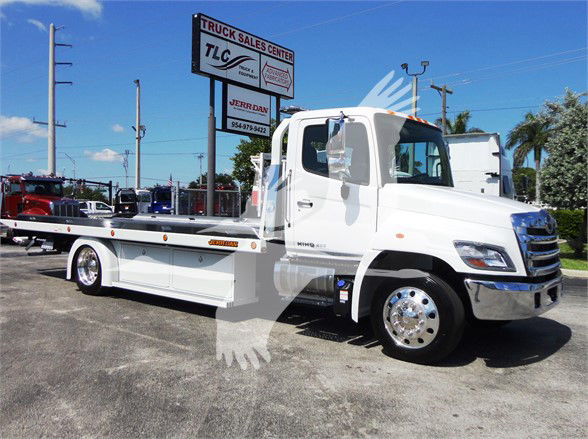
A common configuration in this category is a 22-foot by 102-inch steel carrier body paired with a low-profile or XLP deck, often with a 6-ton bed rating and a wheel lift around 3,500 pounds. That setup covers a large share of daily repossessions, dealership moves, breakdown recoveries, and light commercial transport. Buyers should pay close attention to deck design, including low-car approach angle, dual-angle or shark-style decks, removable rails, and winch specification. An 8,000-pound winch is typical for this size carrier, but the real day-to-day value comes from how the bed loads low-clearance vehicles, how accessible the tool storage is, and how cleanly the wheel lift integrates with L-arms, straps, chains, and V-bridles.
On the chassis side, new Hino tow trucks in this segment are often powered by a 6.7L Cummins diesel rated around 260 horsepower and backed by an Allison automatic transmission. That combination is popular because it is easy to train drivers on, performs well in stop-and-go towing work, and has strong service familiarity across commercial truck shops. Air brakes, air ride suspension, 22.5 low-profile tires, and 4x2 single-axle layouts are common specs. Extended cab and standard cab choices change how the truck fits your operation. An extended cab adds enclosed storage and room for additional crew or gear, while a standard cab can reduce overall length and simplify urban maneuvering.
The best way to evaluate a new Hino tow truck is to match the body and chassis spec to the kind of calls you run most often. If your work is mostly passenger vehicles, crossovers, and light pickups, a 22-foot low-center carrier with a wheel lift is usually the sweet spot. If you regularly load lowered cars, auction units, or damaged vehicles, deck angle, bed height, and underlift geometry become more important than raw horsepower. Buyers should also look closely at factory and body-builder warranty terms, cab ergonomics, mirror visibility, lighting packages, toolbox construction, and included tow gear. In daily towing work, uptime comes from a straightforward chassis, a well-integrated carrier body, and equipment that is matched to the loads you actually recover.
Frequently Asked Questions about New Hino Tow Trucks
What is the typical configuration of a new Hino tow truck?
Most new Hino tow trucks in this category are medium-duty rollback or carrier units built on Hino L6 or 268A chassis. A common setup includes a 22-foot by 102-inch low-profile steel bed, a 6-ton carrier rating, a 3,500-pound wheel lift, and an 8,000-pound winch. These trucks are usually single-axle 4x2 models with diesel power, automatic transmissions, air brakes, and air ride suspension for towing comfort and control.
Are new Hino tow trucks suitable for non-CDL operation?
Many are built around a GVWR of 25,950 to 26,000 pounds, which is a common target for operators trying to stay in a non-CDL configuration. That said, CDL requirements depend on total vehicle rating, state rules, intended use, and any combined weight involved in your operation. Buyers should verify local and federal requirements before assuming a specific truck can be run without a CDL.
What jobs are Hino rollback tow trucks best suited for?
Hino rollback tow trucks are well suited for transporting passenger cars, SUVs, light pickups, auction vehicles, dealership inventory, disabled vehicles, and low-clearance cars when paired with an XLP or low-center deck. They are a practical choice for urban towing, roadside assistance, repossession work, and light commercial recovery. The combination of a carrier bed and wheel lift also gives operators flexibility when a straight flat tow is not the best option.
What should buyers compare when choosing between Hino tow truck specs?
The most important comparisons are GVWR, cab style, engine and transmission pairing, bed length and width, deck angle, wheel lift rating, winch capacity, rail type, and toolbox layout. It also helps to compare visibility features, suspension type, lighting, included tow accessories, and warranty coverage on both the chassis and the body. For many towing businesses, the right spec is the one that improves loading speed, protects low-clearance vehicles, and minimizes downtime.
Why are Cummins and Allison components common on new Hino tow trucks?
The 6.7L Cummins diesel and Allison automatic transmission are widely used in medium-duty towing because they offer familiar serviceability, solid low-speed performance, and straightforward operation for multiple drivers. In tow work, smooth engagement, reliable power delivery, and broad repair network support matter as much as headline output. That is why many fleets view this powertrain combination as a practical choice for rollback and light wrecker service.